Rani Ji Ki Baori: The Queen's Stepwell That Captivates Every Traveler
Rani Ji Ki Baori stands as one of the most architecturally magnificent and exquisitely carved stepwells in all of India, representing the finest and most celebrated example of the remarkable stepwell tradition for which the town of Bundi has become particularly renowned, its descending tiers of intricately sculpted stone, soaring pillared galleries, and the cool subterranean atmosphere of its depths together creating a heritage destination of extraordinary engineering sophistication and artistic refinement. Situated in the heart of Bundi town in the Bundi district of Rajasthan, Rani Ji Ki Baori, meaning the Queen's Stepwell, was constructed in 1699 by Rani Nathavati Ji, the queen of the Bundi royal family, as an act of public welfare intended to provide a reliable source of water to the residents of the town during the harsh desert summers, a purpose that has lent the structure an enduring legacy of both architectural grandeur and genuine civic generosity. The destination draws architecture enthusiasts, heritage travelers, and curious explorers from across the country and the world, offering an encounter with one of the deepest and most elaborately decorated stepwells in Rajasthan, descending some 46 metres below ground level through a succession of carved galleries and platforms that represent the pinnacle of Rajasthani stepwell architecture at its most ambitious and aesthetically accomplished.
Rani Ji Ki Baori The Queen's Stepwell
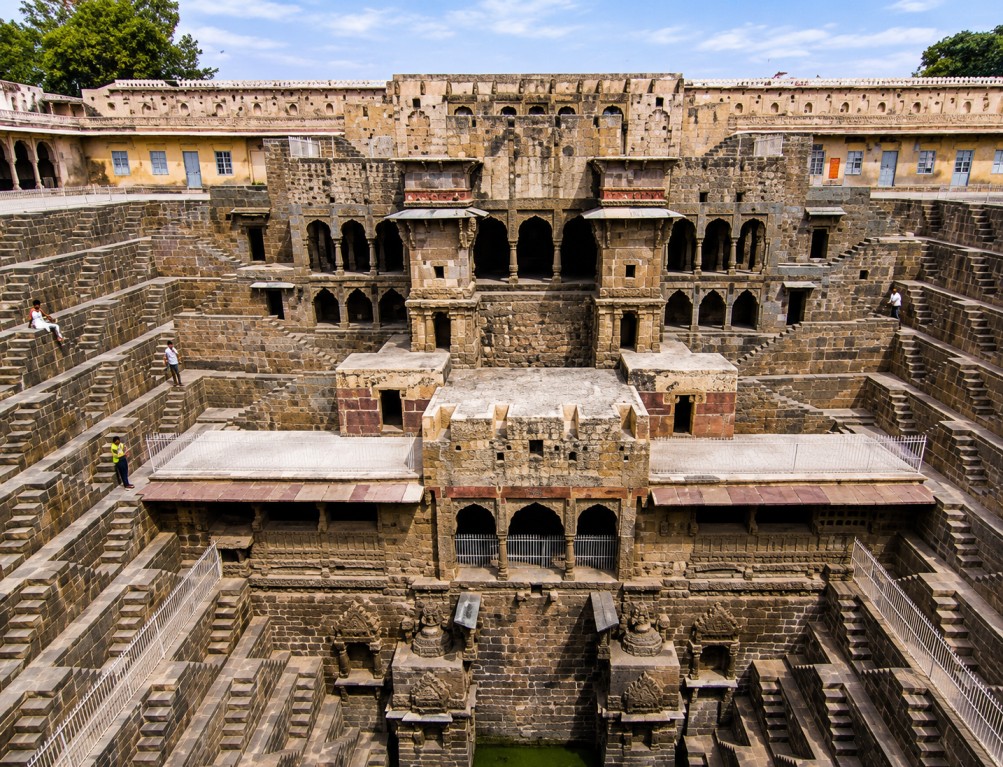
Built in 1699 by Rani Nathavati Ji, this 46-metre stepwell descends through carved pillared galleries into the cool, sculpted depths of Bundi's royal heritage.
Overview
Rani Ji Ki Baori stands as one of the most architecturally magnificent and exquisitely carved stepwells in all of India, representing the finest and most celebrated example of the remarkable stepwell tradition for which the town of Bundi has become particularly renowned, its descending tiers of intricately sculpted stone, soaring pillared galleries, and the cool subterranean atmosphere of its depths together creating a heritage destination of extraordinary engineering sophistication and artistic refinement. Situated in the heart of Bundi town in the Bundi district of Rajasthan, Rani Ji Ki Baori, meaning the Queen's Stepwell, was constructed in 1699 by Rani Nathavati Ji, the queen of the Bundi royal family, as an act of public welfare intended to provide a reliable source of water to the residents of the town during the harsh desert summers, a purpose that has lent the structure an enduring legacy of both architectural grandeur and genuine civic generosity. The destination draws architecture enthusiasts, heritage travelers, and curious explorers from across the country and the world, offering an encounter with one of the deepest and most elaborately decorated stepwells in Rajasthan, descending some 46 metres below ground level through a succession of carved galleries and platforms that represent the pinnacle of Rajasthani stepwell architecture at its most ambitious and aesthetically accomplished.
Why Visit Rani Ji Ki Baori
The recognition of Rani Ji Ki Baori as one of the finest stepwells in India reflects its unparalleled importance within the architectural heritage of Bundi, a town celebrated for possessing one of the largest concentrations of stepwells anywhere in Rajasthan, with Rani Ji Ki Baori standing as the most accomplished and best-preserved among them. One of the most compelling reasons to visit is the extraordinary quality of the carved stone ornamentation that covers nearly every surface of the structure, with intricately sculpted pillars, elaborately carved brackets depicting elephants, deities, and floral motifs, and the rhythmic geometry of the descending stepped platforms creating a visual experience of considerable architectural richness that rewards slow and careful observation as the eye travels downward through each successive level. The engineering sophistication of the stepwell, designed to maintain a consistent and accessible water source through the dry months by allowing access to the water table at varying depths depending on the season, reflects a deep practical understanding of desert hydrology that the Rajasthani stepwell tradition developed and refined over centuries. The combination of architectural beauty, engineering ingenuity, the meaningful civic legacy of its royal patron, and the relatively uncrowded and contemplative atmosphere of the site further strengthens its appeal as a deeply rewarding heritage experience within the broader cultural landscape of Bundi.
👑 A Queen's Public Welfare
Rani Ji Ki Baori was constructed in 1699 by Rani Nathavati Ji, the queen of the Bundi royal family, as an act of public welfare intended to provide a reliable source of water to residents during the harsh desert summers.
Key Highlights Within the Area
The descending tiers of carved stone steps and pillared galleries stand out as the most visually extraordinary feature of Rani Ji Ki Baori, with the symmetrical stepped platforms narrowing as they descend toward the water level far below, framed on either side by ornately carved pillars and arched openings that create a sense of architectural depth and rhythmic visual order. The intricately carved sculptural details adorning the pillars and brackets throughout the stepwell, depicting elephants, mythological figures, and decorative floral patterns, represent a highlight of exceptional artistic craftsmanship, reflecting the skill of the stone carvers who worked under royal patronage to create one of the most decoratively accomplished stepwells in Rajasthan. The cool and shaded atmosphere within the deeper sections of the stepwell offers a further highlight of considerable sensory appeal, the temperature dropping noticeably as visitors descend further from the bright heat of the surface, illustrating in a direct and physical way the practical cooling function that such structures served for the local community across the centuries.
🐘 Carved in Stone
Intricately carved sculptural details adorning the pillars and brackets throughout the stepwell depict elephants, mythological figures, and decorative floral patterns, reflecting the skill of the stone carvers who worked under royal patronage.
Activities
Descending through the successive levels of the stepwell and observing the carved pillars and architectural details at close quarters is the primary and most rewarding activity at Rani Ji Ki Baori, allowing visitors to appreciate both the engineering scale of the structure and the artistic quality of its stone carving as they move progressively deeper into the cool subterranean space. Photography of the symmetrical descending architecture, particularly capturing the geometric patterns created by the receding pillared galleries, is a popular pursuit among heritage and architecture photographers visiting Bundi.
Stepwell at a Glance
Best Time to Visit
The most favorable period to visit Rani Ji Ki Baori is from October to March, when the pleasant winter temperatures of Rajasthan make exploring Bundi's old town and its stepwell comfortable, though the naturally cool interior of the baori also makes it a particularly welcome retreat during the hotter summer months from April to June.
Connectivity
Rani Ji Ki Baori is situated in the heart of Bundi town, easily accessible on foot from the town's other major heritage sites. Bundi is connected by road to Kota, situated approximately 35 kilometres away, which serves as the nearest major railway junction with regular services from Delhi, Mumbai, and Jaipur, making Rani Ji Ki Baori a rewarding inclusion in any Bundi heritage itinerary alongside the town's celebrated palace, fort, and the broader collection of historic stepwells for which this remarkable Rajasthani town is justly famous.