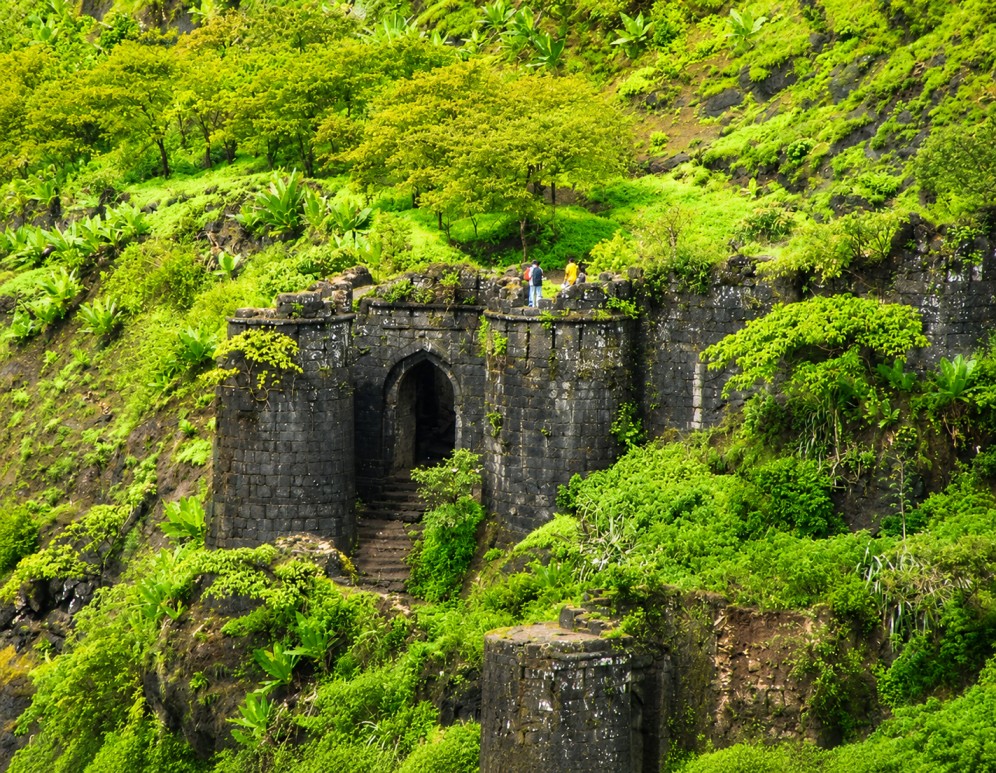
Sinhagad Fort - Echoes Of Maratha Valor
Perched dramatically on a steep cliff of the Sahyadri mountain range, roughly 30 kilometers southwest of Pune in Maharashtra, Sinhgarh Fort is one of India's most storied and strategically significant hill forts. Rising approximately 1,312 meters above sea level, this ancient stronghold offers commanding views of the Deccan plateau and the Khadakwasla reservoir shimmering in the valley below. Whether you are a history enthusiast, a trekker chasing panoramic vistas, or a traveler drawn to the soul of medieval India, Sinhgarh delivers an experience that is both humbling and unforgettable
Perched dramatically on a steep cliff of the Sahyadri mountain range, roughly 30 kilometers southwest of Pune in Maharashtra, Sinhgarh Fort is one of India's most storied and strategically significant hill forts. Rising approximately 1,312 meters above sea level, this ancient stronghold offers commanding views of the Deccan plateau and the Khadakwasla reservoir shimmering in the valley below. Whether you are a history enthusiast, a trekker chasing panoramic vistas, or a traveler drawn to the soul of medieval India, Sinhgarh delivers an experience that is both humbling and unforgettable.
📍 Location
30 kilometers southwest of Pune in Maharashtra
⛰ Elevation
Approximately 1,312 meters above sea level
🏰 Historic Identity
One of India's most storied and strategically significant hill forts
⚔️ From Kondana to Sinhgarh: A Name Forged in Battle
The fort's original name was Kondana, believed to be derived from the sage Kondanya who once meditated here. Its transformation into "Sinhgarh" — meaning Lion's Fort — is directly tied to one of the most celebrated military episodes in Maratha history. The renaming was not a mere ceremonial gesture; it was an act of honor, earned in blood.
The site's strategic importance was recognized as far back as the 2nd century BCE. Over the centuries, Kondana passed through the hands of multiple dynasties — the Rashtrakutas, the Yadavas of Devagiri, and later the Bahamani Sultanate — each recognizing its near-impregnable position atop sheer rocky escarpments. By the 14th century, it had become a critical military asset in the Deccan.
🔥 The Night That Changed History: The Battle of Sinhgarh (1670)
No discussion of Sinhgarh is complete without the legendary Battle of Sinhgarh, fought on the night of February 4, 1670. At the time, the fort was held by Udaybhan Rathod, a trusted commander under the Mughal general Jai Singh. Chhatrapati Shivaji Maharaj, the founder of the Maratha Empire, tasked his trusted general Tanaji Malusare with recapturing this strategic stronghold.
What followed became the stuff of legend. Tanaji and his small force scaled the sheer vertical cliffs of the fort in the dead of night — allegedly aided by a monitor lizard named Yashwanti to whom ropes were tied — and launched a daring surprise assault. In the fierce hand-to-hand combat that ensued, Tanaji Malusare fell, but not before his forces secured the fort. When Shivaji received the news of the victory alongside his general's death, he reportedly said, "Gad aala, pan Sinha gela" — "The fort is won, but the lion is lost." It is from this very utterance that the fort received its eternal name: Sinhgarh.
🏛️ Architecture: A Fortress Built by Nature and Reinforced by Man
The architecture of Sinhgarh Fort is a fascinating blend of natural defense and human engineering. The fort sits atop a plateau and is surrounded on most sides by nearly vertical cliffs, making artificial fortification necessary only at selective points. The two main entrances — the Pune Darwaza (facing northeast) and the Kalyan Darwaza (facing southeast) — are constructed with massive stone gates and bastions that reflect the robust military architecture of the Deccan Sultanate and Maratha periods.
Within the fort complex, you will find the samadhi (memorial tomb) of Tanaji Malusare, a modest yet deeply revered site. Nearby stands a small temple dedicated to Lord Kaundinya, believed to be ancient in origin. The Devtakichi Machi and Belmaachi are two prominent plateaus within the fort's expanse that once served as garrison areas and storage zones.
The Kadeloat Point, a sheer drop at the fort's edge, is where, according to legend, Mughal soldiers once met their end during the Maratha offensive. The stonework throughout — walls, water cisterns, and guard posts — reflects a utilitarian military sensibility rather than ornamental excess, designed for endurance over elegance.
🎭 Cultural Significance and Legends
Beyond its military legacy, Sinhgarh holds deep cultural resonance for the Maratha people. Tanaji Malusare is venerated as a folk hero across Maharashtra, and the fort serves as an annual site of commemoration. Visitors often encounter locals offering prayers at Tanaji's samadhi, a reminder that this is not merely a tourist destination but a living heritage site.
Local folklore adds vivid color to the fort's story. The tale of Yashwanti the monitor lizard is widely retold — a small creature becoming an unlikely instrument of a great victory. Such legends speak to how ordinary people and even animals were woven into the extraordinary fabric of Maratha resistance.
🥾 Visiting Sinhgarh: The Experience on the Ground
The journey to Sinhgarh is itself an experience. Trekkers typically begin from Donje village at the fort's base, navigating a trail that winds through dense forest, rocky terrain, and sudden breathtaking clearings. The trek typically takes one to two hours depending on pace and fitness. For those preferring a less strenuous approach, a road leads partway up, where shared vehicles are available.
Once at the summit, the atmosphere is lively yet reflective. Local vendors sell buttermilk (taak), bhakri-pitla, and pithla-bhaat — rustic Maharashtrian staples that taste inexplicably better at altitude. The fort is particularly popular on weekends with Pune residents, lending it a communal, festive energy.
The panoramic views from the ramparts are exceptional — on clear days, you can see Pune city, the Khadakwasla Dam, and rolling green hills stretching to the horizon. The post-monsoon season, from August through November, is widely considered the best time to visit, when the hills are lush green and clouds drift below the fort's edge. Winters (November through February) offer pleasant temperatures ideal for trekking.
🌍 Why Sinhgarh Matters for Heritage Tourism
Sinhgarh Fort represents a rare convergence of natural grandeur and historical depth. It attracts history buffs tracing the arc of the Maratha Empire, trekkers drawn by the challenging ascent, and day-trippers from Pune seeking respite from urban life. Increasingly, international travelers interested in Deccan history and Indian military heritage are adding it to their itineraries.
The Archaeological Survey of India maintains portions of the fort, though much of the experience retains an unmanicured authenticity that manicured heritage sites often lack. That rawness — the weathered stone, the wind across the plateau, the ghosts of a midnight battle — is precisely what makes Sinhgarh enduring. It does not merely display history; it breathes it.