Taragarh Fort: Explore Bundi's Majestic Hilltop Fortress
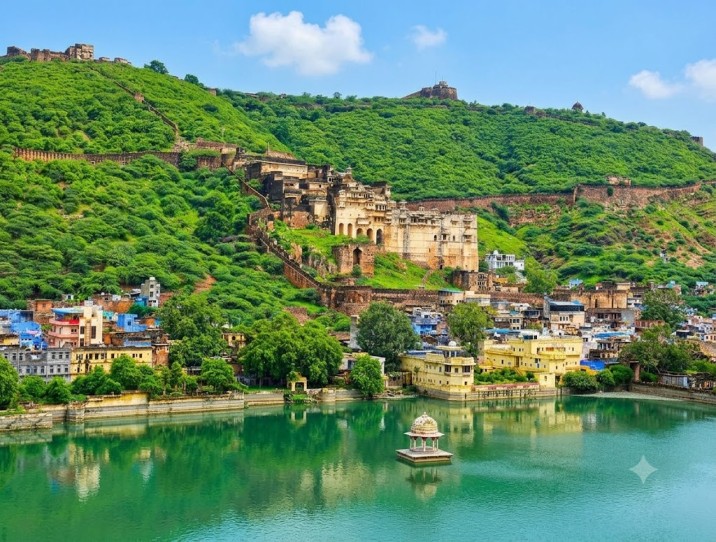
Taragarh Fort stands as one of the most dramatically situated and atmospherically commanding heritage destinations in Rajasthan, representing a formidable hilltop citadel of the Hadoti region whose massive battlements, ancient reservoirs carved directly into solid rock, and sweeping panoramic views across the storybook blue town of Bundi together create a destination of considerable historical grandeur and scenic magnificence. Situated on a steep hill rising directly above Bundi town in the Bundi district of Rajasthan, Taragarh Fort, meaning the Star Fort, was constructed in 1354 by Rao Raja Bar Singh of the Hada Chauhan dynasty and expanded by successive rulers over the following centuries, its thick fortified walls and battlements climbing the rugged hillside in a manner that has earned it a reputation among historians and travelers alike as one of the most imposing and visually striking forts in the entire Rajasthani landscape, overlooking the densely packed blue-washed houses of Bundi below in a composition of heritage architecture and urban landscape that remains relatively undiscovered compared to the better-known forts of Jaipur, Jodhpur, and Udaipur. The destination draws history enthusiasts, architecture lovers, and adventurous heritage travelers from across the country, offering an encounter with a fort whose dense forest cover, partially ruined state, and considerable physical scale create an atmosphere of genuine wilderness exploration combined with rich historical discovery.
Taragarh Fort The Star Fort
A rugged 1354-built citadel of the Hada Chauhan dynasty, its battlements climbing the hillside above Bundi's blue-washed streets in a wilder, less-restored corner of Rajasthani heritage.
Overview
Taragarh Fort stands as one of the most dramatically situated and atmospherically commanding heritage destinations in Rajasthan, representing a formidable hilltop citadel of the Hadoti region whose massive battlements, ancient reservoirs carved directly into solid rock, and sweeping panoramic views across the storybook blue town of Bundi together create a destination of considerable historical grandeur and scenic magnificence. Situated on a steep hill rising directly above Bundi town in the Bundi district of Rajasthan, Taragarh Fort, meaning the Star Fort, was constructed in 1354 by Rao Raja Bar Singh of the Hada Chauhan dynasty and expanded by successive rulers over the following centuries, its thick fortified walls and battlements climbing the rugged hillside in a manner that has earned it a reputation among historians and travelers alike as one of the most imposing and visually striking forts in the entire Rajasthani landscape, overlooking the densely packed blue-washed houses of Bundi below in a composition of heritage architecture and urban landscape that remains relatively undiscovered compared to the better-known forts of Jaipur, Jodhpur, and Udaipur. The destination draws history enthusiasts, architecture lovers, and adventurous heritage travelers from across the country, offering an encounter with a fort whose dense forest cover, partially ruined state, and considerable physical scale create an atmosphere of genuine wilderness exploration combined with rich historical discovery.
Why Visit Taragarh Fort
The recognition of Taragarh Fort as one of the most architecturally and historically significant yet comparatively undervisited forts in Rajasthan reflects its unparalleled importance within the heritage landscape of the Hadoti region, standing as the dominant physical and historical presence above Bundi town for more than six centuries. One of the most compelling reasons to visit is the extraordinary panoramic view the fort offers across the entire town of Bundi spread below, its maze of blue-painted houses, stepped lakes, and the Bundi Palace complex visible in a single sweeping vista that represents one of the most rewarding viewpoints available at any hill fort in Rajasthan. The fort's massive rock-cut reservoirs, carved directly into the solid stone of the hilltop to provide a reliable water supply during periods of siege, demonstrate the same sophisticated hydrological engineering found throughout the Bundi region's celebrated stepwell tradition, here applied at a defensive scale of considerable ambition. The relatively wild and partially overgrown character of large sections of the fort, with dense forest reclaiming significant portions of the structure, lends Taragarh an atmosphere of adventurous discovery that distinguishes it from the more manicured and heavily restored forts found elsewhere in the state, rewarding visitors with a sense of genuine exploration alongside the historical and architectural interest of the site.
🌲 Wild & Undiscovered
The relatively wild and partially overgrown character of large sections of the fort, with dense forest reclaiming significant portions of the structure, lends Taragarh an atmosphere of adventurous discovery distinct from Rajasthan's more restored forts.
Key Highlights Within the Area
The massive battlements and fortification walls of Taragarh stand out as the most imposing architectural feature of the fort, their considerable thickness and scale climbing the steep hillside in a manner that conveys the defensive ambitions of the Hada Chauhan rulers who built and expanded the structure across successive generations. The Bhim Burj, the largest bastion within the fort and once home to a colossal cannon known as Garbh Gunjan, offers a highlight of particular historical and visual interest, its commanding position providing one of the most extensive views across the surrounding landscape. The rock-cut reservoirs within the fort, including the considerable tank known as Bhojan Shala, represent a highlight of significant engineering interest, illustrating the same water conservation ingenuity found throughout the broader stepwell heritage of Bundi. The sweeping panoramic view across Bundi town from the fort's elevated ramparts is perhaps the single most rewarding highlight of the entire visit, the blue-washed houses and palace complex spread below in a vista of considerable scenic and historical resonance.
💣 Bhim Burj & Garbh Gunjan
The Bhim Burj, the largest bastion within the fort and once home to a colossal cannon known as Garbh Gunjan, offers a highlight of particular historical and visual interest, its commanding position providing extensive views across the landscape.
Activities
Climbing the steep approach trail and exploring the fort's battlements, bastions, and rock-cut reservoirs is the primary activity at Taragarh, offering a moderately demanding but rewarding physical exploration of the hilltop complex. Photography of the panoramic views across Bundi town and the surrounding Hadoti landscape, particularly during the soft light of early morning or late afternoon, is a highly rewarding pursuit for visitors to the fort.
Fort at a Glance
Best Time to Visit
The most favorable period to visit Taragarh Fort is from October to March, when the pleasant winter temperatures make the climb to the fort and extended exploration of its battlements considerably more comfortable than during the heat of the summer months from April to June.
Connectivity
Taragarh Fort is accessible by a steep walking trail directly from Bundi town, making it conveniently reachable from the heritage areas of the old city below. Bundi is connected by road to Kota, situated approximately 35 kilometres away and serving as the nearest major railway junction with regular services from Delhi, Mumbai, and Jaipur, making Taragarh Fort a rewarding centerpiece of any Bundi heritage itinerary alongside the town's palace, the Rani Ji Ki Baori stepwell, and Sukh Mahal.