Unakoti (Tripura)
Unakoti stands as one of the most mystically evocative and archaeologically extraordinary destinations in northeastern India, representing an ancient rock-cut sculpture complex of remarkable scale and artistic achievement set within a forested hillside of considerable natural beauty. Situated in the Unakoti district of Tripura near the town of Kailashahar, Unakoti is a destination of singular archaeological and spiritual character, offering a landscape defined by enormous rock-cut images of Shiva, Vishnu, Ganesha, and numerous other deities carved directly into the basalt hillside in a concentration of sculptural ambition that has no parallel anywhere in the northeastern region.
The destination draws history enthusiasts, archaeology lovers, Shaivite pilgrims, and culturally curious travelers from across the country, offering an encounter with a site whose name, meaning one less than a crore or ten million, refers to the legendary number of deities said to rest here and whose carved images date back to between the seventh and ninth centuries of the common era in a body of sculptural work largely unknown outside the region despite its extraordinary artistic significance.
Why Visit Unakoti
The recognition of Unakoti as one of the most significant archaeological and religious sites in northeastern India reflects its unparalleled importance within the cultural heritage landscape of Tripura, standing as a monument to a tradition of rock-cut sacred art created with extraordinary ambition and artistic confidence in a remote forested corner of the subcontinent.
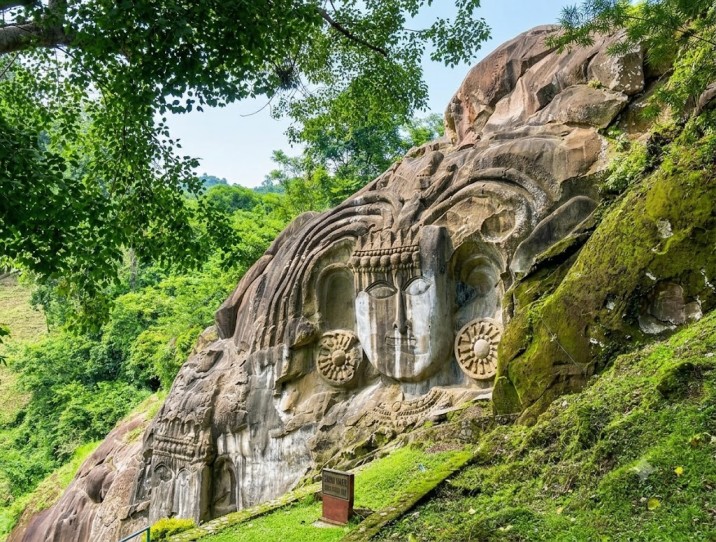
One of the most compelling reasons to visit is the principal rock-cut Shiva head at the center of the complex, known as Unakotiswara Kal Bhairava, which rises from the hillside in a carved relief of extraordinary scale and powerful artistic presence. The massive face emerging from the rock, its features rendered with formal iconographic authority and individual artistic expression, creates an encounter with sacred rock-cut art of a scale and intensity that immediately communicates the devotional ambition of its creators working more than a thousand years ago.
The combination of extraordinary sculptural art, mythological resonance, a living pilgrimage tradition, and the dense forested natural setting further strengthens its appeal as a destination of deeply layered and genuinely extraordinary discovery.
Key Highlights Within the Area
Unakotiswara Kal Bhairava — The Colossal Shiva Head
The colossal Unakotiswara Kal Bhairava head stands out as the most iconic and overwhelming feature of the complex, rising approximately thirty feet from the hillside rock face in a carved relief of massive physical presence and considerable artistic power. The subsidiary figures flanking the central image and the carved details of the crown and facial ornaments create an encounter with rock-cut sacred art of rare and lasting impact.
The Nandikesvar Image
The Nandikesvar image, depicting Nandi the sacred bull of Shiva in a carved rock-cut form of considerable scale, adds a further layer of iconographic richness to the sculptural landscape.
Sacred Water Tank & Natural Springs
The sacred water tank and natural springs associated with the complex add a significant ritual dimension, their waters considered sacred by pilgrims who have bathed here across many centuries of devotional tradition.
Dense Subtropical Forest
The dense subtropical forest enveloping the entire hillside complex lends the site a quality of ancient and mysterious natural beauty that deepens considerably the atmosphere of spiritual presence already created by the carved stone imagery.
Activities
Exploring the sculptural complex along the forest trail that winds through the Unakoti hillside, moving between successive carved images of varying scale and iconographic subject, is the primary and most rewarding activity, with the unhurried discovery of carvings emerging from the forest rock creating a journey of cumulative artistic revelation.
Visiting during the Ashokasthami fair in April offers a dimension of living pilgrimage culture that transforms the archaeological site into a vibrant sacred landscape.
Birdwatching in the forested surroundings is a rewarding complementary pursuit, with the dense subtropical forest of northern Tripura supporting a diverse assemblage of northeastern bird species.
Best Time to Visit & Connectivity
The most favorable period to visit Unakoti is from October to March, when pleasant temperatures make forest exploration comfortable and the clearer light of the dry season reveals the carved sculptures at their most atmospherically beautiful. The Ashokasthami festival in April offers a compelling alternative for those interested in the living pilgrimage tradition of the site.
Unakoti is accessible from Kailashahar, situated approximately eight kilometres away. Agartala, the capital of Tripura, approximately 178 kilometres distant, serves as the primary gateway with Maharaja Bir Bikram Airport offering regular domestic flights from Kolkata, Delhi, and Guwahati. Road and rail connectivity from Agartala through the forested terrain of northern Tripura makes Unakoti a rewarding inclusion in any Tripura travel itinerary.