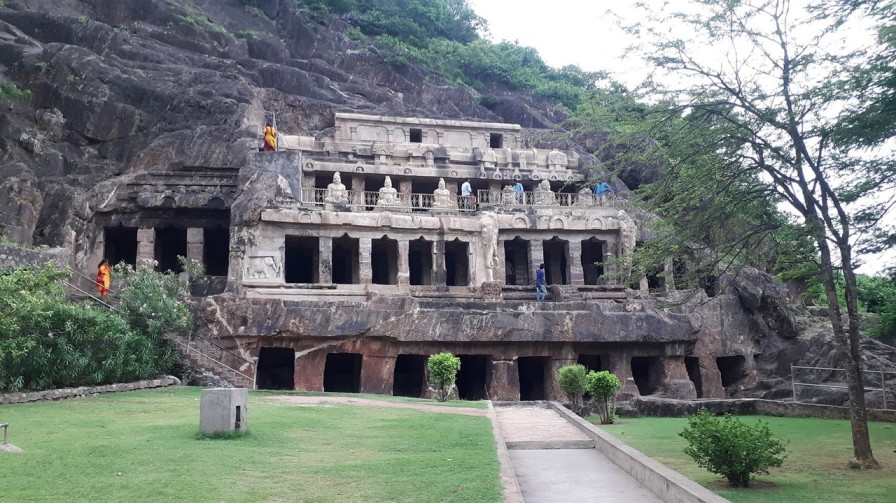
Undavalli Caves - Ancient Wonder In Rock
Imagine standing before a cliff face that has been sculpted by human hands over fourteen centuries, its chambers still cool in the afternoon heat, its walls holding the silence of a thousand years. That's Undavalli Caves for you — not just an archaeological site, but a conversation across time. Carved directly into a sandstone hillside overlooking the Krishna River in Andhra Pradesh, these magnificent rock-cut caves are among the finest examples of ancient Indian craftsmanship you will ever encounter. Once you step inside, you'll understand why historians, artists, and wandering souls have been making their way here for generations
🪨 Undavalli Caves, Andhra Pradesh – Where Stone Tells Stories Older Than Time
Imagine standing before a cliff face that has been sculpted by human hands over fourteen centuries, its chambers still cool in the afternoon heat, its walls holding the silence of a thousand years. That's Undavalli Caves for you — not just an archaeological site, but a conversation across time. Carved directly into a sandstone hillside overlooking the Krishna River in Andhra Pradesh, these magnificent rock-cut caves are among the finest examples of ancient Indian craftsmanship you will ever encounter. Once you step inside, you'll understand why historians, artists, and wandering souls have been making their way here for generations.
📜 A Little Bit of History First
The story of Undavalli Caves stretches back to the 4th and 5th centuries AD, when master craftsmen of the Vishnukundina dynasty transformed a natural sandstone hill into a series of extraordinary cave temples. The name "Undavalli" is believed to derive from the Telugu word for the surrounding village, but the caves themselves speak a language far older — the language of devotion, artistry, and ambition carved in stone.
Originally built as Jain monasteries, the caves were later converted into Hindu temples, and it is this layered religious history that gives Undavalli its unique character. Each chamber whispers a different chapter of Andhra Pradesh's ancient past, and walking through them feels less like a tourist visit and more like a quiet act of discovery.
✨ The Attractions That Will Leave You Breathless
The caves are spread across four storeys, each level revealing something more extraordinary than the last. The ground floor is rough-hewn and elemental, with massive pillars and simple chambers that speak of the site's earliest origins. As you climb higher, the craftsmanship grows more refined and ambitious.
The crown jewel of Undavalli is the magnificent reclining Vishnu sculpture on the third floor — a monolithic masterpiece carved from a single block of granite, depicting Lord Vishnu in the cosmic pose of Anantashayana, resting upon the serpent Shesha. The sheer scale and serenity of this sculpture stops visitors in their tracks. It is one of the most arresting pieces of ancient art in all of South India, and no photograph truly does it justice.
The second floor's intricately carved pillars, the cave ceilings painted with geometric motifs, and the panoramic views of the Krishna River from the cave terraces are equally unforgettable. The river shimmers below like hammered silver, and the landscape stretching out beyond is as peaceful as anything you'll find in this part of the country.
🌿 Culture, People, and Atmosphere
Undavalli Caves carries a calm, almost meditative atmosphere that sets it apart from noisier tourist destinations. Local families, history students, photography enthusiasts, and spiritual seekers all find something deeply personal here. The site remains an active place of worship, and during festival seasons, the sound of temple bells drifts through the stone corridors in a way that feels both ancient and alive.
The nearby town of Vijayawada adds a lively cultural dimension to any visit — bustling markets, riverside ghats, and the famous Kanaka Durga Temple perched atop Indrakeeladri Hill make for a rich, full itinerary.
Don't leave Andhra Pradesh without trying Pesarattu (green moong dal crepes with ginger chutney), Pulihora (tamarind rice), and the legendary Andhra Biryani — fiery, fragrant, and utterly unforgettable.
☀️ Best Time to Visit
Undavalli Caves can be visited year-round, but October to February is the most comfortable season, when the weather is cool and pleasant. Early mornings are particularly magical — the light is soft, the crowds are thin, and the stone seems to glow gold in the slanting sun. Avoid peak afternoon hours in summer (March–May), when the sandstone retains heat, though the caves themselves remain pleasantly cool inside.
🚗 How to Get There
✈️ By Air
By Air: The nearest airport is Vijayawada Airport (VGA), approximately 20 km from the caves. It is well-connected to Hyderabad, Chennai, Bengaluru, Mumbai, and Delhi. Taxis and autos are readily available from the airport.
🚆 By Rail
By Rail: Vijayawada Junction is one of South India's busiest railway hubs, with excellent connections to Chennai, Hyderabad, Kolkata, and Delhi. From the station, the caves are a 12-kilometre drive, easily covered by auto-rickshaw or cab.
🛣️ By Road
By Road: Undavalli is approximately 6 km from Vijayawada city centre and is well-connected by road. Local autos, cabs, and APSRTC buses serve the route regularly. The drive along the Krishna River is scenic and pleasant.
📍 Nearby Places Worth Exploring
The region around Undavalli rewards curiosity. Amaravathi, the ancient Buddhist stupa site and new state capital, is about 45 km away and carries deep historical significance. Kondapalli Fort, perched dramatically in the hills 20 km from Vijayawada, offers stunning views and fascinating history. The Bhavani Island on the Krishna River is a lovely spot for a peaceful afternoon. For those drawn further, Nagarjunasagar — home to a grand dam and ancient Buddhist ruins — is within comfortable driving distance.
🎒 A Few Travel Tips Before You Go
Wear comfortable footwear — the cave floors are uneven and the steps between levels can be steep. Carry a torch or use your phone light to appreciate the finer carvings in darker chambers. Dress modestly as a mark of respect, since the site remains a place of active worship. Arrive early to beat the crowds and catch the best light on the sculptures. Entry fees are nominal, and a licensed local guide will bring the history alive in ways a signboard simply cannot.