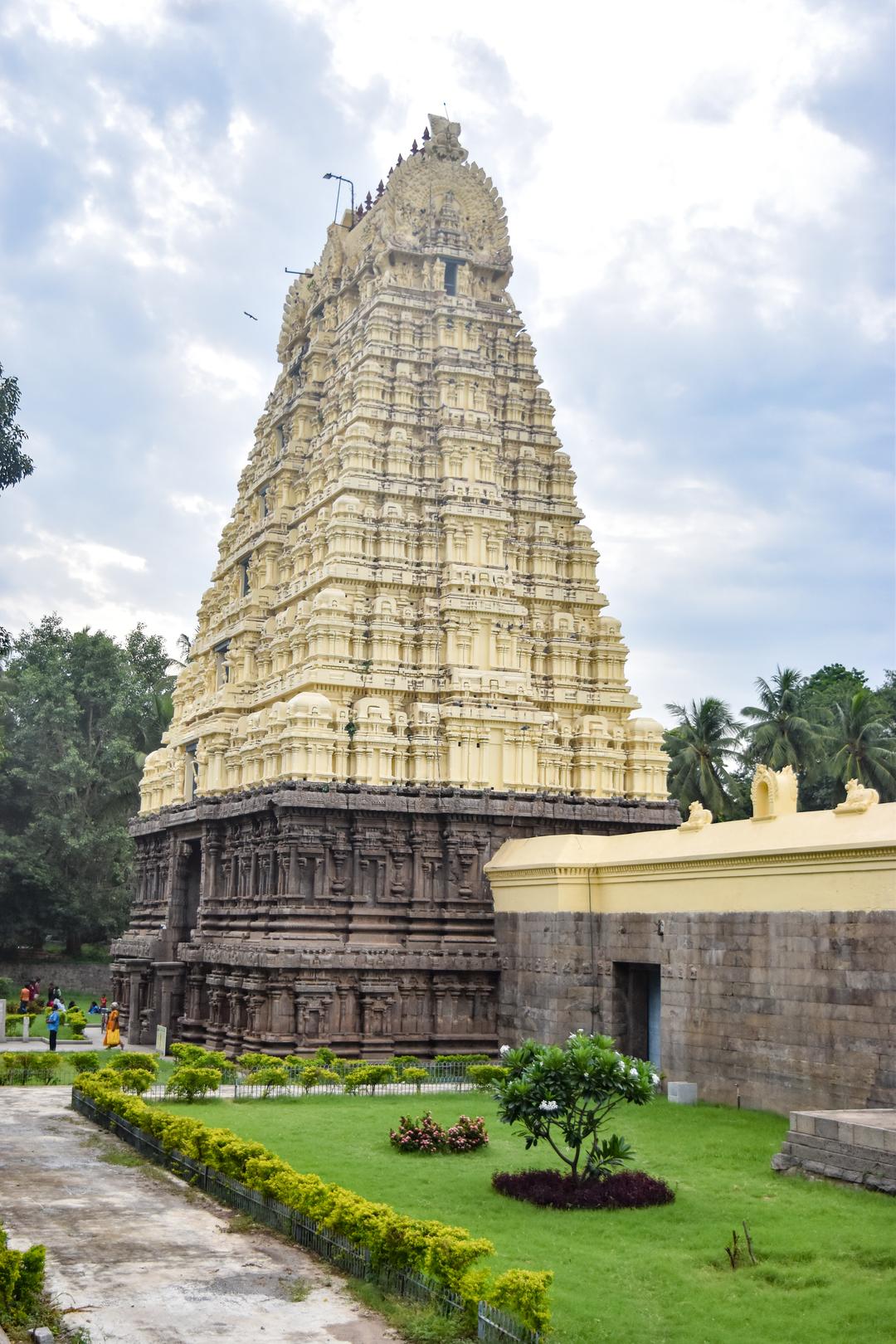
Vellore Fort: A Fortress of Legends and Legacy
Imagine standing before a temple so exquisitely carved that the stone seems to breathe, where every pillar tells a story and every sculpture captures a moment frozen in time across eight centuries. That's Ramappa Temple for you — not just an ancient monument, but a living poem in stone. Nestled amid the lush greenery of Palampet village in Telangana's Mulugu district, this UNESCO World Heritage Site has been humbling visitors for over 800 years. Locals simply call it Ramappa, and the moment you set eyes on its towering shikhara rising from the Deccan plains, you'll understand why the craftsmen who built it were called the finest in the world.
🏛️ Ramappa Temple, Telangana – Where Stone Breathes and History Sings
Imagine standing before a temple so exquisitely carved that the stone seems to breathe, where every pillar tells a story and every sculpture captures a moment frozen in time across eight centuries. That's Ramappa Temple for you — not just an ancient monument, but a living poem in stone. Nestled amid the lush greenery of Palampet village in Telangana's Mulugu district, this UNESCO World Heritage Site has been humbling visitors for over 800 years. Locals simply call it Ramappa, and the moment you set eyes on its towering shikhara rising from the Deccan plains, you'll understand why the craftsmen who built it were called the finest in the world.
📜 A Little Bit of History First
Ramappa Temple's story begins in 1213 CE, during the glorious reign of the Kakatiya dynasty — one of the most powerful and artistically gifted empires of medieval India. Built under the command of General Recharla Rudra, a military commander of King Ganapati Deva, the temple was dedicated to Lord Shiva. But it is the chief sculptor, Ramappa, whose genius was so extraordinary that the temple itself came to bear his name — a rare and beautiful honour in the history of Indian architecture.
The great traveller Marco Polo, who visited the Kakatiya kingdom in the 13th century, was so awestruck by its craftsmanship that he called it the most brilliant temple he had ever seen. In 2021, UNESCO recognised it as a World Heritage Site, finally giving the world a formal reason to look at what Telangana has quietly treasured for centuries.
✨ The Attractions That Will Leave You Breathless
The Ramappa Temple itself is the centrepiece, and it demands your full, unhurried attention. Built on a star-shaped platform — a signature Kakatiya design — the temple rises gracefully with a distinctive reddish-brown brick shikhara (tower) that is remarkably lightweight. The secret? The bricks were made with a unique technique that makes them float on water. Builders called them "floating bricks," and they were used specifically to reduce the weight on the structure above — an engineering marvel that has helped the temple survive centuries of time and tremors.
Step inside and let your eyes wander across the bracket figures — sensuous, joyful sculptures of dancers and musicians carved with breathtaking precision. Known as Madanikas, these female figures are celebrated as some of the finest examples of sculptural art in all of Indian history. Every expression, every gesture, every fold of fabric is rendered with a tenderness that makes you forget you are looking at stone.
The black basalt pillars of the temple are polished to a mirror-like sheen and ring like metal when tapped — a testament to the extraordinary skill of Kakatiya craftsmen. The ceilings are adorned with intricate lotus carvings, and the walls are covered with friezes depicting elephants, horses, and scenes from Hindu mythology.
Surrounding the main temple are two smaller shrines — the Kamesvara and Kakatiya Shiva temples — along with a beautiful Ramappa Lake, an artificial reservoir built by the Kakatiyas. A walk along the lake at golden hour, with the temple silhouette reflecting on the still water, is one of those rare travel moments that settles quietly into your soul.
🎭 Culture, People, and Local Life
The village of Palampet carries the quiet dignity of a place that has lived in the shadow of greatness for centuries. The locals are warm, unhurried, and genuinely proud of their heritage. Visit on a festival day — particularly Maha Shivaratri — and you'll witness the temple transformed into a vibrant celebration of devotion, with lamps, flowers, and chanting filling the air.
The region belongs to the Telangana heartland, and the cultural flavour is distinctly Deccan. You'll hear Telugu spoken with a gentle musical lilt, and the hospitality is of the kind that makes a stranger feel like a guest.
For food, try the local dhabas near the temple serving simple, hearty Telangana meals — rice, dal, tamarind-based curries, and the fiery gongura chutney that defines the region's cuisine. Nothing elaborate, everything honest.
🌤️ Best Time to Visit
The ideal time to visit Ramappa Temple is from October to March, when the weather is cool, skies are clear, and the surrounding landscape is green after the monsoon. Summers (April–June) can be intensely hot on the Deccan plateau, so early morning visits are advisable. The monsoon months (July–September) bring dramatic skies and a lush backdrop — beautiful for photography, though roads can occasionally be challenging.
🚗 How to Get There
✈️ By Air
The nearest airport is Rajiv Gandhi International Airport, Hyderabad, approximately 200 km from Palampet. Taxis and hired vehicles cover the distance comfortably in about four hours.
🚆 By Rail
The closest railway station is Warangal, roughly 77 km away, well-connected to Hyderabad, Vijayawada, and other major cities. From Warangal, hire a cab or take a local bus towards Mulugu and Palampet.
🛣️ By Road
Warangal and Mulugu are connected by state roads. From Warangal, the drive to Ramappa Temple takes about two hours through scenic Telangana countryside. Hyderabad to Palampet is approximately a four-hour road journey — entirely worthwhile.
📍 Nearby Places Worth Exploring
Ramappa Temple pairs beautifully with a wider Kakatiya heritage trail. Warangal Fort, with its iconic gateway arches, is an absolute must. The Thousand Pillar Temple in Hanamkonda is another Kakatiya masterpiece just 75 km away. Pakhal Lake and Eturnagaram Wildlife Sanctuary nearby offer nature escapes for those wanting to blend heritage with the outdoors.
❤️ Why You Simply Must Visit Ramappa Temple
Some temples are built to impress. Ramappa was built to endure — and to move you. It is the kind of place where you arrive as a tourist and leave as something quieter, something more thoughtful. The floating bricks, the dancing Madanikas, the mirror-polished pillars, the stillness of the lake at dusk — these are not things you photograph so much as carry with you long after you have left Palampet behind.
Telangana has been waiting patiently for the world to arrive at its doorstep. Ramappa Temple is the reason to finally make that journey.