📖 Introduction
2. Agra Standing on the banks of the Yamuna River, Agra ranks among India's most famous heritage cities and serves as a living testament to the grandeur of Mughal architecture and imperial ambition. As the former capital of the Mughal Empire during one of its most glorious periods, Agra is home to some of the finest examples of Indo-Islamic architecture in the world, structures that continue to draw millions of visitors each year from every corner of the globe. The city offers a journey back in time to an era of emperors, marble palaces, and architectural marvels that have stood for centuries as symbols of love, power, and artistic achievement.
✨ Why Visit Agra
Agra's primary identity is built around its role as the gateway to Mughal history. The city served as the political and cultural epicenter of the Mughal dynasty for significant stretches of its rule, and the architectural legacy left behind by emperors such as Akbar, Jahangir, and Shah Jahan remains remarkably well preserved. Walking through Agra's monuments is akin to walking through chapters of a dynasty that once controlled vast swathes of the Indian subcontinent and left behind a distinctive blend of Persian, Central Asian, and Indian architectural traditions.
The city's monuments carry the prestigious recognition of UNESCO World Heritage status, a designation that underscores their outstanding universal value and the importance of their preservation for future generations. This recognition has helped Agra maintain its monuments with a level of care and attention that ensures visitors can experience these structures much as they appeared centuries ago, with their intricate inlay work, calligraphy, and architectural details still largely intact.
Perhaps most significantly for tour planners and travelers alike, Agra forms one of the three essential pillars of India's famous Golden Triangle circuit, alongside Delhi and Jaipur. This well-established travel route has become the backbone of first-time visitor itineraries to India, offering a compact yet incredibly rich introduction to the country's history, culture, and architectural diversity within a relatively short and manageable travel distance, making Agra an almost unavoidable stop for anyone exploring northern India for the first time.
🏰 Key Attractions
🕌 Agra Fort
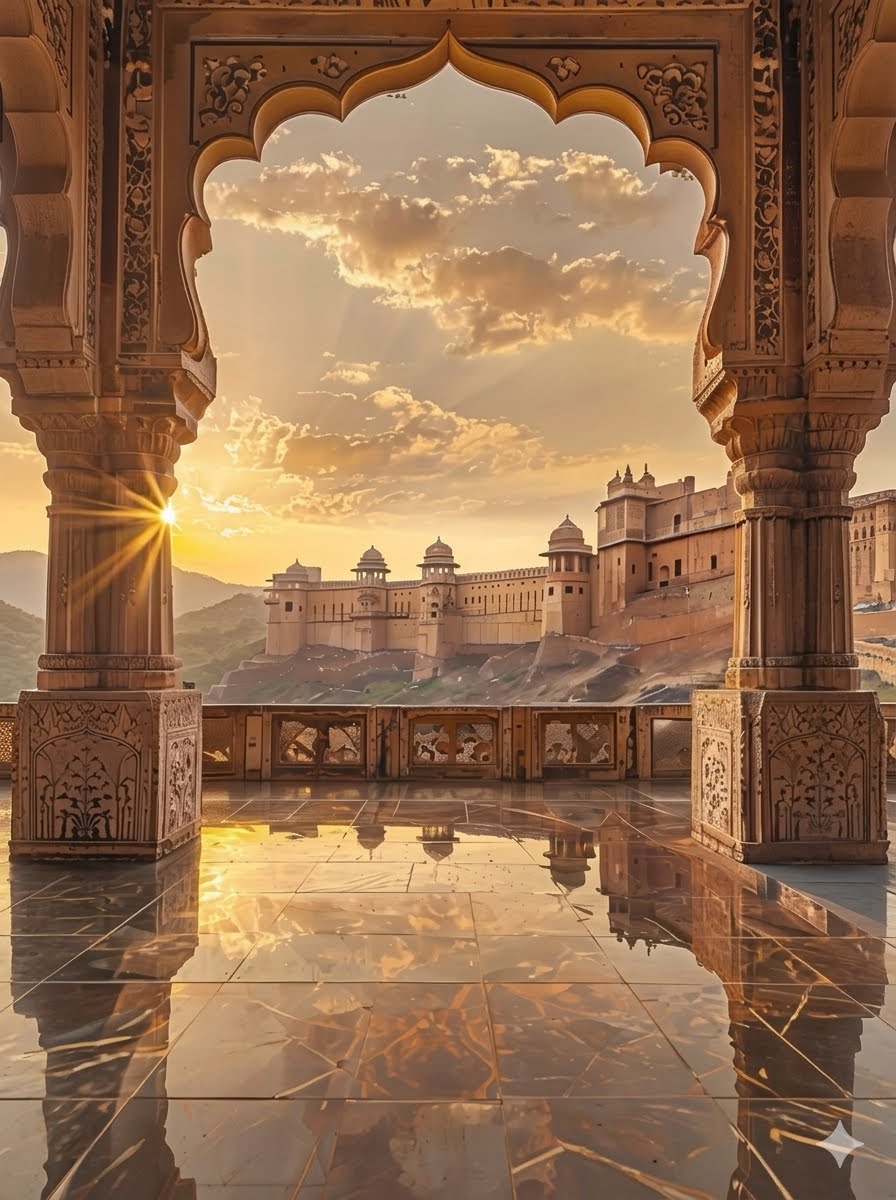
Agra Fort stands as one of the most imposing and historically significant structures in the city, a massive red sandstone fortress that served as the main residence of Mughal emperors until the capital was shifted to Delhi. Enclosed within its formidable walls are palaces, audience halls, mosques, and gardens that reflect the evolving architectural tastes of successive emperors, from the robust military fortifications of Akbar's era to the more refined marble pavilions added later by Shah Jahan. The fort offers visitors a chance to explore the inner workings of Mughal imperial life, including the chambers where Shah Jahan was famously held under house arrest by his son Aurangzeb, reportedly gazing across the river toward the monument he had built for his beloved wife.
🌅 Mehtab Bagh
Mehtab Bagh, often referred to as the Moonlight Garden, occupies a unique position directly across the Yamuna River, offering one of the most picturesque and tranquil vantage points in the entire city. This Mughal-era garden was originally designed as a viewing platform, laid out with symmetrical pathways, fountains, and plantings intended to be enjoyed under moonlight. Today, it provides photographers and visitors with a serene, less crowded alternative perspective, particularly stunning during sunset when the changing light creates dramatic reflections and silhouettes across the riverside landscape.
🏛️ Itmad-ud-Daulah
Itmad-ud-Daulah, often called the "Baby Taj," is the tomb of Mir Ghiyas Beg, a Persian nobleman whose daughter became the empress Nur Jahan. Built earlier than the Taj Mahal, this exquisite mausoleum is considered an important precursor in the development of Mughal architectural style, featuring delicate marble inlay work, intricate lattice screens, and a more intimate scale compared to the grander monuments of later emperors. Its detailed craftsmanship and the experimental architectural techniques used in its construction make it a fascinating stop for those interested in understanding the evolution of Mughal design before it reached its zenith.
📸 Activities
Heritage tours form the backbone of any Agra experience, with knowledgeable guides bringing to life the stories, legends, and historical context behind each monument. These tours often weave together narratives of imperial politics, architectural innovation, and personal dramas of the Mughal court, transforming what might otherwise be simply impressive buildings into vivid windows into a bygone era. Many tours can be customized to focus on specific themes, whether architectural details, historical timelines, or the personal stories of the rulers who commissioned these structures.
Photography enthusiasts find Agra to be an exceptionally rewarding destination, with opportunities ranging from classic sunrise and sunset shots of marble monuments bathed in changing light to detailed close-ups of intricate stone carvings, inlay work, and calligraphy. Locations such as Mehtab Bagh are particularly favored by photographers seeking unique angles and reflections that differ from the more commonly captured viewpoints, while the play of light on white marble throughout the day offers endless variations for capturing these iconic structures.
Cultural experiences in Agra extend beyond monument visits to include encounters with the city's living traditions of craftsmanship, particularly the marble inlay work known as pietra dura, a technique with roots tracing back to the same artisans who worked on the great Mughal monuments. Visitors can observe artisans practicing these centuries-old techniques, passed down through generations, creating intricate designs using semi-precious stones inlaid into marble, a tradition that continues to thrive in workshops around the city even today.
📅 Best Time to Visit
The ideal period to visit Agra spans from October to March, during which the weather remains relatively cool and comfortable, allowing for extended outdoor exploration of the various monuments without the discomfort of extreme heat. The summer months bring intense heat that can make walking through expansive fort complexes and garden areas quite challenging, while the winter months offer not only pleasant temperatures but also softer light conditions that are particularly favorable for photography and general sightseeing.
🚆 How to Reach Agra
Agra is well connected through multiple transportation options, though many travelers choose to combine their visit with other destinations on the Golden Triangle circuit. Agra Airport provides direct air connectivity for those flying in specifically, while Delhi International Airport serves as a major alternative gateway, with Agra easily reachable from Delhi by road or rail within a few hours, making it convenient for travelers arriving through India's primary international hub.
For rail travelers, Agra Cantt serves as the main railway station, well connected to Delhi and other major cities, including high-speed train options that have significantly reduced travel time between the two cities, making same-day or short overnight visits increasingly popular among time-constrained travelers.
🎯 Suggested Duration and Target Market
A stay of 1 to 2 nights is typically recommended for Agra, sufficient to cover the major monuments at a comfortable pace, including early morning visits when crowds are thinner and lighting conditions are most favorable for photography, along with time for exploring local craftsmanship and culinary specialties.
Agra holds strong appeal across several traveler segments, particularly those interested in heritage tourism drawn by its UNESCO-listed monuments and historical significance, luxury travelers who appreciate the city's range of high-end accommodations offering views of its iconic structures, and cultural travelers seeking to understand the artistic and architectural achievements of one of history's great empires. Its position within the Golden Triangle circuit ensures it remains a consistently high-demand destination for both domestic and international visitors exploring northern India.