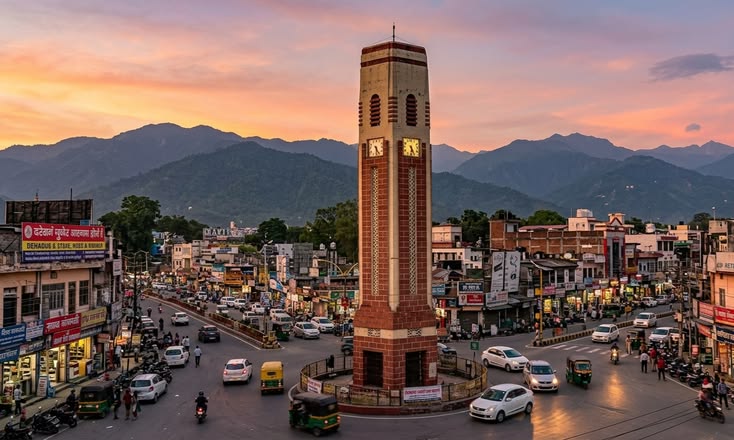
🏔️ Dehradun & Nainital Travel Guide
🌿 Destination Overview - Dehradun
Dehradun sits in the Doon Valley, framed by the Shivalik range to the south and the higher Himalayan foothills to the north — a location that has historically made it a natural transition point between the plains of North India and the mountainous terrain beyond. This geographical position has shaped much of the city's development, from its role as a base for forestry and educational institutions during the colonial period to its current status as the administrative capital of Uttarakhand and a key transportation hub for the entire state.
For many travelers, Dehradun functions primarily as a stopover — the point where they arrive by air or rail before continuing onward to destinations like Mussoorie, Rishikesh, or further into the mountains toward places like Chopta or the Valley of Flowers. However, this transit role shouldn't overshadow the genuine attractions Dehradun offers in its own right, nor the value of spending time in the city itself rather than simply passing through on the way to somewhere else.
✨ Why Dehradun Deserves Attention on Your Itinerary
🚪 A Major Gateway to the Himalayas
Dehradun's role as a gateway city is perhaps its most defining characteristic from a tourism perspective. As the location of Jolly Grant Airport and a significant railway terminus, the city serves as the practical starting and ending point for journeys to numerous destinations throughout Uttarakhand. This gateway function means that even travelers with no specific interest in Dehradun itself will likely pass through, making the question of whether to spend additional time here — rather than rushing straight through — a relevant consideration for trip planning.
🌳 A Blend of Urban Convenience and Natural Surroundings
Unlike purely administrative or commercial cities, Dehradun benefits from its valley location, with natural attractions including caves, springs, and forested areas located within relatively easy reach of the urban center. This proximity means that visitors can experience genuine natural attractions — caves, waterfalls, forest walks — without needing to travel significant distances from the city itself, offering a combination of urban amenities and nature access that's relatively unusual.
🏛️ Educational and Institutional Heritage
Dehradun has long been associated with prestigious educational institutions, a legacy that dates back to the colonial period when the city's climate and setting made it an attractive location for schools and research institutions. This educational heritage adds a dimension to the city beyond pure tourism, with institutions like the Forest Research Institute representing not just attractions for visitors but genuine centers of ongoing research and education — giving the city a sense of institutional significance that complements its tourism appeal.
🏨 A Practical Base for Business and Leisure
As the state capital, Dehradun naturally attracts business travel related to government and administrative functions, while its position as a gateway city also makes it a practical base for leisure travelers planning to explore the broader region. This combination of business and leisure relevance has helped support a tourism infrastructure that caters to both types of visitors, from business hotels to more leisure-oriented accommodations.
📍 Dehradun Key Attractions
🕳️ Robber's Cave
Known locally as Gucchupani, Robber's Cave is a natural rock formation through which a stream flows, creating a narrow gorge that visitors can walk through, often wading through the shallow water that runs along the cave floor. The cave's name derives from local legend regarding its historical use as a hideout, adding a layer of folklore to what is fundamentally a natural attraction.
The walk through the cave is generally considered accessible for most visitors, though the presence of water means appropriate footwear and a willingness to get at least partially wet are necessary considerations. The surrounding area, while developed to support visitor access, retains enough of its natural character to make the experience feel genuinely connected to the landscape rather than overly commercialized.
💧 Sahastradhara
Translating roughly to "thousand-fold spring," Sahastradhara is known for its sulfur springs, which have long been associated with various health benefits, drawing visitors interested in the springs' reputed therapeutic properties alongside those simply interested in the natural setting itself.
Like Robber's Cave, Sahastradhara's relative proximity to Dehradun makes it an accessible half-day excursion, suitable for visitors with limited time who still want to experience some of the natural attractions in the area surrounding the city.
🏛️ Forest Research Institute
Among Dehradun's most architecturally significant attractions, the Forest Research Institute represents both a functioning research institution and a notable example of colonial-era architecture, with its imposing main building and surrounding grounds offering visitors a glimpse into the city's institutional history.
For visitors interested in history, architecture, or the natural sciences, the Forest Research Institute offers a different kind of attraction compared to the natural sites of Robber's Cave and Sahastradhara.
🎯 Activities for Visitors
🏙️ City Tours
General city tours of Dehradun allow visitors to explore the urban landscape, including colonial-era buildings, markets, and other points of interest scattered throughout the city.
🌲 Nature Excursions
Half-day or full-day excursions to natural attractions like Robber's Cave and Sahastradhara represent some of the most popular activities for visitors with some time to spend in Dehradun.
🏛️ Heritage Exploration
Visits to sites like the Forest Research Institute, along with other colonial-era buildings and institutions scattered throughout the city, offer opportunities for heritage-focused exploration.
Recommended Places