📖 Introduction
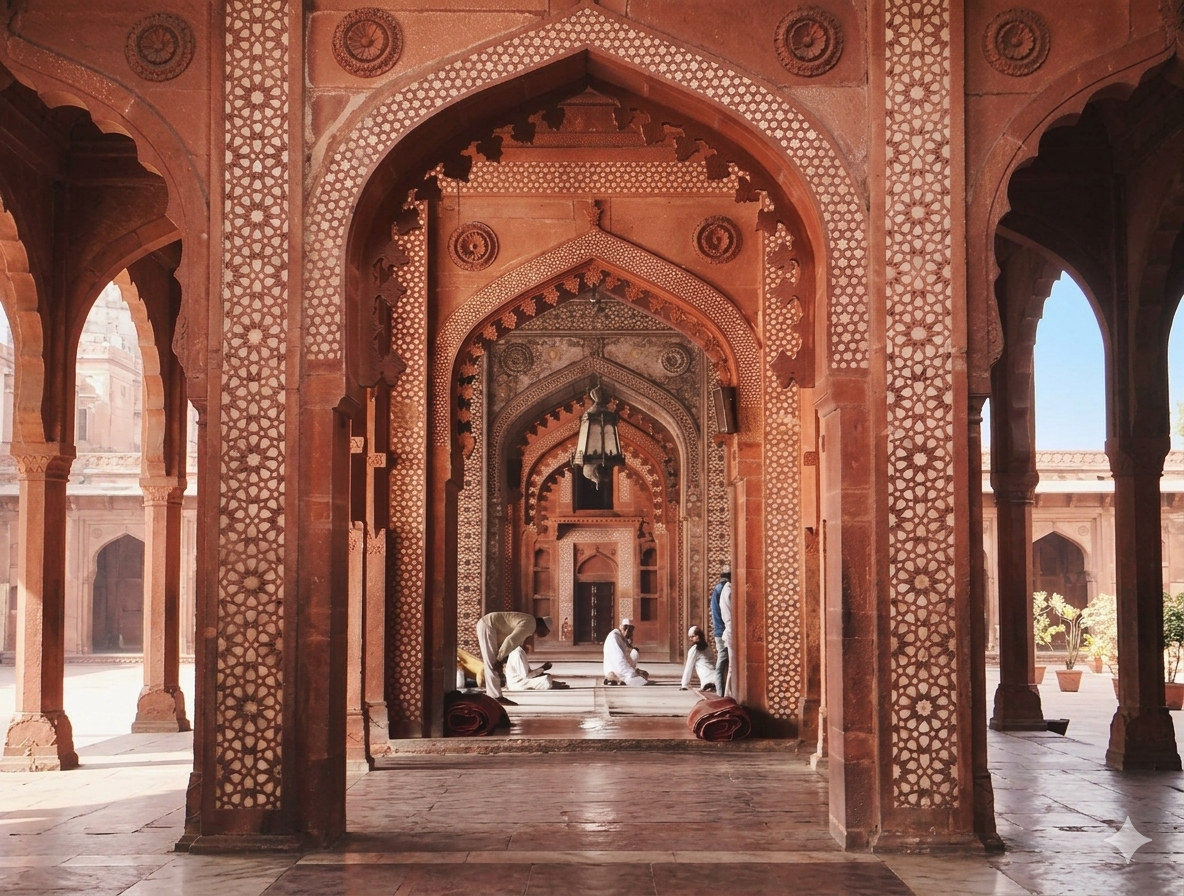
Fatehpur Sikri A short distance from Agra, the abandoned city of Fatehpur Sikri stands as one of the most evocative and architecturally significant sites in northern India, a sprawling complex of red sandstone palaces, courtyards, and mosques that once served as the capital of the Mughal Empire under Emperor Akbar. Built with great ambition and abandoned within decades of its completion, largely due to water scarcity issues that made the city unsustainable, Fatehpur Sikri today exists as a remarkably well-preserved snapshot of Mughal imperial life frozen at its peak, offering visitors a deeply atmospheric experience of walking through what was once one of the most important cities in the empire, now silent and largely empty of inhabitants.
✨ Why Visit Fatehpur Sikri
The recognition of Fatehpur Sikri as a UNESCO World Heritage Site reflects the outstanding architectural and historical value of this remarkable complex, an honor that acknowledges the site's importance not merely as a collection of impressive buildings but as a comprehensive representation of an entire planned city from the height of the Mughal era. This designation has ensured that the site receives the conservation attention necessary to preserve its structures, allowing visitors today to experience the scale and ambition of Akbar's vision in a way that few other sites of this period allow, given that Fatehpur Sikri was never significantly altered or built over after its abandonment, unlike many historic cities that have continued to evolve and change over subsequent centuries.
The Mughal architecture found throughout Fatehpur Sikri represents a particularly fascinating chapter in the broader story of Mughal architectural development, showcasing a distinctive synthesis of Persian, Central Asian, and indigenous Indian architectural traditions, including Hindu and Jain influences, that reflects Akbar's broader policy of cultural and religious synthesis during his reign. The buildings throughout the complex display remarkable craftsmanship in their carved sandstone details, intricate latticework, and the overall harmony of their design, with structures ranging from grand public spaces intended for ceremonial functions to more intimate private quarters that reveal the personal tastes and daily life of the imperial court.
As a historic royal city, Fatehpur Sikri offers visitors something quite different from many other Mughal sites, which often consist of isolated monuments such as tombs or forts. Here, an entire planned urban environment survives largely intact, including palaces for Akbar's various wives, administrative buildings, religious structures, and ceremonial spaces, all arranged according to a coherent overall plan that reflects both the practical requirements of governing an empire and the symbolic and ceremonial functions that royal architecture was expected to serve. Walking through this complex allows visitors to gain a much fuller sense of how Mughal imperial life was organized and experienced compared to viewing individual monuments in isolation.
🏛️ Key Highlights Within the Complex
🕌 Jama Masjid & Buland Darwaza
Among the most significant structures within Fatehpur Sikri is the Jama Masjid, one of the largest mosques in India at the time of its construction, featuring an impressive courtyard and the Buland Darwaza, an enormous gateway constructed to commemorate Akbar's military victories, which remains one of the tallest gateways in the world and creates a dramatic entrance experience for visitors approaching the mosque complex. Within the mosque's courtyard also stands the tomb of Sheikh Salim Chishti, a revered Sufi saint whose blessings Akbar sought for the birth of an heir, and whose dargah remains an active site of pilgrimage today, with visitors of various faiths continuing to visit and tie threads to the marble screens surrounding the tomb as expressions of hope and prayer.
🏛️ Diwan-i-Khas
The Diwan-i-Khas, or Hall of Private Audience, represents one of the more architecturally innovative structures within the complex, featuring a unique central pillar with elaborately carved brackets supporting a platform from which Akbar is believed to have presided over discussions, connected by narrow bridges to the corners of the room, creating a striking and symbolically significant architectural arrangement that has fascinated visitors and scholars for its unusual design and the various theories proposed regarding its specific function.
🏯 Panch Mahal
The Panch Mahal, a five-story pavilion with each level smaller than the one below, creating a pyramid-like structure with open sides supported by numerous columns, offered a cool, breezy retreat for the women of the court and demonstrates the sophisticated understanding of climate-responsive architecture employed throughout the complex, with the structure's open design allowing air to circulate freely even during the heat of the day.
🎯 Activities
Heritage tours through Fatehpur Sikri typically guide visitors through the major structures of the complex in a logical sequence, with guides providing historical context about Akbar's reign, the reasons behind the city's construction and subsequent abandonment, and the significance of individual buildings and the stories associated with them, including the various legends and historical accounts that surround figures like Sheikh Salim Chishti and the role his blessing is said to have played in the birth of Akbar's son and successor, Jahangir.
Photography at Fatehpur Sikri benefits enormously from the warm tones of the red sandstone used throughout the complex, which interacts beautifully with the changing light throughout the day, creating particularly striking conditions during early morning and late afternoon when the low angle of sunlight enhances the texture and carved details of the stonework. The relatively open, uncluttered nature of many areas within the complex, compared to more crowded monuments, also allows photographers greater freedom to compose images without significant interference from large crowds, particularly in sections of the complex slightly removed from the main entrance areas.
Cultural experiences at Fatehpur Sikri often extend into discussions of Akbar's broader religious and cultural policies, including his establishment of Din-i Ilahi, a syncretic religious philosophy that attempted to blend elements from various religious traditions practiced within his empire, reflecting the emperor's interest in religious tolerance and synthesis that is symbolically represented throughout the architecture of the city itself, where elements drawn from Hindu, Jain, and Islamic architectural traditions appear side by side, sometimes within the same structures.
📅 Best Time to Visit
The recommended period for visiting Fatehpur Sikri spans from October to March, when temperatures remain comfortable enough for the considerable amount of walking required to explore the extensive complex, much of which consists of open courtyards and exposed walkways offering little shade. The intense heat of the summer months in this region of Uttar Pradesh can make exploration of the site considerably more challenging, while the cooler winter months also provide more favorable lighting conditions for photography throughout the day.
🚆 Connectivity
Fatehpur Sikri's connectivity benefits from its proximity to Agra, with Agra Airport serving as the nearest air gateway, providing flight connections that allow visitors to combine a Fatehpur Sikri visit with their broader Agra itinerary. Fatehpur Sikri Railway Station provides direct rail access to the site itself, reflecting its importance as a heritage destination, though most visitors reach the site by road given its relatively short distance from Agra.
🎒 Suggested Duration and Target Market
A recommended stay of half a day to one full day reflects the scale of the complex and the depth of interest different visitors may have, with a half-day visit sufficient to see the major highlights for those combining the site with other Agra attractions on the same day, while a full day allows for more leisurely exploration of the complex's various sections, including areas slightly removed from the main highlights that reward visitors with additional architectural details and a greater sense of the city's original scale.
Fatehpur Sikri holds particular appeal for heritage travelers interested in Mughal history and architecture, particularly those wishing to understand the broader context of imperial city planning beyond individual monuments, and cultural tourism enthusiasts drawn by the site's unique status as a largely intact historic city that offers insight into the religious, political, and artistic synthesis that characterized Akbar's reign, making it a valuable complement to a visit to the Taj Mahal and Agra Fort for those seeking a more complete picture of Mughal achievements in this region of India.