```html
🏔️ Jammu & Kashmir
Overview
Jammu & Kashmir stands as one of the most celebrated, spiritually resonant, and naturally magnificent destinations in the world, a Union Territory whose landscapes have drawn poets, conquerors, pilgrims, and travellers for millennia and whose beauty remains, across every season, among the most breathtaking that the Indian subcontinent has to offer.
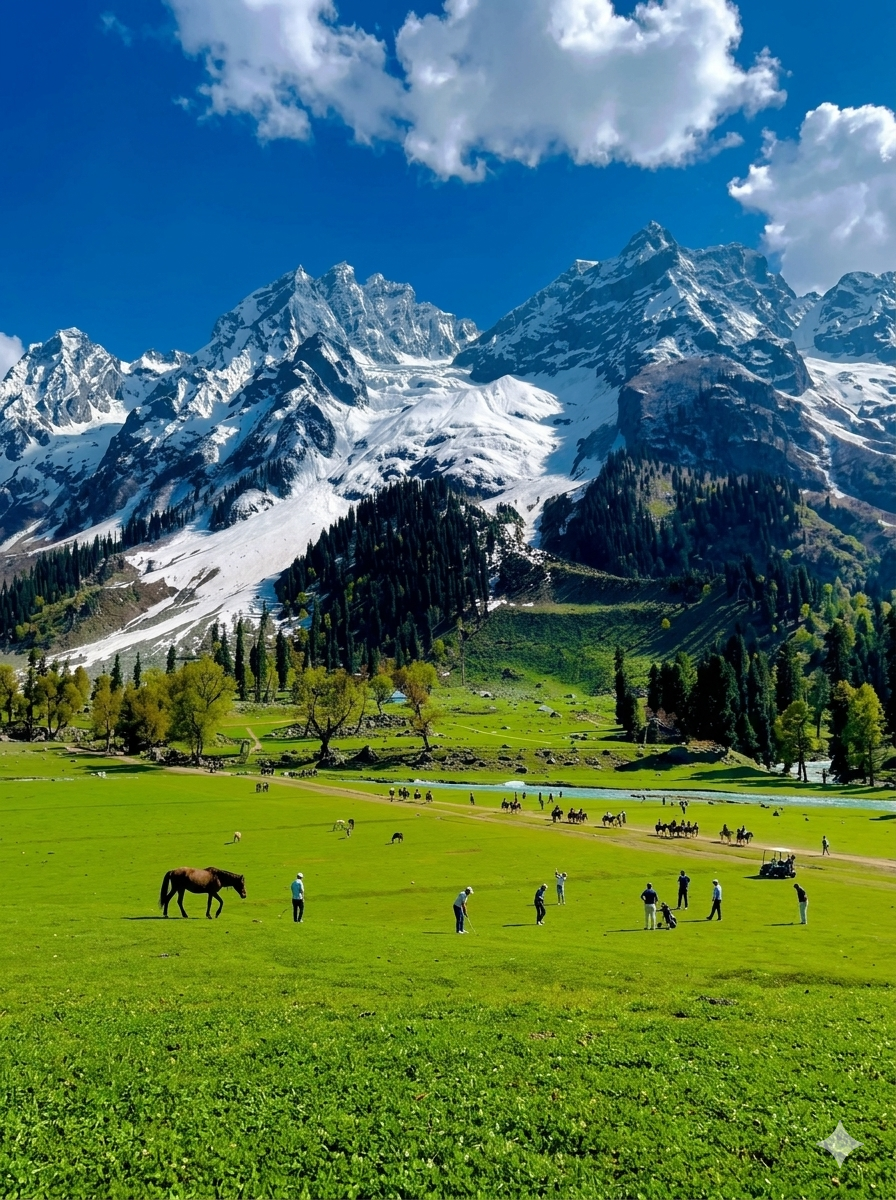
Nestled in the extreme north of India and framed by the towering ranges of the Himalayas, the Pir Panjal, the Zanskar, and the Karakoram, the territory encompasses a vast arc of geographical diversity — from the subtropical plains of Jammu in the south to the cool meadows of the Kashmir Valley at its centre to the high-altitude cold deserts of Ladakh in the north — each zone distinct in its climate, culture, landscape, and character.
The Kashmir Valley itself, cradled between mountain ranges at an altitude of approximately 1,600 metres and threaded by the Jhelum River, has been called Paradise on Earth since the Mughal emperors first established their summer courts here in the sixteenth and seventeenth centuries.
Its Dal Lake, its saffron fields, its walnut and chinar forests, its houseboats and shikaras, and the ring of snow-capped peaks that frame every view have made it one of the most enduringly iconic landscapes in all of Asia.
The city of Jammu, the winter capital and the gateway for millions of pilgrims making the journey to the Vaishno Devi shrine, carries a character shaped by its Dogra heritage, its temples, and its role as the transition point between the Punjab plains and the Himalayan highlands.
Together, these regions form a destination of extraordinary breadth, capable of offering a different and equally rewarding experience at every altitude and in every season.
✨ Why Visit Jammu & Kashmir
The most compelling reason to visit Jammu & Kashmir is the sheer and overwhelming scale of its natural beauty — a beauty that operates simultaneously at the intimate level of a garden of blooming tulips reflected in a still lake and at the vast level of Himalayan peaks rising above glaciated valleys into skies of an intensity of blue rarely seen elsewhere.
The territory also carries a spiritual significance that is rare in its plurality. The Vaishno Devi Temple in the Trikuta Hills, one of the most visited Hindu pilgrimage sites in India with millions of devotees making the journey each year, draws worshippers from every corner of the country.
The cultural richness of the territory — expressed through the Wazwan culinary tradition, the exquisite craftsmanship of Kashmiri shawls, carpet weaving, papier-mâché, and woodcarving, and the living folk music traditions of both the Kashmiri and Dogra communities — adds a further and equally compelling layer to what the destination offers.
📍 Key Highlights Within the Area
🚣 Dal Lake
Dal Lake, the iconic centrepiece of Srinagar and one of the most recognisable landscapes in India, is an experience unlike any other in the country.
🌷 Mughal Gardens
The Mughal Gardens — Shalimar Bagh, Nishat Bagh, and Chashme Shahi — laid out by the Mughal emperors in the seventeenth century on the banks of Dal Lake, represent the finest surviving examples of Mughal garden design in India outside the immediate surroundings of the Taj Mahal.
🎿 Gulmarg
Gulmarg, at an altitude of approximately 2,650 metres in the Pir Panjal range, is India's premier ski resort and home to the Gulmarg Gondola, one of the highest cable car systems in the world.
🏞️ Pahalgam & Sonamarg
Pahalgam, set in the Lidder Valley at approximately 2,200 metres and surrounded by forests of pine and fir above the fast-flowing Lidder River, is the base for some of the most celebrated trekking routes in the western Himalayas.
🛕 Heritage & Nature
The Shankaracharya Temple, perched on a hill above Srinagar and dating to the ninth century or earlier, overlooks the entire city and its surrounding lakes with a serenity that has drawn both pilgrims and travellers for over a thousand years.
🥾 Activities
Trekking across the ranges of Jammu & Kashmir offers some of the most rewarding high-altitude walking in Asia, with routes ranging from the popular Kashmir Great Lakes Trek to the challenging crossings of the Zanskar range and the Chadar Trek along the frozen Zanskar River in winter.
Skiing and snowboarding at Gulmarg, with its long runs, reliable snowfall, and the dramatic backdrop of the Himalayan range, represent the finest ski experience available anywhere in India.
A Shikara ride on Dal Lake or Nigeen Lake is one of the quintessential experiences of Srinagar, offering a slow and immersive passage across the water past floating gardens, reed beds, and the wooden facades of the houseboats.
The Kashmiri Wazwan feast — a multi-course ceremonial meal featuring elaborately prepared lamb dishes cooked by specialist chefs called wazas — is among the most distinctive culinary traditions in the subcontinent and a cultural experience as much as a meal.
The annual festivals of the territory, from the Hemis Festival of Ladakh to the Tulip Festival of Srinagar, add a cultural and celebratory dimension to the travel experience across different seasons.
ℹ️ Practical Information
📅 Best Time to Visit
The most favorable period to visit the Kashmir Valley is from March to October, with spring and autumn offering the most visually distinctive and climatically comfortable experiences.
❄️ Winter Season
Winter from December to February brings heavy snowfall to Gulmarg and the higher reaches of the valley, making it ideal for skiing and a dramatically atmospheric experience.
- ```