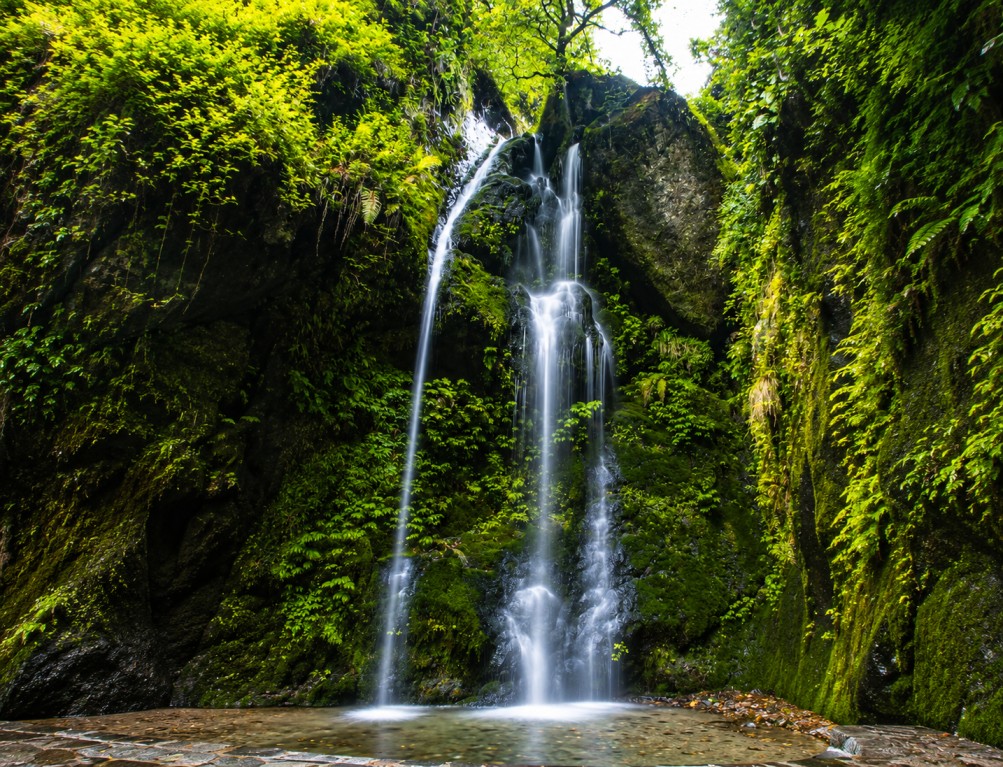
Jibhi Waterfall, a short-trail forest cascade in the Banjar Valley
A moss-and-cedar forest waterfall reached by an easy, short walk from Jibhi village — low physical barrier to entry, strong photography value, and a natural base point for onward routing to Tirthan Valley and Jalori Pass.
Landscape & Cultural Context
OverviewThe waterfall sits inside a cool, year-round forest cover of deodar, pine, oak and cedar, dropping over moss-covered rock into a clear pool. The short approach trail runs past wooden bridges and streams, which makes the walk itself part of the product rather than a distance to cover before the destination.
Seasonal character shifts noticeably: spring and summer bring wildflowers along the trail, monsoon turns the fall into a stronger cascade with vivid greenery, autumn adds golden foliage, and winter occasionally brings light snow — four distinct visual versions of the same short walk.
Jibhi village itself retains traditional Himachali architecture, apple orchards and terraced fields, with local festivals and fairs still part of everyday community life rather than staged for visitors.
The village also functions as a gateway point to Serolsar Lake and the Budhi Nagin Temple, which supports positioning Jibhi as a base for a multi-attraction Banjar Valley itinerary rather than a single-stop detour.
Key Attractions
Within the Banjar Valley baseJibhi Waterfall
The core stop, reached on a short, scenic walk with a wooden bridge viewpoint that is among the most photographed spots in the valley.
Jibhi Village
Traditional wooden cottages and riverside cafés serving as the operational base for stays, meals and onward logistics.
Tirthan Valley
River valley known for trout fishing and gateway access to the Great Himalayan National Park, a UNESCO World Heritage Site.
Jalori Pass & Serolsar Lake
Onward mountain-pass and lake-trek attractions reachable from the same Jibhi base, useful for multi-day itinerary stacking.
Chehni Kothi & Shringa Rishi Temple
A landmark timber-and-stone tower and a regional temple, both within short driving distance for cultural add-on days.
Shoja
Neighbouring village offering additional homestay capacity and access points toward Jalori Pass.
Activities & Seasonal Variation
Programming notesThe waterfall trail suits beginners and short-stay itineraries, while the surrounding valley supports longer programming — trekking onward to Jalori Pass, trout fishing on the Tirthan River with permits, and riverside camping for guests wanting more time in the forest.
Wildlife, Cuisine & Local Craft
Ground experienceWildlife — Surrounding forest supports Himalayan monal, pheasant species, barking deer, fox, langur and varied birdlife, with the adjoining Great Himalayan National Park adding rarer species such as Himalayan black bear, snow leopard, Himalayan tahr and musk deer to extended itineraries.
Cuisine — Cafés and homestays in Jibhi serve Siddu, Dham, Madra, Babru, Chha Gosht, fresh trout, rajma, local honey and herbal teas.
Craft & retail — Jibhi, Banjar and Kullu supply handwoven woollens, Kullu shawls, Himachali caps, wooden handicrafts, organic honey, herbal products, handmade soaps, dry fruit and local souvenirs.
Access & Logistics
Routing reference| Mode | Nearest point | Distance / note |
|---|---|---|
| Air | Kullu–Manali Airport, Bhuntar | Approx. 50 km from Jibhi |
| Rail (broad gauge) | Chandigarh | Nearest broad-gauge railhead |
| Rail (narrow gauge) | Joginder Nagar | Nearest narrow-gauge railhead |
| Road | Kullu, Banjar, Manali, Shimla | Regular bus and taxi service to Jibhi |
Seasonality Calendar
Route planningMarch–June and September–November bring the most stable trail conditions. Monsoon (July–August) intensifies the waterfall but leaves trails slippery — flag this in trip terms rather than avoiding the season outright, since the cascade is at its strongest then. Winter is quiet, with occasional light snowfall.