```html
🏔️ Ladakh
Cradled high within the folds of the Himalayas and the Karakoram range, Ladakh stands as one of the world's most extraordinary high-altitude destinations, a land of stark beauty where towering mountains, vast desert plateaus, turquoise lakes, and ancient Buddhist monasteries combine to create landscapes that feel almost otherworldly. Often described as a moonscape or a high-altitude desert, Ladakh's terrain offers a dramatic departure from anything most travelers have encountered before, while its deeply rooted Tibetan-Buddhist culture adds a profound spiritual and cultural dimension to its physical grandeur. For those willing to make the journey to these heights, Ladakh rewards with experiences that are both visually stunning and deeply transformative.
✨ Why Visit Ladakh
The defining characteristic of Ladakh is undoubtedly its Himalayan desert landscapes, a unique geographical phenomenon where the rain shadow effect of the surrounding mountain ranges creates an arid, high-altitude desert environment unlike anywhere else in India. The result is a terrain of dramatic contrasts, where barren brown mountains rise sharply against brilliant blue skies, rivers cut through valleys creating ribbons of green in an otherwise stark landscape, and snow-capped peaks tower in the distance even during the warmer months. This unusual combination of desert and mountain, of aridity and altitude, creates visual experiences that feel genuinely unlike anywhere else on the planet, drawing photographers, geologists, and curious travelers alike.
For adventure enthusiasts, Ladakh represents something of a holy grail, a true adventure paradise where some of the world's highest motorable roads, challenging trekking routes, and opportunities for high-altitude cycling and rafting combine to create a playground for those seeking physical challenge in dramatic settings. The sheer scale of the landscape, combined with the thin air at altitude, transforms even relatively simple activities into memorable achievements, while more serious adventurers can pursue some of the most demanding routes available anywhere in the world.
Ladakh's cultural identity is deeply shaped by its unique Tibetan-Buddhist heritage, a legacy that distinguishes it sharply from the rest of India and connects it culturally and historically to the broader Tibetan Buddhist world. Ancient monasteries perched on hilltops, prayer flags fluttering across mountain passes, chortens dotting the landscape, and a way of life shaped by Buddhist philosophy and practice create an atmosphere that feels both remote and deeply spiritual. This cultural dimension adds layers of meaning to the physical journey through Ladakh, transforming road trips and treks into encounters with living traditions that have persisted in these high valleys for centuries.
📍 Key Attractions
🏰 Leh Palace
Leh Palace stands as a striking architectural landmark overlooking the town of Leh, Ladakh's capital and primary hub for travelers. This nine-story palace, constructed in the seventeenth century and often compared in style to the Potala Palace in Lhasa, once served as the residence of the royal family of Ladakh before they relocated to Stok Palace. Though now partially in ruins, the palace offers visitors panoramic views over Leh town and the surrounding mountains, along with insight into the region's royal history and traditional Ladakhi architecture, characterized by its use of mud, stone, and wood in construction techniques adapted to the harsh high-altitude climate.
💙 Pangong Lake
Pangong Lake ranks among the most spectacular and recognizable sights in all of Ladakh, a vast high-altitude lake that stretches across the border into Tibet, known for its mesmerizing ability to shift through different shades of blue throughout the day depending on the angle of sunlight and atmospheric conditions. Surrounded by barren mountains and situated at an altitude that adds to the dramatic sense of remoteness, Pangong Lake has become an iconic destination, its surreal color palette and vast scale creating images that have become synonymous with Ladakh itself in popular imagination, partly amplified by its appearance in Bollywood films.
🧲 Magnetic Hill
Magnetic Hill presents one of Ladakh's most curious and talked-about attractions, a stretch of road where vehicles appear to defy gravity, seemingly rolling uphill when left in neutral. While the phenomenon is generally understood to be an optical illusion created by the surrounding landscape's slopes and the absence of clear visual reference points, the experience remains a popular and entertaining stop for travelers, often combined with visits to nearby attractions along the Leh-Kargil-Srinagar highway, including the confluence of the Indus and Zanskar rivers.
🏔️ Khardung La
Khardung La holds the distinction of being one of the highest motorable passes in the world, a mountain pass that has become a bucket-list destination for motorcycle enthusiasts and road trippers from across the globe. Standing at the pass, surrounded by snow even during summer months, with prayer flags whipping in the thin mountain air, offers a profound sense of achievement and scale that encapsulates much of what draws travelers to Ladakh in the first place. The pass also serves as a gateway to the Nubra Valley, opening up further exploration into some of Ladakh's more remote regions.
🚵 Activities
Road trips through Ladakh have achieved near-legendary status among travelers, with routes connecting Leh to destinations like Pangong Lake, Nubra Valley, and onward to Srinagar or Manali offering some of the most scenic drives imaginable, winding through high mountain passes, alongside glacial rivers, and across vast plateaus. Motorbike tours, in particular, have become almost synonymous with Ladakh travel, with riders from across India and the world undertaking journeys on routes that test both rider and machine against challenging terrain and altitude, creating bonds and memories that often become defining travel experiences.
Trekking in Ladakh offers access to remote valleys, traditional villages, and high mountain passes that remain inaccessible by road, providing a more intimate encounter with the landscape and the way of life of communities living at extreme altitudes. Routes range from relatively accessible multi-day treks suitable for reasonably fit travelers to demanding high-altitude expeditions for experienced trekkers, with the famous frozen river trek along the Zanskar Gorge during winter representing one of the region's most extraordinary and challenging experiences.
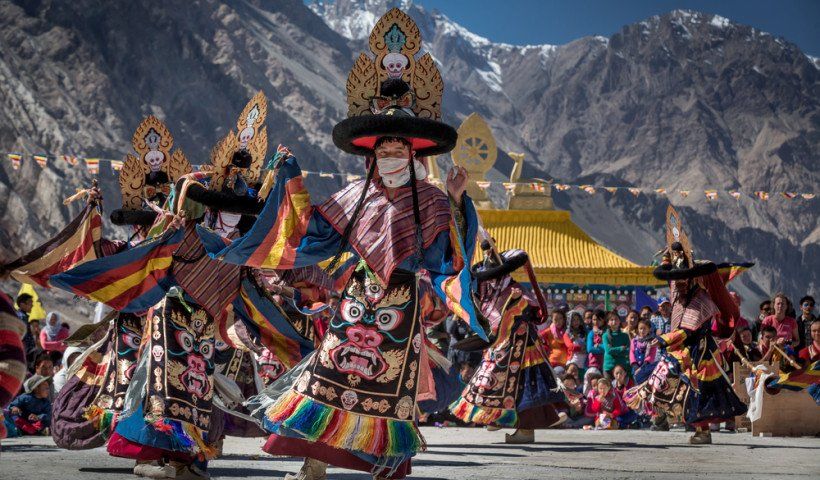
Monastery tours form an essential component of any Ladakh itinerary, with ancient gompas perched on hilltops and cliff faces throughout the region offering insight into Tibetan Buddhist philosophy, art, and architecture. Monasteries such as those found throughout the Indus Valley house ancient murals, statues, and manuscripts, while many remain active centers of monastic life where visitors can witness daily rituals, prayer ceremonies, and occasionally, colorful festivals featuring masked dances performed by monks.
ℹ️ Travel Information
📅 Best Time to Visit
The recommended period for visiting Ladakh runs from May to September, corresponding with the summer months when the region's high mountain passes become accessible after being closed by snow for much of the year. During this window, daytime temperatures become tolerable, roads connecting Leh to other parts of Ladakh and beyond open up, and the harsh winter conditions give way to relatively milder weather that makes outdoor activities and travel between locations feasible. Outside this window, much of Ladakh becomes extremely difficult or impossible to access by road.
✈️ How to Reach Ladakh
Ladakh's remote, high-altitude location means connectivity options are limited compared to most other destinations. The Kushok Bakula Rimpochee Airport in Leh serves as the primary gateway for most visitors, offering flights connected to major Indian cities and providing the fastest and most practical means of reaching the region, particularly important given the extreme distances and challenging terrain involved in overland travel.
For those traveling by rail, Jammu Tawi serves as the nearest railway station, located at a considerable distance of approximately 700 kilometers from Ladakh. This significant distance means that rail travel typically forms only the initial portion of a longer overland journey, usually combined with road travel through scenic but demanding mountain routes.
Nearby Places To Explore
```