👑 A Name Rooted in Legend
Morni Hills derives its name from a queen who is believed to have ruled the area — a detail that fits neatly with the region's layered past. Historically, Morni Hills has been associated with various dynasties that have left their mark on the land, including the Rajputs, Mughals, Chandelas, and the British colonial era. Traces of ancient forts and ruins hint at the area's historical and archaeological importance. Morni has never been a single-era place — it carries centuries of stories in its ridgelines and ruins, which gives even a casual visit a certain depth.
🌲 Landscapes and Natural Beauty
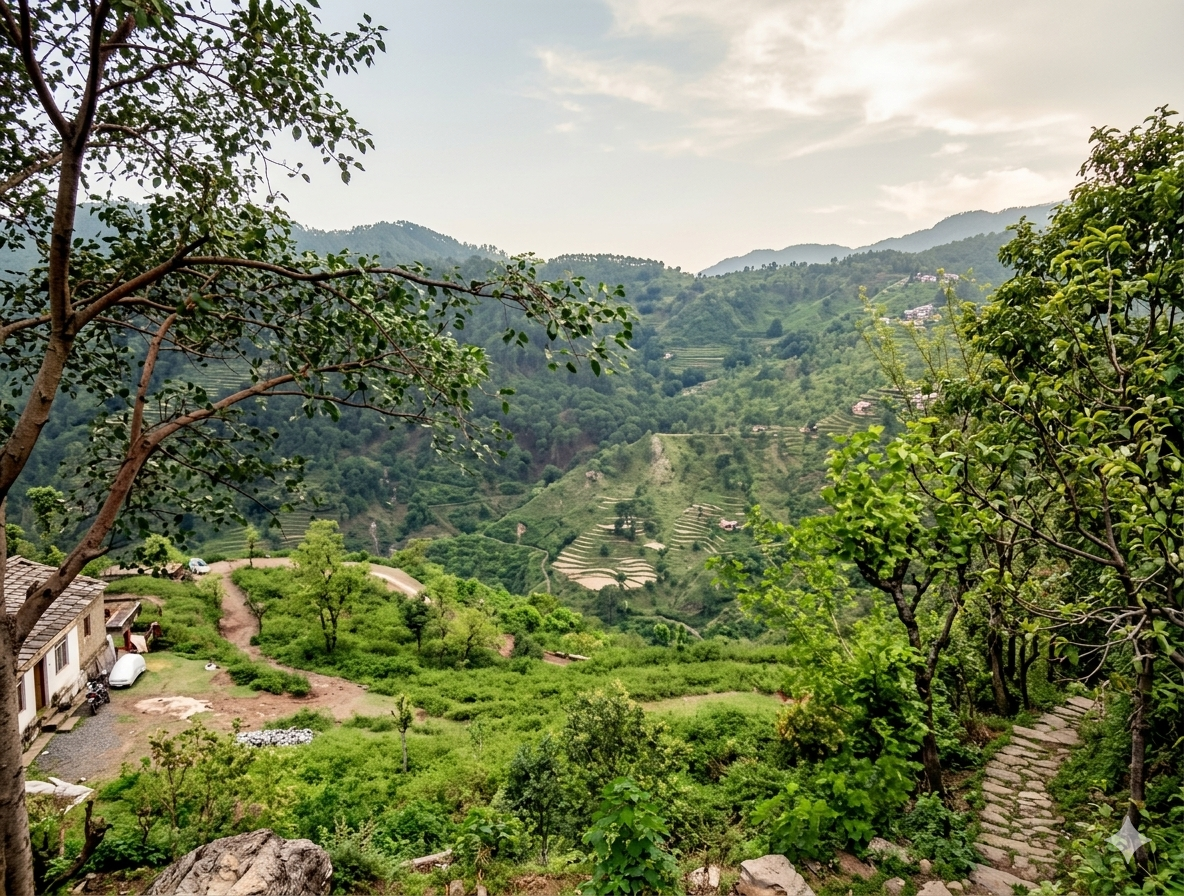
At an elevation of 3,600 feet above sea level, Morni has a fascinating range of flora and fauna. Pines crown the hilltops and trees like neem, oak, pipal, jamun, amaltas and jacaranda cover the slopes. When the flowering trees blossom, the hillsides are awash with colour, presenting a delightful sight.
The approach road from Panchkula winds through forested corridors that open intermittently to wide valley views — the kind of drive that makes you slow down without thinking about it. On clear days, the distant Himalayan foothills appear on the horizon, and the silence is noticeable even by hill station standards. This is countryside that hasn't been carved up for development, and it shows.
🚣 Tikkar Taal: The Heart of Morni
The area's most beloved landmark is Tikkar Taal, a pair of lakes — Bada Taal (the larger) and Chhota Taal (the smaller) — that have puzzled and delighted visitors for generations. There are two large lakes or tals, which seem to be interconnected mysteriously even though they are separated by a hillock — the water level in both the tals always remains the same. Locals consider the lake auspicious and gather here on ceremonial occasions. A small temple on the banks contains a Trimurti (the Hindu Trinity), which dates back to the 12th century AD.
The way leading up to the lake is through dense forests, which make it more attractive with its picturesque beauty and soul-pleasing views of the Shivalik range. The trek is of moderate difficulty and hence may be undertaken by almost any amateur or professional trekker. Boating is available at Tikkar Taal, with paddle boats and rowboats for rent — particularly enjoyable in the morning or late afternoon when the light is gentler and the water calmer. For families, it's an easy, satisfying outing. For couples, it's quietly romantic. For photographers, the reflections on the water at golden hour are genuinely beautiful.
🏰 Morni Fort and the Adventure Park
Perched on a hilltop above the village, Morni Fort is a 17th-century structure that rewards the climb with commanding views of the valley below. The fort is not just a mere fort structure — it has now been converted into a museum that highlights art, craft, and local heritage. It's also a great spot for photography. The fort's Mughal-style arches and large courtyard give architectural photographers plenty to work with, and the surrounding silence adds to the atmosphere.
Immediately adjacent is an Adventure Park that brings the energy level up considerably. The adventure park near the Morni Fort boasts Burma bridges, ziplining, and climbing walls to get your adrenaline going. It's the most family-friendly concentration of activity in Morni Hills, and children seem to find it difficult to leave.
⛰️ Karoh Peak: The High Point — Literally
For the more committed trekker, Karoh Peak is the headline draw. Located on the border of Himachal Pradesh and Haryana, Karoh Peak is the highest point in Haryana and is also home to several temples. It takes about an hour to reach the peak and 40 minutes to return. Karoh Peak is home to a number of birds including the Himalayan Bulbul and Crested Serpent Eagle, and is also a stop for many migratory birds. Sunrise from the peak is worth every minute of the ascent.
🦅 Wildlife and Birdwatching
Morni Hills genuinely delivers for wildlife and birding enthusiasts. Morni is a paradise for wildlife enthusiasts and birdwatchers with its teeming population of birds like quails, sand grouse, and doves, as well as animals like jackals, hyenas, sambhars, and even a jungle cat or two. Numerous bird species can be seen here including Wallcreeper, Crested Kingfisher, Bar-tailed Treecreeper, Blue Peafowl, Kalij Pheasant, Red Junglefowl, Grey Francolin, and Oriental Turtle Dove. Early morning walks through the pine forest, binoculars in hand, are among the most rewarding hours you can spend here.
🛕 Temples and Spiritual Stops
Beyond the lakes and fort, Morni Hills has a quiet spiritual dimension. Thakurdwara Temple, dedicated to Lord Krishna and considered the oldest place of worship in the area, sits in Morni Village surrounded by a tranquil atmosphere well-suited to meditation and reflection. Sidhpeeth Sri Mata Baglamukhi Mandir draws visitors from across the country for its religious significance as a Shakti Peeth, and a community bhandara (free meal) is typically available after prayers — a warm local tradition that outsiders are genuinely welcome to join.
🍲 Food: Simple, Honest Haryanvi Cooking
Morni Hills is not a restaurant destination, but the food here is satisfying and authentic. Mountain Quail is a popular choice located near Tikkar Taal, serving homestyle vegetarian and non-vegetarian food with scenic views. For a more casual bite, Lohagarh Farms offers traditional Haryanvi cuisine in a rustic village setting. Authentic Haryanvi food like bajra roti, lassi, and seasonal curries are the staples worth seeking out. The lassi here is thick, cold, and made with the kind of unhurried care that urban cafés spend years trying to replicate.
🛍️ Shopping and Local Crafts
Morni's market is small but characterful. The museum and local market exhibit terracotta pottery, handwoven textiles, folk embroidery, and wooden carvings — all representative of Haryanvi craft traditions that don't get nearly enough attention from mainstream tourists. These make for meaningful, lightweight souvenirs that support local artisans directly.
📍 Nearby Attractions
Day-trippers can extend the experience outward. Pinjore Gardens (Yadavindra Gardens), built during the Mughal era, are a short drive away and worth a stroll through their terraced lawns and cascading fountains. Gurudwara Nada Sahib near Panchkula is a spiritually uplifting stop on the way in or out. Ramgarh Fort, built by Raja Ram Chander, is now a heritage hotel and offers ancient sundials, deep wells, and what is reportedly the tallest door in India.
❤️ Who Will Love Morni Hills?
Nature lovers will find the pine forests, lakeside trails, and wildlife sightings genuinely rewarding. Photographers have extraordinary variety — misty mornings, reflective lakes, fort ruins, flowering hillsides, and birds at every turn. Families get the adventure park, boating, and picnic spots around Tikkar Taal. Couples will appreciate the unhurried pace and the lack of tourist noise. Solo travelers can cover the key attractions comfortably in a day and spend the rest of the time simply being quiet in the hills — something Morni facilitates unusually well. Adventure enthusiasts have trekking, rock climbing, ziplining, and the Karoh Peak ascent to keep them busy.
🌤️ Best Time to Visit
The best time to visit Morni Hills is from September to March, to enjoy pleasant weather and sun-kissed mountains. Winter months bring cool, clear air and the best conditions for trekking and birdwatching. Monsoon (July to September) turns the hills an intense, lush green — beautiful to look at, but roads can become slippery and some trails are best avoided. Summer is manageable at elevation but warm enough to limit the appeal of long outdoor stretches.
🚗 How to Reach Morni Hills
🛣️ By Road
The most practical way to reach Morni Hills is by road. Morni Hills is approximately 35 km from Panchkula city, making it accessible for a day trip. The roads are generally well-maintained, though some stretches can be winding as you ascend into the hills.
✈️ By Air
Chandigarh Airport is the nearest major airport.
🚆 By Rail
Kalka Railway Station is the closest railhead, from where taxis and local transport are available.
🚘 From Delhi
Driving from Delhi takes roughly five hours via NH-44.
🧭 Travel Tips
Carry cash — many small eateries and stalls don't accept cards. Pack comfortable trekking shoes and a light jacket even in summer, as evenings cool quickly at elevation. Mobile network coverage can be patchy in the deeper forest areas, so download offline maps before you go. To enjoy the tranquility and stunning vistas, aim for weekdays or early mornings to avoid the weekend rush. And give yourself at least one full morning with no particular agenda — Morni Hills rewards the traveler who slows down enough to actually notice where they are.