🏜️ Nubra Valley
Tucked away beyond the towering Khardung La pass, Nubra Valley unfolds as one of the most surreal and visually arresting landscapes in all of Ladakh, a place where rolling sand dunes rise improbably against a backdrop of snow-capped Himalayan peaks, and where double-humped Bactrian camels, descendants of those once used along the ancient Silk Route, still roam across the cold desert terrain. This unique convergence of desert and mountain, of arid sands and glacial rivers, creates a landscape so unexpected that many first-time visitors find it difficult to reconcile what they are seeing with their preconceived notions of the Himalayas, making Nubra Valley one of the most memorable extensions of any Ladakh journey.
✨ Why Visit Nubra Valley
The defining characteristic of Nubra Valley, and the primary reason it draws travelers from across the world, is its status as a genuine desert within the Himalayas. At an altitude that would typically be associated with alpine landscapes, Nubra instead presents visitors with expansive sand dunes, a phenomenon created by the unique geography and rain shadow effects of the surrounding mountain ranges combined with sediment deposits from the Shyok and Nubra rivers. This juxtaposition of golden sand against the backdrop of towering snow-covered peaks creates a landscape so visually striking that it has become one of the most photographed and discussed locations within the broader Ladakh region.
Closely tied to this desert landscape is the opportunity for Bactrian camel rides, an experience that has become almost synonymous with a visit to Nubra Valley. These double-humped camels, a species more commonly associated with Central Asia and the historic Silk Route trading caravans that once passed through this region, were originally brought to Ladakh to facilitate trade between India and Central Asia. Today, encountering these distinctive animals against the backdrop of sand dunes and mountains offers visitors a tangible connection to the historical trade routes that once linked this remote valley to a much wider world, while also providing a memorable and somewhat whimsical activity that feels distinctly different from typical Himalayan experiences.
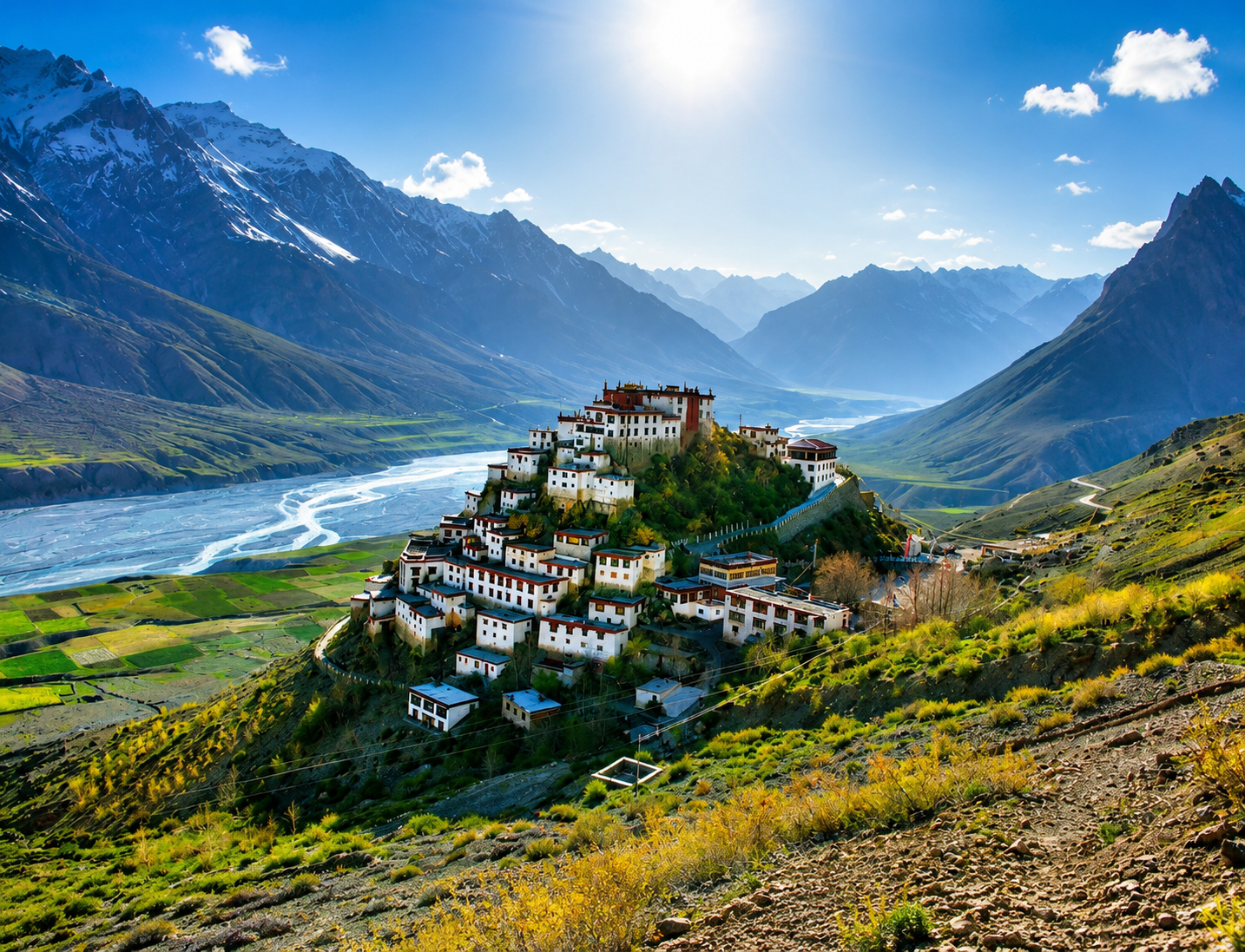
Beyond its desert and camel experiences, Nubra Valley offers stunning mountain scenery that rivals anything found elsewhere in Ladakh. The valley's relatively lower altitude compared to other parts of Ladakh, combined with the presence of rivers that bring greater vegetation and greenery to certain areas, creates a landscape of remarkable diversity within a relatively compact geographic area, ranging from stark desert terrain to lush riverside oases, all framed by some of the most dramatic mountain backdrops in the region.
📍 Key Attractions
🏜️ Hunder Sand Dunes
The Hunder Sand Dunes represent the most iconic and visually distinctive feature of Nubra Valley, a stretch of rolling sand dunes that seem entirely out of place given the surrounding high-altitude mountain environment. These dunes have become the primary location for experiencing Bactrian camel rides, with visitors able to traverse the sandy terrain atop these unusual animals while taking in views of the surrounding mountains and the Shyok River winding through the valley below. The contrast of golden sand, blue sky, and white-capped peaks creates a setting that feels almost composited, yet exists entirely naturally, making it an essential stop for photographers and casual visitors alike.
🏯 Diskit Monastery
Diskit Monastery, perched dramatically on a hilltop overlooking the valley, stands as the oldest and largest monastery in Nubra Valley, belonging to the Gelugpa sect of Tibetan Buddhism. The monastery complex houses ancient artifacts, statues, and murals that offer insight into the region's deep Buddhist heritage, while its elevated position provides sweeping panoramic views across the valley below. Perhaps most striking is the enormous statue of Maitreya Buddha, facing down the valley toward Pakistan, a colossal figure that has become a landmark visible from considerable distances and serves as a powerful symbol of the spiritual significance this region holds for its inhabitants.
🏡 Turtuk Village
Turtuk Village offers a markedly different experience from the rest of Nubra Valley, both culturally and historically. This small village, located near the Line of Control and only opened to tourists relatively recently, was historically part of Baltistan and retains a distinct cultural identity influenced by Balti traditions, differing notably from the Tibetan Buddhist culture more commonly associated with Ladakh. The village's terraced fields, traditional stone and wood architecture, apricot orchards, and predominantly Muslim population create a unique cultural enclave that offers visitors insight into the complex historical and cultural geography of this border region, while its relatively recent opening to tourism gives it a sense of discovery that few other accessible destinations in Ladakh can match.
🎒 Activities
Camel safaris across the Hunder Sand Dunes represent the signature activity associated with Nubra Valley, offering visitors a chance to experience these unusual landscapes from the back of a Bactrian camel, an experience that combines novelty, photographic opportunity, and a tangible link to the historic trade routes that once connected this region to Central Asia and beyond. The relatively gentle pace of these rides allows visitors to fully absorb the surreal scenery surrounding them, often considered one of the more unexpectedly memorable experiences of an entire Ladakh trip.
Camping in Nubra Valley has grown increasingly popular, with riverside locations and areas near the sand dunes offering opportunities to spend nights under some of the clearest and most star-filled skies imaginable, given the region's high altitude, low humidity, and minimal light pollution. These camping experiences range from relatively basic setups to increasingly luxurious glamping options that have emerged in recent years, catering to travelers seeking to combine adventure with comfort while experiencing the valley's dramatic nighttime skies and the profound silence that descends across the landscape after dark.
Photography opportunities throughout Nubra Valley are virtually endless, given the diversity of landscapes contained within a relatively compact area, from the golden hues of the sand dunes at sunrise and sunset to the stark beauty of the surrounding mountains, the greenery of riverside villages, and the cultural richness found in places like Turtuk. The valley's relatively lower altitude compared to other parts of Ladakh also means that photographers can spend more time outdoors without the same level of exertion required at higher elevations, allowing for more extended and comfortable photography sessions.
Cultural tours through Nubra Valley offer insight into the diverse communities that call this region home, from the Buddhist traditions centered around monasteries like Diskit to the distinct Balti culture found in villages like Turtuk. These tours often include visits to local homes, interactions with residents, and opportunities to learn about traditional agricultural practices adapted to this unique high-altitude desert environment, providing a more intimate and human dimension to the dramatic landscapes that initially draw most visitors to the region.
📅 Best Time to Visit
The recommended period for visiting Nubra Valley aligns with the broader Ladakh travel season, spanning from May to September. During these months, the mountain passes that provide access to the valley, including Khardung La, remain open and navigable, while temperatures across the valley become comfortable enough for camping, camel safaris, and extended outdoor exploration. Outside this window, the passes connecting Nubra Valley to Leh typically close due to heavy snowfall, making the region largely inaccessible.
🧭 Suggested Duration and Target Market
A stay of 2 to 3 nights is generally recommended for Nubra Valley, providing sufficient time to experience the Hunder Sand Dunes and camel safari, visit Diskit Monastery, and make the journey out to Turtuk Village, while also allowing for at least one night of camping to fully appreciate the valley's renowned night skies and tranquil atmosphere.
Nubra Valley holds particular appeal for adventure travelers drawn by its unique landscape and activities found nowhere else in the region, luxury travelers increasingly attracted by the growth of high-end camping and accommodation options that allow them to experience this remote destination in comfort, and culture-focused travelers interested in the diverse communities and historical trade route connections that have shaped this valley's identity. Combined with its proximity to Leh via Khardung La, Nubra Valley has become an essential extension for travelers seeking to experience the full diversity of what Ladakh has to offer beyond the more commonly visited areas around Leh and Pangong Lake.
Nearby Attractions