🏛️ Introduction
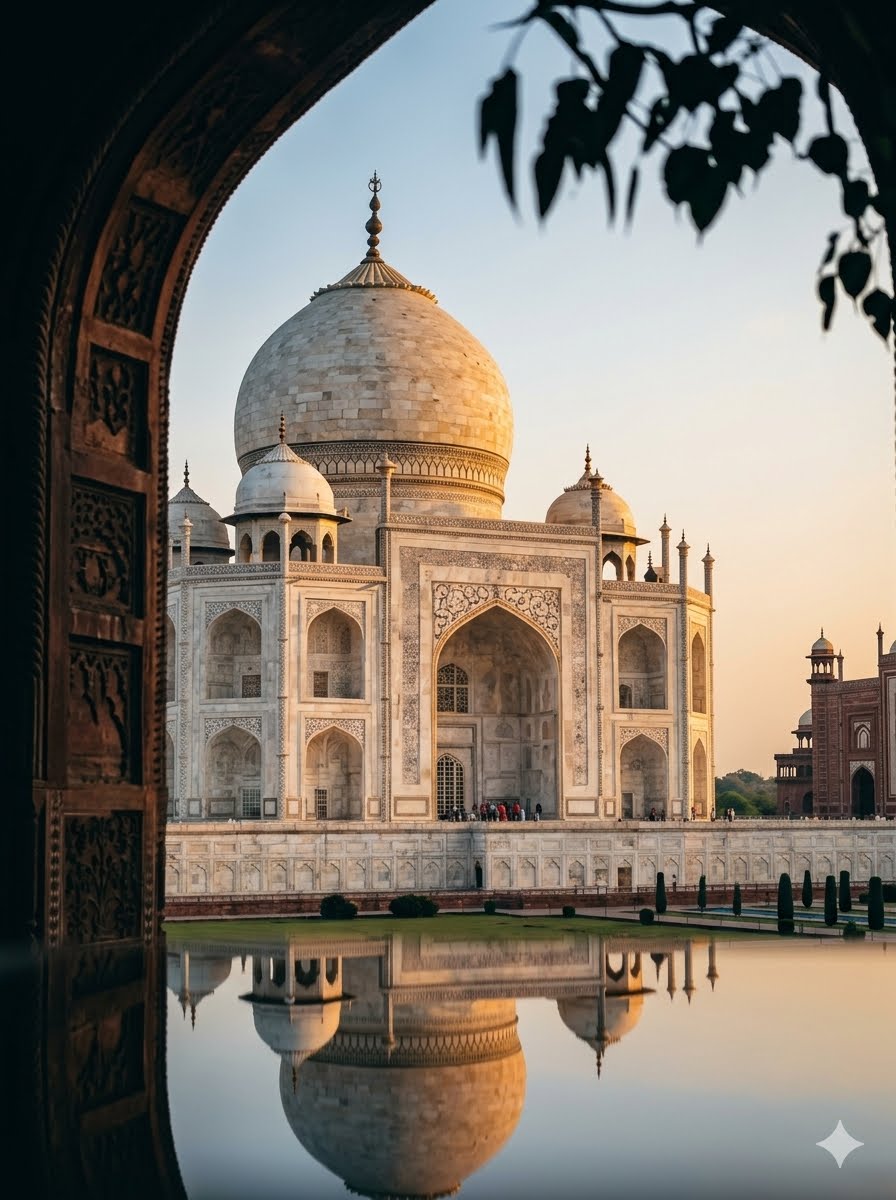
Taj Mahal Rising in luminous white marble against the skyline of Agra, the Taj Mahal stands as one of the most recognizable and revered structures ever created by human hands. Counted among the Seven Wonders of the World, this extraordinary mausoleum represents not merely a building but an idea, an embodiment of devotion translated into architecture on a scale and with a precision that continues to astonish visitors nearly four centuries after its completion. For countless travelers, the Taj Mahal is not simply a stop on an itinerary but the very reason an entire journey to India is undertaken.
✨ Why Visit the Taj Mahal
The Taj Mahal's designation as a UNESCO World Heritage Site reflects its recognition as a monument of outstanding universal value, an honor that places it among the most important cultural and architectural treasures on the planet. This status is not merely ceremonial; it represents an acknowledgment of the monument's unparalleled contribution to world architecture, its role in bridging Persian, Islamic, Ottoman, and Indian artistic traditions into a singular cohesive masterpiece, and its enduring influence on architectural design across centuries and continents.
Beyond its architectural significance, the Taj Mahal carries a narrative that has captured imaginations across the world, that of a monument built by the Mughal emperor Shah Jahan as a mausoleum for his beloved wife Mumtaz Mahal, who died during childbirth. This story has elevated the Taj Mahal into a global symbol of eternal love, a status that transcends its function as a tomb and transforms it into a destination of pilgrimage for couples, romantics, and anyone drawn to stories of devotion that have endured the test of time. This symbolic weight is part of what makes a visit to the Taj Mahal feel different from visiting other historical monuments, as visitors often arrive carrying not just curiosity about history but an emotional connection to the story itself.
As the most visited monument in India, the Taj Mahal occupies a singular position in the country's tourism landscape. It serves as the anchor point around which countless itineraries are built, the image most commonly associated with India in the global imagination, and often the single most anticipated moment of an entire trip for first-time visitors. This status as the country's premier tourist attraction has also ensured that the infrastructure surrounding the monument, from visitor management to conservation efforts, receives significant attention and investment, helping preserve the experience for the millions who visit each year.
🌟 The Experience of Visiting
What strikes most visitors upon their first sight of the Taj Mahal is the sheer scale combined with an almost impossible delicacy. The monument's white marble facade is inlaid with semi-precious stones in intricate floral and geometric patterns, a technique known as pietra dura, creating designs that appear almost painted from a distance but reveal themselves as elaborate stone inlay work upon closer inspection. The four minarets that flank the main structure, the perfectly symmetrical gardens leading up to it, and the reflecting pools that capture its image all contribute to a sense of harmony and proportion that feels almost otherworldly.
One of the most remarkable qualities of the Taj Mahal is how dramatically its appearance changes throughout the day and across seasons. The marble seems to shift in color depending on the light, appearing pinkish in the early morning, brilliant white under the midday sun, and golden as the evening light fades, while on nights of the full moon, the monument takes on an almost ethereal glow. This characteristic has made the Taj Mahal a subject of endless fascination for photographers and artists, each visit potentially offering a different visual experience depending on timing and weather conditions.
📸 Activities
Sunrise tours represent perhaps the most coveted experience associated with the Taj Mahal, and for good reason. Arriving at the monument in the early morning hours offers several distinct advantages, including significantly smaller crowds compared to later in the day, softer and more flattering light for both viewing and photography, and cooler temperatures that make the experience more comfortable, particularly during warmer months. The combination of mist that sometimes lingers in the early morning, the changing colors of dawn light on the marble, and the relative tranquility creates an atmosphere that many describe as deeply moving, allowing for a more contemplative encounter with the monument before it becomes filled with visitors.
Heritage photography at the Taj Mahal extends far beyond simply capturing the iconic frontal view that has become so familiar through countless images. Experienced photographers and guides can lead visitors to alternative vantage points and angles that reveal different facets of the monument's architecture, from detailed shots of the inlay work and calligraphy that adorns its surfaces to wider compositions that incorporate the surrounding gardens, gateways, and reflecting pools. The interplay of light, shadow, and reflection throughout the complex offers endless creative possibilities, making photography not just a way to document the visit but an integral part of engaging with the monument's design.
Cultural experiences centered around the Taj Mahal often delve into the historical context that gave rise to its construction, exploring the love story between Shah Jahan and Mumtaz Mahal, the architectural innovations employed in its construction, the thousands of artisans and craftsmen from across the Mughal Empire and beyond who contributed to its creation, and the symbolic meanings embedded within its design, including its representation of paradise in Islamic architectural tradition. These narratives add layers of meaning to the visual experience, transforming a visit into a deeper engagement with history, art, and culture.
📅 Best Time to Visit
The recommended period for visiting the Taj Mahal spans from October to March, coinciding with the cooler and more comfortable weather conditions in the region. During these months, visitors can spend extended time exploring the monument and its grounds without the discomfort of intense heat, while the clearer skies typical of this period often provide better visibility and more favorable conditions for photography.