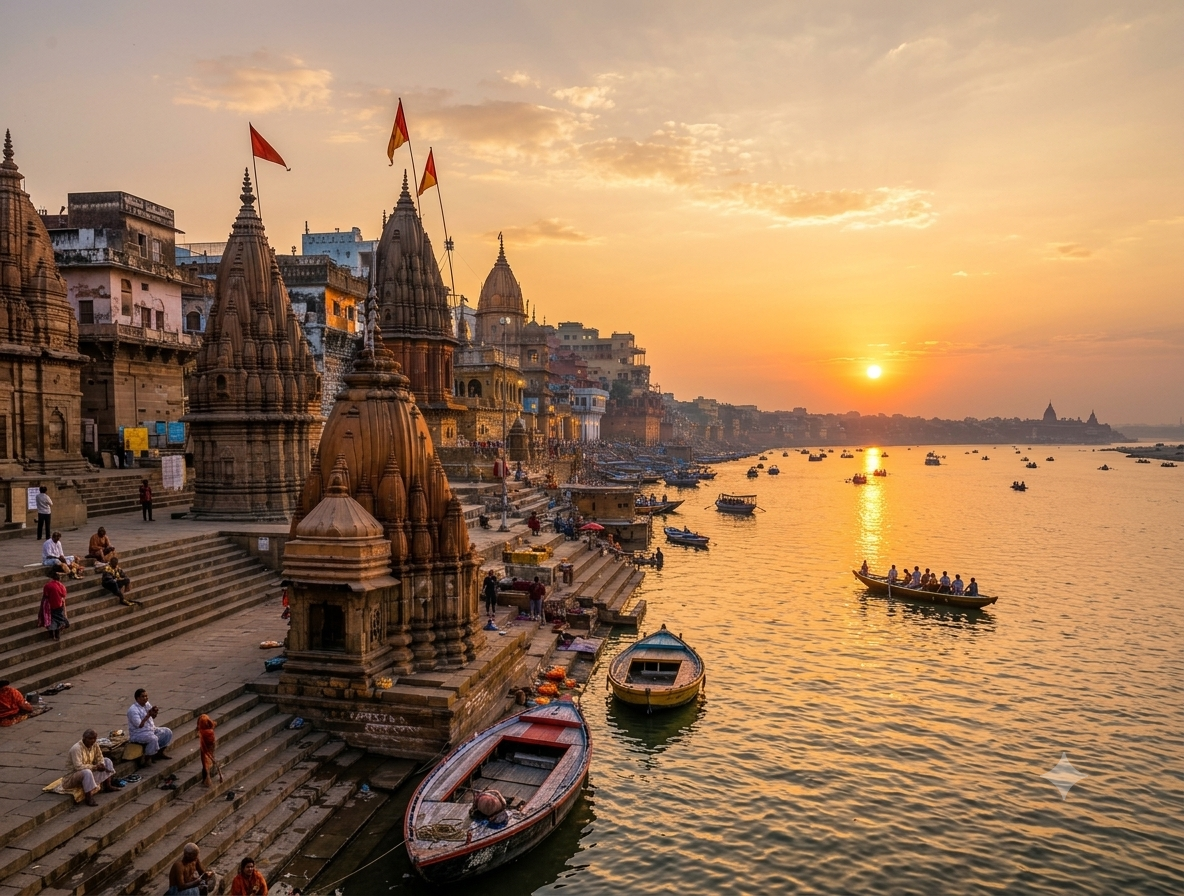
🛕 Varanasi
Perched along the sacred banks of the river Ganges, Varanasi stands as one of the oldest continuously inhabited cities in the world and holds the distinguished title of India's spiritual capital. For thousands of years, this ancient city has drawn pilgrims, philosophers, scholars, and seekers from across the globe, all converging on its ghats to witness the eternal cycle of life, death, and devotion that defines its character. To walk through the narrow lanes of Varanasi is to step into a living museum of Hindu civilization, where ancient traditions continue uninterrupted in the modern era.
✨ Why Visit Varanasi
The primary allure of Varanasi lies in its status as a sacred city situated on the banks of the Ganges, a river considered holy by millions of Hindus who believe that bathing in its waters can cleanse one of sins and that dying within the city limits offers liberation from the cycle of rebirth. This profound spiritual significance permeates every aspect of life in Varanasi, from the daily rituals performed at dawn to the cremation ceremonies conducted at its famous burning ghats.
Beyond its religious importance, Varanasi is home to an extraordinary concentration of ancient temples, each with its own history, architecture, and devotional practices. The rituals performed here, many of which have remained unchanged for centuries, offer visitors a rare glimpse into living traditions that connect the present directly to India's distant past. The city's deep cultural heritage extends beyond religion into music, art, literature, and philosophy, with Varanasi having served as a center of learning and classical arts for centuries, producing renowned musicians, poets, and scholars who have shaped Indian cultural identity.
For travelers seeking an authentic, unfiltered experience of India's spiritual and cultural essence, few destinations can rival the intensity and depth of what Varanasi offers. It is a city that engages all the senses simultaneously, from the sight of flickering oil lamps along the riverbank to the sound of temple bells and Vedic chants, the smell of incense mixed with the smoke of funeral pyres, and the constant hum of human activity along its ancient ghats.
🏛️ Key Attractions
🌅 Dashashwamedh Ghat
Dashashwamedh Ghat ranks among the most important and visually spectacular sites in Varanasi. This is the primary ghat where the renowned Ganga Aarti ceremony takes place each evening, a mesmerizing ritual involving multiple priests performing synchronized movements with large brass lamps, accompanied by chanting, music, and the ringing of bells, all dedicated to the worship of the river goddess. The atmosphere during this ceremony, with hundreds of devotees and visitors gathered along the steps and in boats on the water, creates an unforgettable spectacle that captures the essence of Varanasi's spiritual energy.
🔱 Kashi Vishwanath Temple
The Kashi Vishwanath Temple stands as one of the most sacred shrines in Hinduism, dedicated to Lord Shiva in his form as Vishweshwar, the Lord of the Universe. This temple is one of the twelve Jyotirlingas, considered the holiest of Shiva temples, and draws a constant stream of pilgrims who come to offer prayers and seek blessings. The temple complex, with its golden spire and intricate architecture, represents centuries of devotion and remains a focal point of religious life in the city.
🕉️ Assi Ghat
Assi Ghat, located at the southern end of the ghat stretch, offers a slightly different experience compared to the more crowded central ghats. Known for its morning yoga sessions, cultural programs, and a younger, more relaxed atmosphere, Assi Ghat is popular among travelers who wish to witness sunrise rituals, enjoy boat rides, or simply sit and observe the daily rhythms of life along the river in a more tranquil setting.
☸️ Sarnath
A short distance from the city center lies Sarnath, one of the most significant sites in Buddhist history. It was here that Gautama Buddha delivered his first sermon after attaining enlightenment, setting in motion the wheel of dharma. Today, Sarnath is home to ancient stupas, monastery ruins, archaeological remains, and a museum housing artifacts from the Mauryan and Gupta periods, including the famous Ashoka Pillar with its lion capital. For travelers interested in Buddhist heritage, Sarnath offers a peaceful and historically rich complement to the intensity of Varanasi's Hindu sites.
🚤 Activities
🪔 Ganga Aarti Ceremony
The Ganga Aarti ceremony, performed every evening at Dashashwamedh Ghat, is perhaps the single most iconic activity associated with Varanasi and is considered a must-witness experience for virtually every visitor. The synchronized ritual, performed against the backdrop of the river at dusk, creates a hypnotic visual and auditory experience that lingers in memory long after departure.
🚣 Boat Cruises
Boat cruises along the Ganges offer one of the best ways to experience Varanasi, particularly during sunrise when the early morning light bathes the ghats in golden hues and reveals the city slowly awakening to its daily rituals. These cruises allow visitors to observe bathing rituals, cremation ceremonies from a respectful distance, and the architectural grandeur of the palaces and temples that line the riverfront, all from the unique vantage point of the water.
🏘️ Heritage Walks
Heritage walks through the old city's labyrinthine lanes provide insight into the daily life, architecture, and hidden temples that exist away from the main ghats. These walks often reveal centuries-old havelis, traditional craft workshops, and small neighborhood shrines that most visitors would otherwise miss entirely.
🎼 Cultural Tours
Cultural tours focusing on Varanasi's classical music heritage, traditional weaving industries particularly the famous Banarasi silk sarees, and its role as a center of Sanskrit learning offer deeper engagement with the intellectual and artistic dimensions of the city beyond its religious significance.
📋 Practical Information
📅 Best Time to Visit
The recommended period for visiting Varanasi is from October to March, when the weather remains pleasantly cool and comfortable for extended periods of sightseeing, ghat walks, and outdoor ceremonies. The oppressive heat and humidity of the summer months, combined with the monsoon rains, make travel considerably more challenging, so the cooler winter months provide the ideal conditions for experiencing the city's attractions at a comfortable pace.
✈️ How to Reach Varanasi
Varanasi benefits from excellent connectivity given its international significance as a pilgrimage destination. The Lal Bahadur Shastri International Airport serves the city with both domestic and international flight connections, making it accessible to travelers from around the world. For those traveling by rail, Varanasi Junction is a major railway hub with extensive connections to cities across India, reflecting the city's importance as a transportation nexus that has historically facilitated pilgrim traffic from all corners of the country.
🛏️ Suggested Duration
A stay of 2 to 3 nights is generally sufficient to experience the essential highlights of Varanasi, including the evening aarti, a sunrise boat ride, temple visits, and a day trip to Sarnath, while allowing some time for exploration of the old city's lanes.
🎯 Target Market
Varanasi holds particular appeal for pilgrimage travelers undertaking religious journeys, cultural enthusiasts seeking immersive experiences rooted in ancient traditions, and heritage travelers interested in exploring one of the world's oldest living cities. According to destination management company observations, Varanasi commands strong international demand, particularly among spiritual seekers and cultural travelers from Western countries, Southeast Asia, and beyond, who view the city as an essential destination for understanding India's religious and philosophical traditions.
Buddhist Circuit Nearby