```html
🌊 Hogenakkal Falls (Tamil Nadu)
🏞️ Niagara of India • Kaveri River • Coracle Rides • Ancient Rock Formations
📖 Overview
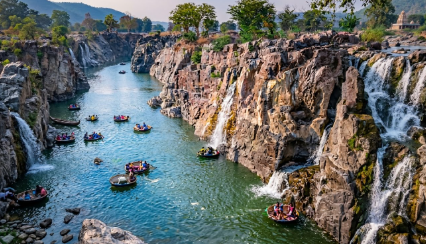
Hogenakkal Falls stands as one of the most spectacular and atmospherically distinctive natural destinations in southern India, a waterfall of considerable power and unusual geological character that has earned its place among the most visited natural sites in Tamil Nadu and one of the most celebrated river falls on the entire subcontinent. Situated in the Dharmapuri district of Tamil Nadu at the point where the Kaveri River crosses from Karnataka into Tamil Nadu, descending through a dramatically rocky terrain in a series of cascading channels, Hogenakkal presents a landscape of white-frothing water, dark carbonatite rock, and perpetual mist that is unlike any other waterfall environment in peninsular India.
The name Hogenakkal is derived from two Kannada words — hoge, meaning smoke, and kal, meaning rock — a name that captures with precision the defining visual character of the falls, where the force of the Kaveri descending through the gorge creates a dense spray that rises from the rocks below in swirling clouds that resemble smoke rising from the stone. The falls are also known locally as Marikottayam, and the site is informally called the Niagara of India, a comparison that speaks to the scale and drama of the cascading water rather than to any physical resemblance. The Kaveri, having wound its way through the dense herbal forests of Karnataka before crossing the state border, carries waters that have long been considered to possess medicinal properties, a belief rooted in the river's passage through forest terrain rich in herbs and minerals that leach into the water along its course.
What distinguishes Hogenakkal from other waterfall destinations in Tamil Nadu is the totality of the experience it offers — not merely a single dramatic cascade to be viewed from a distance, but an environment of gorges, channels, rocky outcrops, ancient carbonatite formations, and river pools that can be explored by water as much as by land, making the falls an immersive natural experience rather than simply a scenic viewpoint.
✨ Why Visit Hogenakkal Falls
The most compelling reason to visit Hogenakkal is the coracle ride — an experience specific to this destination and one of the most distinctive natural encounters available anywhere in Tamil Nadu. The coracles, called parisals by the local boatmen, are small circular basket boats made of bamboo and hide, traditionally used for river navigation in this part of the Deccan, and the boatmen who navigate them through the gorge and under the falls carry a skill developed across generations of intimate knowledge of the river's currents, channels, and moods. Being taken through the narrow gorges and close to the base of the cascading channels in these lightweight, agile craft — with the spray of the falls falling on the passengers and the sound of the water filling the enclosed rocky space — is an encounter with the river's power at close quarters that no land-based viewpoint can replicate.
Hogenakkal also carries the distinction of being one of the few major waterfall destinations in India that flows with meaningful volume throughout the year, as the Kaveri's upstream catchment and the combined flow of several tributaries that join the river before Hogenakkal maintain the falls at a level that rewards visitors across all but the driest periods. This year-round character makes it an unusually dependable natural destination for those planning visits outside the post-monsoon peak season.
The proximity of Hogenakkal to Bengaluru, approximately 180 kilometres away, and to Salem, approximately 85 kilometres away, has made it one of the most popular weekend natural destinations in the region, drawing visitors from both Karnataka and Tamil Nadu in significant numbers and establishing a lively local economy of boat operators, fish fry stalls, and oil massage practitioners along the riverbank that adds a warmly human dimension to the natural setting.
⭐ Key Highlights Within the Area
🌊 The Falls
The falls themselves, where the Kaveri divides into approximately fourteen separate channels as it descends through the rocky gorge, with drops ranging from fifteen to sixty-five feet at different points along the river, constitute the central and defining feature of the destination. The combined effect of multiple cascades falling simultaneously across a wide rocky terrain — each channel creating its own curtain of white water and mist — produces a visual and auditory spectacle of considerable scale, and the rising spray that gives the falls their name creates a permanent haze over the gorge that softens the light and keeps the surrounding rock surfaces permanently wet and gleaming.
🪨 Carbonatite Rocks
The carbonatite rocks through which the Kaveri falls at Hogenakkal are among the most ancient geological formations in South Asia, predating human civilisation by an extraordinary margin and providing the falls with a geological significance that adds a dimension of deep time to what is already a compelling natural site. The dark, worn surfaces of these ancient rocks, polished by the river over millennia and carved into complex formations of channels, pools, and ridges, are as visually remarkable as the water that flows over them.
💆 Oil Massage Tradition
The oil massage tradition of Hogenakkal, practised by local masseurs along the riverbank using a range of herbal oils and powders, is one of the most distinctive cultural features of the destination. Visitors seeking therapeutic treatments sit along the rocky shore while masseurs trained in traditional techniques work with oils formulated from locally sourced herbs, after which a dip in the river completes the experience. This combination of natural setting, medicinal water, and traditional bodywork has made the Hogenakkal massage a celebrated local offering that draws visitors specifically seeking the experience.
🐟 Fresh Fish Cuisine
The fresh fish cuisine available along the banks of the Kaveri at Hogenakkal is another distinctive feature of the destination, with local vendors and small restaurants serving freshly caught river fish — including varieties such as katla, rohu, kendai, and keluthi — prepared as fry, curry, and other preparations that reflect the particular culinary traditions of the Dharmapuri district. The combination of the river setting, the sound of the falls in the background, and the taste of freshly cooked river fish makes the meal itself a memorable component of the Hogenakkal experience.
🏗️ Mettur Dam
The Mettur Dam, also known as the Stanley Reservoir, located downstream from Hogenakkal and built in 1939, is one of the largest dams in Tamil Nadu and a significant engineering landmark that irrigates approximately 271,000 acres of agricultural land across twelve districts of the state. The reservoir and its surroundings provide an additional point of interest for those wishing to extend their visit beyond the falls, and the Ellis Park along the dam's vicinity offers a pleasant green space for a quiet stroll.
🌿 Melagiri Hills & Wildlife
The Melagiri Hills, rising above the falls and accessible by trekking trails from the riverbank area, offer a different perspective on the landscape and the river, with forested hillside paths that reward those seeking outdoor activity beyond the water-based experience of the falls themselves. The Cauvery Wildlife Sanctuary in the broader area shelters a range of fauna including elephants, leopards, deer, and a rich avifauna, adding an ecological dimension to the region for wildlife enthusiasts.
🚣 Activities
The coracle ride is the primary and most celebrated activity at Hogenakkal, and for most visitors it constitutes the defining experience of the destination. The boatmen navigate their circular craft through the gorge channels, approaching the base of the falls and manoeuvring through the spray and current with a confidence born of long practice, and the experience of being carried through these confined, dramatic spaces at water level — surrounded by the roar of the falls and the rising mist — is one that remains vivid long after the visit. Coracle rides are available from the designated ghats along the riverbank, and the duration and route can be customised depending on the visitor's preference for proximity to the falls.
Swimming and bathing in the Kaveri at the designated safe points along the riverbank is a popular activity for those comfortable in moving river water, and the medicinal reputation of the Kaveri's waters at this point draws many visitors specifically for the bathing experience. The oil massage sessions offered by local masseurs along the rocky banks provide a relaxing and culturally specific complement to the water activities, and the combination of massage, river bathing, and a meal of fresh fish constitutes the full traditional Hogenakkal experience as it has evolved over many years of popular tourism.
Trekking into the Melagiri Hills from the falls area offers a more physically demanding alternative for those drawn to highland landscapes and forest environments, with trails climbing through forested terrain to viewpoints that look back down over the river valley and the surrounding countryside. Photography rewards considerable time at Hogenakkal, particularly in the morning and late afternoon hours when the light catches the mist above the gorge and the spray of the individual channels is thrown into relief against the dark carbonatite rock.
📅 Best Time to Visit
🍂 October to May
The most favorable period to visit Hogenakkal Falls is from October to May, encompassing both the post-monsoon peak season and the cooler winter months when the falls are at strong flow, the river conditions are suitable for coracle riding and bathing, and the weather in the Dharmapuri district is comfortable for outdoor exploration. October and November are particularly rewarding, as the monsoon runoff keeps the Kaveri at a high and dramatic level while the rains themselves have largely subsided, creating conditions of maximum visual spectacle combined with reasonable access.
❄️ December to February
The winter months from December to February offer the most pleasant temperatures and are the most popular period for visitors making the trip from Bengaluru and the major cities of Tamil Nadu, with clear skies, moderate heat, and excellent conditions for the full range of activities including coracle rides, bathing, trekking, and riverside dining. The falls maintain a strong flow through this period and the visibility across the gorge is at its best.
☀️ March to September
March to May sees rising temperatures across the Dharmapuri plains, and while the falls continue to flow and all activities remain available, the midday heat along the exposed rocky riverbank can be considerable. Early morning visits during these months are the most comfortable and are rewarded with the best light conditions for photography. The monsoon from June to September brings the Kaveri to its most powerful and dramatically swollen state, and the visual scale of the falls during this period is at its most overwhelming, but the strength of the current makes coracle rides and river bathing dangerous and they are typically suspended. Road access can also be affected by heavy rainfall, and the monsoon months are generally not recommended for a visit.
🚗 Connectivity
Hogenakkal Falls is located in the Dharmapuri district of Tamil Nadu and is most conveniently reached from Bengaluru, approximately 180 kilometres away, or from Dharmapuri town, approximately 47 kilometres away, which serves as the nearest significant urban base. The falls are accessible by well-maintained road from both Bengaluru and from Salem, approximately 85 kilometres away, making them well within reach for a comfortable day trip or weekend excursion from either city.
Dharmapuri is the nearest railway station, connected to Chennai, Bengaluru, Salem, and other cities on the Salem–Bengaluru rail line, from where hired taxis or local buses cover the remaining distance to the falls in approximately one hour. Salem, with its broader rail connectivity and slightly larger airport, is also a practical approach point for travellers coming from further afield. From Bengaluru, both state-run Karnataka KSRTC and Tamil Nadu TNSTC bus services operate regular routes to Hogenakkal, and the road journey through the Deccan countryside is scenic and manageable. Private taxis from Bengaluru, Salem, and Dharmapuri are widely available and offer the most flexible and convenient means of reaching and exploring the falls and the surrounding area at one's own pace.
Discover More Around [Hogenakkal Falls]