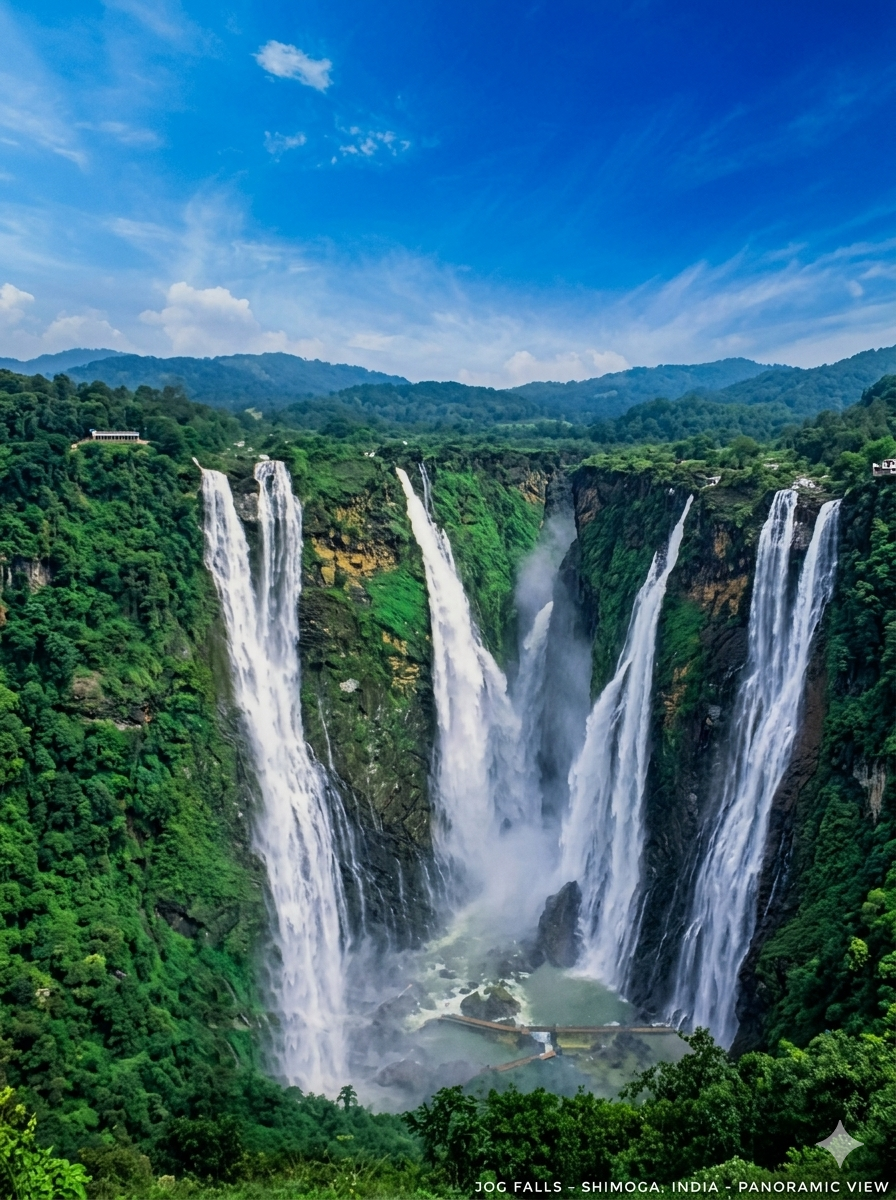
🌊 Jog Waterfall: Where the Earth Lets Go
Standing at the edge of the viewing platform at Jog Waterfall, you don't just see water falling — you feel it. The ground vibrates faintly beneath your feet. The mist kisses your face before you even realize it's there. And the sound? It's less like a waterfall and more like the earth clearing its throat.
Located in Shivamogga district, Jog Waterfall is the second highest plunge waterfall in India, dropping an astonishing 253 meters (830 feet) in four distinct streams: Raja, Rani, Rover, and Rocket. Each has its own character — Raja is the tallest and most commanding, Rani is elegant and graceful, Rover is scattered and wild, and Rocket shoots out with surprising force. Together, they create one of nature's most theatrical performances.
📜 History and Interesting Facts
The waterfall is formed by the Sharavathi River, which originates in the Western Ghats and crashes into the deep gorge below before eventually meeting the Arabian Sea. The area gained significant historical importance when the Linganamakki Dam was constructed upstream in the 1940s, as part of the Mahatma Gandhi Hydroelectric Project — one of India's earliest large-scale power generation efforts. Because of the dam, Jog's flow is now regulated, and the best views are reserved for the monsoon season when the dam gates open and the falls roar back to life in full, unrestrained glory.
Fun fact: during peak monsoon, the mist from Jog Waterfall can be seen from several kilometers away. The falls were even mentioned in the writings of British-era travelers who were left breathless by its raw power.
📸 What to Do Here
The main viewpoint is accessible and well-maintained, with a staircase leading down closer to the base — about 1,200 steps of a workout that is absolutely worth it. Trekking trails around the
Attractions Nearby [Jog Waterfalls]