<
🌿 Kemmanagundi — KR Hills (Karnataka)
🏔️ Overview
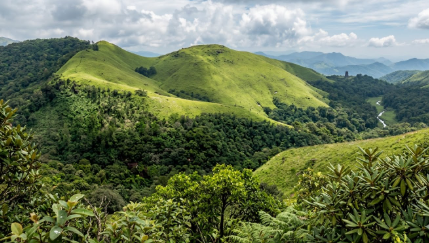
Kemmanagundi stands as one of the most beautifully composed and least crowded hill retreats in Karnataka, a highland destination of quiet grandeur that combines royal heritage, horticultural refinement, dramatic waterfalls, and sweeping valley views in a setting of exceptional natural beauty at the edge of the Western Ghats.
Situated in the Tarikere taluk of the Chikkamagaluru district at an altitude of 1,434 metres above sea level, Kemmanagundi occupies a position on the Baba Budan Giri range of the Western Ghats where the combination of elevation, moisture, and lateritic soil creates a landscape of unusual fertility and visual richness — dense with coffee and tea plantations, bamboo groves, shola forest patches, and the cascading streams and waterfalls that are among the most celebrated natural features of the Malnad highlands.
🌱 Heritage & Origin
The name Kemmanagundi is derived from three Kannada words — kempu, meaning red, mannu, meaning soil, and gundi, meaning pit — a reference to the characteristic deep red lateritic earth that gives the region its particular colour and that speaks to the geological antiquity of the Deccan terrain.
The hill station is also known popularly as KR Hills — a name that honours Krishnaraja Wadiyar IV, the revered Maharaja of Mysore, who discovered this highland plateau during the early twentieth century and was so thoroughly captivated by its beauty that he established his summer retreat here, developing the gardens and royal residence that continue to define the character of the destination today.
Following independence, the Maharaja's estate was donated to the Government of Karnataka, and the Karnataka Horticultural Department took over the maintenance of the gardens and the Raj Bhavan resort, ensuring that the horticultural legacy of the royal period was preserved and made accessible to all visitors.
✨ Why Visit Kemmanagundi
The most compelling reason to visit Kemmanagundi is the quality of its atmosphere — a quality of quietude, beauty, and natural completeness that is rare among Karnataka's more widely known hill stations and that reflects the particular care with which this landscape has been tended since the Maharaja first developed it as his summer sanctuary.
Unlike destinations that have grown rapidly around a single attraction, Kemmanagundi retains the character of a place that was designed for slow and attentive enjoyment — for morning walks through the garden when the dew is still on the rose bushes, for sitting at the Z Point viewpoint as the sun descends behind the distant ridges, and for the long forested walk to Hebbe Falls through coffee plantation and river valley that rewards every step of the effort.
The relative obscurity of Kemmanagundi compared to neighbouring destinations such as Chikmagalur town and Mudigere has preserved its character and kept its visitor numbers at a level that allows the landscape to be enjoyed without the crowds that increasingly define more famous hill stations across southern India.
🌺 Key Highlights Within the Area
🏛️ Raj Bhavan and Gardens
The Raj Bhavan and its surrounding gardens, maintained by the Karnataka Horticultural Department and set at the highest accessible point of the hill station, are the central and most distinctively cultivated feature of Kemmanagundi. The gardens around the Raj Bhavan are laid out with ornamental beds of roses, seasonal flowers, and exotic plants whose variety and careful maintenance reflect the horticultural ambition of the Mysore royal household that created them. The Raj Bhavan itself, the former summer residence of Krishnaraja Wadiyar IV, commands a panoramic view of the surrounding valleys and the ridgelines of the Baba Budan range that is at its most spectacular at sunrise and sunset, when the light falls across the plantation-covered slopes in long horizontal bands of gold and amber. The sunset view from the Raj Bhavan terrace is consistently cited as one of the most beautiful highland sunset experiences available in the Western Ghats.
🥾 Z Point Viewpoint
The Z Point, named for the zigzag path that descends from the hilltop to the viewpoint below, is the most celebrated trekking destination at Kemmanagundi and one of the finest natural viewpoints in the Chikkamagaluru district. The trail to the Z Point descends from the Raj Bhavan area through forested terrain to a rocky promontory that offers a wide and unobstructed prospect over the valley below — a panorama of layered ridges, plantation hillsides, and distant peaks that at dawn presents a landscape of mist and emerging light of extraordinary atmospheric beauty, and at sunset turns to deep amber and violet as the sky darkens over the Western Ghats.
💧 Hebbe Falls
The Hebbe Falls, located approximately 8 kilometres from Kemmanagundi and accessible via a walk of approximately three kilometres through dense forest after the motorable road ends, cascade in two magnificent stages from a total height of 168 metres through a setting of dark jungle rock and dense tropical forest that is among the most dramatically beautiful natural environments in the district. The upper fall, known as Dodda Hebbe or Big Hebbe, and the lower fall, known as Chikka Hebbe or Small Hebbe, each have their own distinct character — the upper fall a single powerful column of white water descending from the cliff above, the lower fall a broader and more diffuse cascade spreading across a wider rock face. The walk to the falls through the coffee plantation and forest is itself a deeply rewarding experience, and the arrival at the falls after the forested approach creates a sense of natural discovery that makes the effort feel entirely justified.
🌊 Kalhatti Falls
The Kalhatti Falls, situated approximately 10 kilometres from Kemmanagundi near the village of Kalhattipura, cascade from a considerable height in a wooded setting that carries both natural beauty and local spiritual significance, as the surrounding area is associated with the presence of the saint Kalahasti and the waters are considered sacred by the local community. The Veerbhadra Temple adjacent to the falls adds a devotional dimension to what is already a visually rewarding natural site, and the valley views from the approach to the falls reward the journey as much as the falls themselves.
🌹 Rose Garden
The Rose Garden maintained by the Horticultural Department within the Kemmanagundi estate is one of the finest highland rose gardens in Karnataka, with a collection of varieties displayed across a terraced layout that makes the most of the hillside setting. The garden is at its most spectacular when the roses are in full bloom, creating a concentrated display of colour and fragrance that contrasts beautifully with the dark green of the surrounding forest and the red of the lateritic soil beneath.
🚶 Activities
🥾 Trekking
Trekking is the primary and most rewarding outdoor activity at Kemmanagundi, with routes ranging from the accessible and well-marked trail to the Z Point to the longer and more forested walk to Hebbe Falls and the more demanding climbs toward the higher peaks of the Baba Budan range. The Z Point trek, covering a relatively short distance of approximately two to three kilometres from the Raj Bhavan area, is suitable for walkers of most fitness levels and is particularly rewarding at the hours of dawn and dusk when the views from the viewpoint are at their most dramatic. The Hebbe Falls trek, beginning from the motorable road end approximately five kilometres from the hill station, passes through coffee plantation and dense forest for approximately three kilometres to the falls and constitutes one of the most beautiful half-day nature walks in the Western Ghats.
🌿 Garden Walks
Garden walks through the Raj Bhavan grounds and the Rose Garden, best undertaken in the early morning when the dew is still present and the fragrance of the flowers is most concentrated, are a quieter and more contemplative form of engagement with the Kemmanagundi landscape that suits those for whom the pleasures of horticultural beauty are as compelling as the pleasures of highland trekking. The drive and walking routes through the surrounding coffee and tea plantations, particularly in the early morning and late afternoon, provide an aromatic and visually rich engagement with the working agricultural landscape of the Baba Budan range.
📸 Photography
Photography rewards extensive time at Kemmanagundi, particularly at the Z Point and the Raj Bhavan terrace at the golden hours of dawn and dusk, at the Hebbe Falls in the post-monsoon months when the falls are at full flow, and within the Rose Garden when the blooms are at their most prolific. Extended exploration of the surrounding range on foot, moving through the forested ridges and coffee estate tracks toward Baba Budangiri and the Chandra Drona range, provides the most comprehensive engagement with the landscape of the Western Ghats that this highland base allows.
🗓️ Best Time to Visit
The most favorable period to visit Kemmanagundi is from October to May, with the post-monsoon months of October and November offering the landscape at its most lushly green and the waterfalls at their most powerful and visually dramatic. During these months the Hebbe Falls and Kalhatti Falls are running at strong volume from the accumulated monsoon rainfall, the forest vegetation is at its most intensely green, and the morning mist sits in the valleys below the Z Point in a way that creates one of the most atmospheric highland viewpoint experiences available in Karnataka.
December to February brings the coolest temperatures and the clearest skies of the year, making the trekking experience particularly comfortable and the views from the Z Point and the Raj Bhavan terrace the most extensive and unobstructed. The Rose Garden is at its finest in the cooler months when the blooms are at their most prolific and the colours are most vivid against the cool highland air. This period also coincides with the coffee blossom season in the surrounding plantations, when the white flowers open across the hillsides in January and February and release a fragrance that fills the valley air with a scent of unusual intensity and beauty.
March to May sees gradually rising temperatures that remain moderate at the altitude of Kemmanagundi even as the surrounding plains become uncomfortably warm, making the hill station a popular destination for visitors from the lowland cities of Karnataka and Kerala seeking respite from the summer heat. The waterfalls are at their lowest during this period and the landscape has dried to a golden-green that has its own understated beauty, and the views from the hilltop viewpoints on clear pre-monsoon mornings can extend over considerable distances.
The monsoon from June to September brings heavy rainfall to the Western Ghats and the landscape of Kemmanagundi reaches its most dramatically lush and saturated state, with the waterfalls roaring, every surface of the forest thick with moss and moisture, and the coffee plants in full monsoon greenery. The trekking trails can become slippery and the access roads occasionally difficult during the heaviest rainfall periods, but the landscape in full monsoon is extraordinarily beautiful and rewards those who visit with an awareness of its conditions.
🚗 Connectivity
📍 Location Access
Kemmanagundi is situated in the interior of the Chikkamagaluru district and is accessible only by road, as the surrounding terrain and the relatively small scale of the hill station preclude any rail or air connectivity to the immediate area. The hill station is approximately 62 kilometres from Chikmagalur town, approximately 41 kilometres from Kadur — the nearest significant railway station — and approximately 246 kilometres from Bengaluru, making it a destination most naturally approached as part of a broader exploration of the Chikkamagaluru district or the Malnad region of Karnataka.
🛣️ Road Journey
From Bengaluru, the road journey to Kemmanagundi takes approximately five to six hours via the Hassan highway, passing through the increasingly green and hilly terrain of the Western Ghats foothills as the route approaches the Baba Budan range. Kadur Junction, the nearest railway station with connectivity to Bengaluru, Hassan, and Mangaluru, is the most practical rail approach point, from where hired taxis cover the remaining distance to the hill station in approximately one hour through the plantation-lined ghat roads. From Chikmagalur town, the approach road winds through coffee estate country and bamboo groves to the Kemmanagundi plateau in a journey of approximately ninety minutes that is scenic and rewarding in its own right.
🏡 Accommodation
Direct public bus services to Kemmanagundi are limited, and private taxis hired from Chikmagalur town, Kadur, or Bengaluru are the most practical and flexible means of reaching the hill station and exploring its surrounding attractions. Accommodation at Kemmanagundi is available primarily through the Horticultural Department's Raj Bhavan resort — a government-run facility that occupies the former royal retreat and offers rooms within the historic estate — and through a small number of private homestays and eco-lodges in the surrounding plantation area. Advance booking for the Raj Bhavan is strongly recommended, particularly during the peak winter months and the holiday weekends when demand consistently exceeds the limited available capacity.
Explore Around [Kemmanagundi]