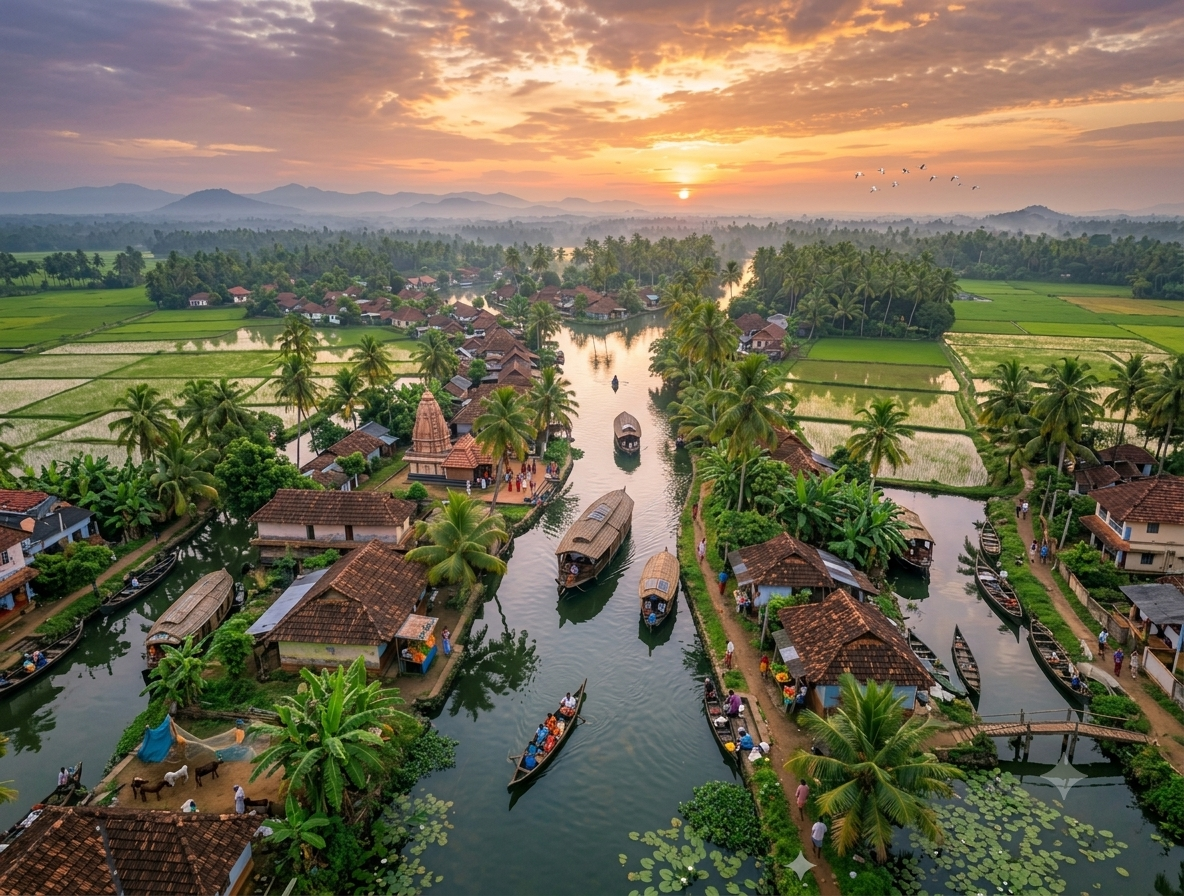
🌴 Kerela
📍 Region
India's Southwestern Coastline
🌊 Highlights
Backwaters, Beaches, Tea Hills, Wildlife, Ayurveda
🎭 Experiences
Houseboats, Kathakali, Trekking, Wellness Retreats
🚆 Connectivity
Air, Rail, and Extensive Highway Network
🌿 Destination Overview
Tucked along India's southwestern coastline, Kerala is a narrow strip of land where the Arabian Sea meets the Western Ghats, creating one of the most ecologically diverse regions in the country. Often called "God's Own Country," this state packs an extraordinary range of landscapes into a relatively small area: palm-fringed beaches, a sprawling network of tranquil backwaters, misty tea-covered hills, and dense tropical forests teeming with wildlife. Add to this a rich cultural heritage shaped by centuries of trade with Arabs, Chinese, and Europeans, and you get a destination that feels distinct from the rest of India in almost every way, from its cuisine and architecture to its pace of life.
Kerala's appeal lies in its balance. It's a place where you can spend a morning gliding through still backwaters on a houseboat and the same evening watching a traditional Kathakali performance, or hike through a spice plantation one day and relax on a quiet beach the next. The state is also known for its high literacy rate, progressive social indicators, and well-preserved natural environment, all of which contribute to a sense of order and ease that many travelers find refreshing.
✨ Why Visit
Kerala offers something genuinely different from the more frequently visited parts of India. Instead of chaotic crowds and monuments, the experience here is built around nature, slowness, and sensory richness. The backwaters alone are reason enough to visit; nowhere else in the world will you find quite the same combination of interconnected lakes, canals, and lagoons lined with coconut groves and traditional villages. Beyond the scenery, Kerala is a haven for food lovers, with a cuisine built on coconut, fresh seafood, and an extraordinary range of spices that the region has exported for thousands of years.
It's also a destination suited to many kinds of travelers. Couples are drawn to the romantic houseboat stays and hill station resorts, families appreciate the wildlife sanctuaries and beaches, wellness travelers come specifically for authentic Ayurvedic treatments, and adventure seekers find trekking, river rafting, and wildlife safaris in the Western Ghats. Kerala manages to be relaxing and stimulating at once, which is part of why it consistently ranks among India's most recommended states for first-time visitors and repeat travelers alike.
📍 Key Attractions
🚤 Alleppey & Kumarakom Backwaters
The backwaters around Alleppey and Kumarakom are the single most iconic experience in Kerala. This network of canals, rivers, and lakes runs parallel to the coast and is best explored aboard a traditional houseboat, known locally as a kettuvallam, which often comes with a private crew, simple but comfortable cabins, and home-cooked meals served as the boat drifts past rice paddies and fishing villages.
⛰️ Munnar
In the highlands, Munnar is Kerala's answer to a hill station escape. Rolling tea estates stretch across the hillsides as far as the eye can see, interrupted only by the occasional waterfall or viewpoint. The cooler climate here is a welcome contrast to the coastal heat, and the area is also home to Eravikulam National Park, one of the last refuges of the endangered Nilgiri tahr.
🐘 Periyar National Park
For wildlife enthusiasts, Periyar National Park near Thekkady offers boat safaris on Periyar Lake, where elephants, sambar deer, and occasionally tigers can be spotted from the water. The park is also a starting point for spice plantation tours, since the surrounding region grows cardamom, pepper, and cinnamon.
🏖️ Kovalam & Varkala
Kerala's coastline has its own highlights, particularly the beach towns of Kovalam and Varkala. Kovalam is known for its crescent-shaped beaches and lighthouse views, while Varkala stands out for its dramatic cliffside setting, where red laterite cliffs drop straight down to the sea.
🏛️ Fort Kochi
Fort Kochi, in the city of Kochi, rounds out the list with a completely different flavor: a historic port town with Portuguese, Dutch, and British colonial influences visible in its architecture, Chinese fishing nets along the shore, and a thriving arts scene centered around the Kochi-Muziris Biennale.s
🎭 Activities
Beyond sightseeing, Kerala rewards travelers willing to slow down and participate. A houseboat stay is less a sightseeing activity than a way of living for a day or two, and many visitors describe it as the highlight of their trip. Ayurvedic treatments and wellness retreats are widely available, ranging from a single massage session to multi-day detox programs supervised by trained practitioners, and Kerala is considered one of the most authentic places in the world to experience this traditional medicine system.
Spice plantation walks near Thekkady let visitors see and smell cardamom, pepper, and vanilla growing on the vine, often paired with a cooking demonstration. Trekking opportunities are abundant in the Western Ghats, particularly around Munnar and Wayanad, with trails suited to both casual walkers and serious hikers. Wayanad in particular offers caves, waterfalls, and bamboo rafting alongside its trekking routes.
Cultural experiences are easy to find as well. Kathakali and Mohiniyattam performances, often preceded by a demonstration of the elaborate makeup process, are staged regularly in Kochi and other towns for visitors. Those interested in martial arts can watch a Kalaripayattu demonstration, considered one of the oldest fighting systems in the world. And no visit is complete without sampling Kerala's food: a traditional sadya meal served on a banana leaf, fresh seafood along the coast, and the ubiquitous appam with stew.
📅 Best Time to Visit Kerala
October to March is ideal, with pleasant weather (20-32°C) perfect for backwaters, beaches, and sightseeing. December-February is peak season (cooler, festive). June-September is monsoon season, great for Ayurveda treatments and lush greenery, but heavy rains can disrupt travel. April-May is hot and humid, best avoided unless visiting hill stations like Munnar.
🚆 Connectivity
Air: Major airports at Kochi (Cochin International), Thiruvananthapuram, Kozhikode (Calicut), and Kannur, with good domestic and several international connections.
Rail: Well-connected via Indian Railways, with main stations at Thiruvananthapuram, Kochi, Kozhikode, and Thrissur linking to major Indian cities.
Road: Extensive highway network (NH66 runs along the coast) connects Kerala to Tamil Nadu, Karnataka, and other neighboring states; state and private buses are frequent and reliable.
Explore Beyond [Kerela]
- Munnar: Where Tea Garden Touch The Sky
- Alleppey Backwaters: A Journey On Water
- Varkala : India's Most Stunning Cliffside Beach Escape
- Kovalam: The Coastal Paradise