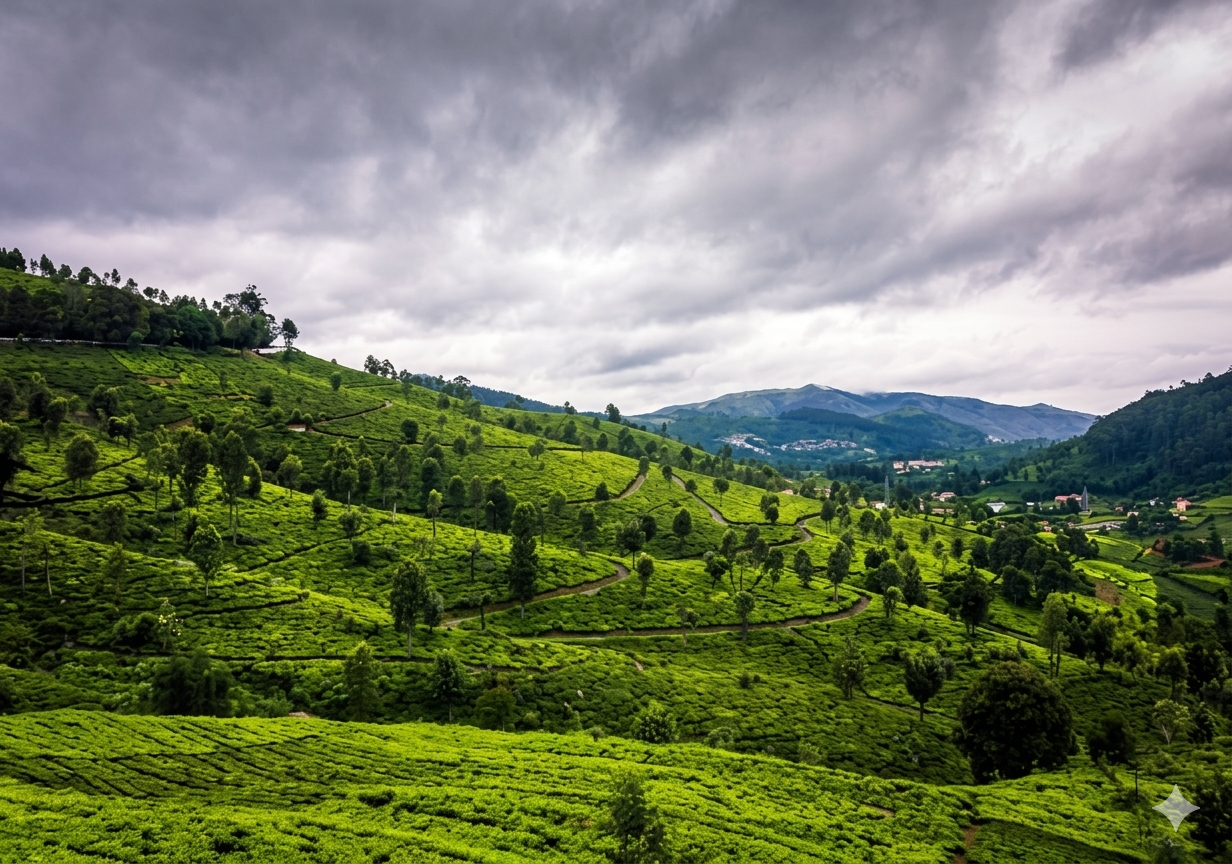
🏞️ Kotagiri, Tamil Nadu: The Quiet Nilgiri Gem That Steals Your Heart Slowly
🌿 Introduction: The Hill Station That Doesn't Shout
Some places announce themselves loudly — with billboards, tourist crowds, and Instagram-ready viewpoints that everyone and their neighbor has already photographed. Kotagiri does none of that. It simply waits, patient and unhurried, at 1,793 meters above sea level in the Nilgiri Hills of Tamil Nadu, confident that the right kind of traveler will find their way to it eventually.
And when you do find it — tucked between rolling tea gardens, ancient tribal settlements, and mist-soaked valleys — you'll wonder why it took you so long.
Kotagiri is the oldest hill station in the Nilgiris, older than Ooty, older than Coonoor, and yet somehow far less crowded than either. It carries its age gracefully, the way a well-loved book does — worn at the edges, rich in stories, and infinitely more rewarding than anything brand new. For travelers who are tired of manufactured charm and hungry for something genuinely real, Kotagiri is the answer you didn't know you were looking for.
📜 History and Interesting Facts: Older Than You Think
Long before the British arrived with their bungalows and botanical ambitions, the Nilgiri Hills belonged to the Kota tribe — one of the indigenous communities of the region — and it is from them that Kotagiri takes its name. "Kotagiri" translates roughly to "mountains of the Kotas," and this tribal identity remains beautifully woven into the town's character even today.
The British discovered Kotagiri in the early 19th century and quickly recognized its extraordinary climate. In fact, John Sullivan, the Collector of Coimbatore who is often credited with "discovering" Ooty for the British, first passed through Kotagiri before settling on Ooty as his base. Had things gone slightly differently, Kotagiri might have become the Nilgiri's most famous address.
Instead, it remained quieter — and in hindsight, that might be its greatest gift to the modern traveler.
The area's tea cultivation history dates back to the 1840s, and some of the estates here are among the oldest in all of India. The Nilgiri tea grown around Kotagiri carries a distinctive brisk, fragrant quality that sets it apart from Darjeeling or Assam teas — lighter on the palate, aromatic, and deeply satisfying.
🏔️ Major Attractions and Activities: Small Town, Big Experiences
Catherine Falls is Kotagiri's showstopper — a dramatic two-tiered waterfall cascading 250 feet through thick shola forest, named after the wife of a British collector. The approach road winds through tea estates and the view of the falls, especially after rainfall, is genuinely breathtaking. It's about 8 km from town, and the drive alone is worth it.
Kodanad Viewpoint offers one of the most sweeping panoramas in the entire Nilgiri region. On clear mornings, you can see the Mysore Plateau stretching endlessly below, with the Moyar River glinting far beneath like a silver thread. If you visit at dawn and catch the sunrise breaking over the plains, it's the kind of moment that rearranges your priorities.
Rangaswamy Peak and Pillar are twin landmarks rising dramatically from the forest — the peak standing at around 1,858 meters and the Pillar, a striking natural rock column, visible from considerable distance. These are sacred to local tribal communities and hold deep spiritual significance. Treks here are rewarding but require a local guide and some fitness.
Elk Falls, smaller and less visited than Catherine Falls, is a hidden treasure — tucked quietly into the forest and accessible via a short trek. It rewards those who make the effort with peaceful solitude and cool, clear water.
The Kota Tribal Villages nearby offer a rare, respectful window into one of India's most ancient living cultures. The Kota people are known for their craftsmanship — particularly in metalwork and music — and their ceremonies, when open to visitors, are extraordinary experiences in cultural humility and wonder.
Tea Estate Walks around Kotagiri are informal, unscripted, and deeply satisfying. Many estates allow visitors to walk through the rows of clipped tea bushes, watch the plucking process, and sometimes tour a small processing unit. There's something meditative about walking through a tea garden in the early morning when the dew is still on the leaves.
🍛 Local Culture and Cuisine: Eat Like a Local, Think Like One
Kotagiri's food reflects its Tamil hill culture — simple, wholesome, and quietly brilliant. Breakfast at a local tiffin center means idli, sambar, and coconut chutney served on stainless steel plates with a tumbler of frothy filter coffee that'll ruin all other coffee for you permanently.
The local Toda and Kota tribal communities have their own food traditions — millet-based dishes, wild forest greens, and preparations made from ingredients that grow only in these hills. If you get an opportunity to eat in a tribal home or at a community-run eatery, take it without hesitation.
Fresh Nilgiri tea is, of course, the defining beverage. Pick up loose-leaf tea directly from local sellers or small estate shops — it makes for the most honest souvenir you can carry home, and it's incomparably better than anything packaged for tourist markets in bigger cities.
Pongal, vadai, and various rice preparations dominate the local lunch scene. Small dhabas and family-run restaurants serve honest meals at honest prices, and the lack of touristy menus means the food tastes exactly like it should.
📅 Best Time to Visit
October to June is broadly the best window. The post-monsoon months of October and November see the landscape at its most lush and green — everything washed clean and vivid. December through February brings cool, crisp weather with temperatures dipping to around 5–8°C at night, making it ideal for those who love wrapping up in a shawl and sipping tea by a window.
March to May offers warmer, sunnier days — perfect for viewpoints, outdoor walks, and photography.
The monsoon (July to September) transforms Kotagiri into a moody, mist-wrapped dream. Waterfalls are at full thunder, the forest is intensely alive, and the town quiets down beautifully. If you don't mind rain and love dramatic landscapes, monsoon Kotagiri is hauntingly beautiful.
🚗 How to Reach: The Journey Into the Hills
By Air: The nearest airport is Coimbatore International Airport, approximately 85 km from Kotagiri. It has good connectivity to major cities including Chennai, Bengaluru, Mumbai, Delhi, and Hyderabad, plus several international destinations. From the airport, taxis and buses head to Mettupalayam, from where you can continue to Kotagiri by road.
By Rail: The nearest major railway station is Mettupalayam Railway Station, about 45 km away and well-connected to Chennai, Coimbatore, and other major Tamil Nadu cities. From Mettupalayam, the legendary Nilgiri Mountain Railway — a UNESCO World Heritage route — runs up to Ooty via Coonoor, passing through spectacular scenery. From Coonoor, Kotagiri is just 28 km by road.
By Road: The drive up to Kotagiri is genuinely one of the great pleasures of visiting. From Mettupalayam, the road winds up through the Nilgiri foothills with forest on both sides and views that keep getting better. From Coimbatore it's about 90 km, from Bengaluru around 310 km, and from Chennai approximately 530 km. TNSTC buses connect Kotagiri to Ooty, Coonoor, and Mettupalayam regularly.
💡 Travel Tips: Small Details That Make a Big Difference
- Go without a rigid itinerary. Kotagiri rewards wandering. The best moments here — a sudden valley view, a tea picker who stops to chat, a tiny waterfall off the road — aren't on any map.
- Layer your clothing. Even in summer, mornings and evenings get genuinely cold. A light jacket is essential year-round.
- Choose homestays over resorts. The town has a handful of wonderfully personal homestays run by families who know every trail, every good restaurant, and every viewpoint worth visiting.
- Be respectful around tribal villages. Ask before photographing people, follow local customs, and remember you are a guest in a living community, not a cultural exhibit.
- Stock up on tea and spices from local sellers — prices are far more reasonable here than in Ooty or tourist-heavy markets.
📍 Nearby Places to Explore
🌄 Ooty
30 km, the Nilgiris' most famous hill station
🌿 Coonoor
28 km, charming, tea-soaked, and slightly less crowded than Ooty
🚂 Mettupalayam
45 km, gateway town with the mountain railway
🐘 Mudumalai Wildlife Sanctuary
60 km, excellent wildlife reserve with elephant sightings
🏙️ Coimbatore
85 km, a vibrant city perfect for a pre or post-trip stop
❤️ Why You Should Go: The Real Reason
Here's the truth about Kotagiri: it will not overwhelm you. It will not try to. There are no loud tourist buses circling every hour, no hawkers pushing overpriced trinkets, no over-developed resorts blocking your valley views. What it offers instead is something increasingly rare in modern travel — genuine quietness.
The kind of quiet where you can hear wind move through a tea garden. Where a conversation with a stranger feels unhurried and real. Where you go to bed tired in the best possible way — from walking, breathing clean air, and simply being present in a beautiful place.
Kotagiri is for the traveler who has been everywhere and is looking for somewhere that feels like nowhere else. It's for the soul that needs rest more than stimulation. It's for anyone who has ever looked out of a city window and thought — there has to be something simpler than this.
There is. It's called Kotagiri.
Come quietly. Stay longer than you planned. Leave a little lighter
Explore Around [Kotagiri]