Bandhavgarh Fort Experience — Ancient Stone, Living Jungle, Timeless Legend
At Ocean Tripmakers, we build itineraries around sites where heritage and wilderness sit within the same frame. Bandhavgarh Fort rises atop the Vindhya Hills inside Bandhavgarh Tiger Reserve — over 2,000 years of history and Ramayana-linked mythology, overlooking one of India's most celebrated wildlife landscapes.
Natural Beauty and Landscapes
The fort is surrounded by the forests, hills and grasslands of Bandhavgarh National Park — sal, bamboo, teak and mixed deciduous cover across the hillsides, forming rich wildlife habitat and consistent scenic value year-round.
The climb passes through forest trails where deer, langurs, peacocks and varied birdlife are commonly seen, opening onto summit views across the tiger reserve's forests, valleys, cliffs and meadows.
History and Mythological Significance
Bandhavgarh Fort carries deep mythological weight. According to the Ramayana, Lord Rama gifted the fort to his younger brother Lakshmana, also known as Bandhav, after the defeat of Ravana — giving the fort its name, from Bandhav (brother) and Garh (fort).
Archaeological evidence points to rule by the Mauryas, Vakatakas, Kalachuris, Baghels and other regional kingdoms, with the fort serving as a strategic military stronghold across centuries.
Ancient temples, caves, inscriptions, sculptures, reservoirs and ruins throughout the fort reflect its layered historical and cultural record.
Major Attractions
Massive stone walls, ancient gateways, and palace and temple remnants form the core of the fort visit, with panoramic forest views from multiple points along the walls.
Further attractions include ancient inscribed caves, rock-cut sculptures, water tanks, and temples, with Tala Zone, Magadhi Zone, Khitauli Zone, and nearby tribal villages extending the visit beyond the fort itself.
Adventure Activities and Local Experiences
The uphill trek through dense forest is among the most rewarding parts of a Bandhavgarh visit, and pairs naturally with a wildlife safari inside the national park — heritage and wildlife combined within a single stop.
Wildlife, Cuisine and Shopping
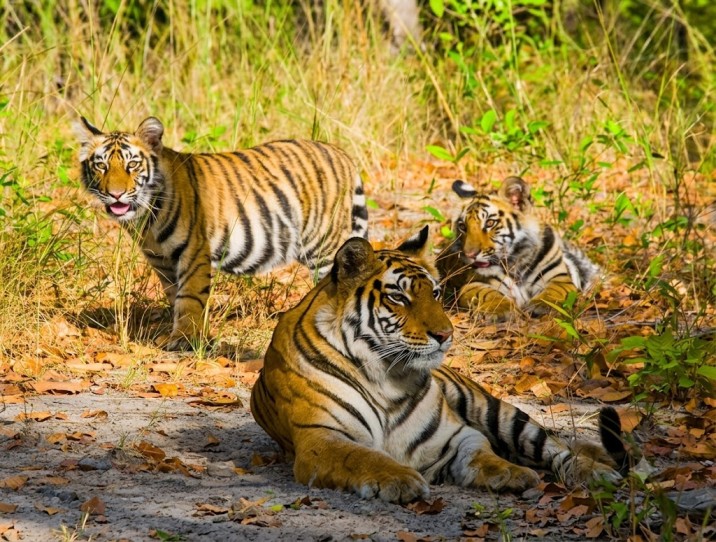
As part of Bandhavgarh National Park, the fort surroundings support Bengal tigers, Indian leopards, sloth bears, sambar deer, chital, nilgai, wild boars, jackals, langurs, and over 250 recorded bird species.
Dal Bafla, Poha, Bhutte Ka Kees, local tribal dishes, kebabs, seasonal vegetables, jalebi and traditional sweets at nearby resorts and restaurants.
Tribal handicrafts, bamboo products, wooden carvings, Gond paintings, handwoven textiles and wildlife-themed souvenirs in Tala Village and nearby towns.
Best Time to Visit and How to Reach
October to March gives the most comfortable conditions for trekking and sightseeing. April to June suits wildlife-focused visits, when shrinking water sources concentrate animal sightings; the park generally closes during peak monsoon.
Jabalpur, approximately 170 km away.
Khajuraho and Prayagraj offer additional access options.
Umaria, approximately 35 km, with Katni Junction offering further connectivity.
October–March for comfort; April–June for wildlife sighting frequency.
Travel Tips and Visitor Experience
Comfortable trekking shoes and lightweight clothing suit the forest walks. Drinking water, sunscreen, binoculars and a zoom-capable camera are worth carrying. As the fort sits within a protected forest area, visitors must follow forest department regulations and remain with authorised guides where required — avoiding littering, respecting archaeological structures, and keeping noise low around wildlife.
Travel Partner Opportunity
For travel partners building Madhya Pradesh wildlife-and-heritage programs, Bandhavgarh Fort offers a rare pairing — a genuine ancient monument set inside an active tiger reserve, supporting both trekking-led and safari-led itinerary formats from one location.
It fits naturally into multi-day Madhya Pradesh circuits alongside Khajuraho, Kanha, and Jabalpur, giving heritage and wildlife travellers a single anchor point that serves both interests.
Ancient stone, living jungle, timeless legend — one hilltop holding all three.