Jawai : The Leopard Hills Of Rajasthan
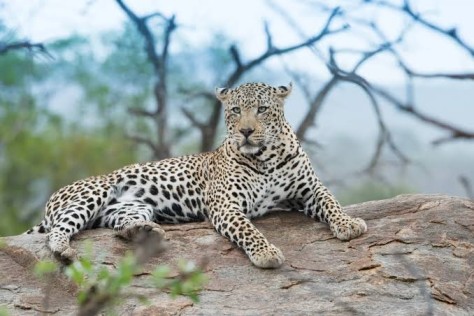
Picture golden granite hills rising sharply from the desert plains, the silhouette of a leopard stretched across a sun-warmed boulder, and a shepherd herding his flock past a centuries-old temple as if the two worlds have always belonged together. That's Jawai — not a national park, not a typical safari destination, but something rarer: a place where the wild and the human live side by side, unguarded and unafraid. Tucked away in the Pali district of Rajasthan, roughly midway between Udaipur and Jodhpur, Jawai has quietly become one of India's most extraordinary wildlife destinations, even though it carries no official "national park" status. Here, the land itself does the work of a sanctuary.
🐆 Jawai, Rajasthan – Where the Wild Roams Free
Picture golden granite hills rising sharply from the desert plains, the silhouette of a leopard stretched across a sun-warmed boulder, and a shepherd herding his flock past a centuries-old temple as if the two worlds have always belonged together. That's Jawai — not a national park, not a typical safari destination, but something rarer: a place where the wild and the human live side by side, unguarded and unafraid. Tucked away in the Pali district of Rajasthan, roughly midway between Udaipur and Jodhpur, Jawai has quietly become one of India's most extraordinary wildlife destinations, even though it carries no official "national park" status. Here, the land itself does the work of a sanctuary.
📜 A Little Bit of History First
Jawai's story is tied closely to water in a state defined by its scarcity. The Jawai Bandh, or Jawai Dam, was built by Maharaja Umaid Singh of Jodhpur and completed in 1957, and it remains the largest dam in western Rajasthan. What followed was almost accidental — the dam attracted birds, the rocky hills attracted leopards, and the leopards found space to thrive undisturbed in the caves and crevices of the Aravalli range. Long before tourists arrived, the Rabari tribe had already settled into a quiet truce with the leopards, treating the big cats as sacred guardians of their land rather than threats. That relationship, built over generations, is what makes Jawai feel less like a reserve and more like a living, breathing community where every creature has its place.
🌿 The Wildlife That Will Leave You Breathless
The leopards are, understandably, the headline. Jawai is home to somewhere between 60 and 70 free-roaming leopards, making it one of the highest-density leopard habitats anywhere in the world.
Open-jeep safaris take visitors deep into this rocky terrain at dawn and dusk, when the leopards are most active, often resting on boulders that look custom-built for them.
But Jawai is far from a one-act show. The Jawai Bandh draws marsh crocodiles that bask along its banks, while its waters host more than a hundred bird species, including migratory flamingos and demoiselle cranes during the winter months. Striped hyenas, jackals, nilgai, and jungle cats move through the same landscape, often glimpsed on the same safari as the leopards.
🏡 Culture, People, and Food
What truly sets Jawai apart is its people. The Rabari, a pastoral community recognisable by their distinctive white attire and red turbans, have lived here for generations, herding goats and camels across the same hills the leopards call home.
Food in Jawai leans into authentic Rajasthani flavours — expect hearty, farm-to-table meals at the resorts and camps dotting the region, often featuring dal baati churma, gatte ki sabzi, and other Marwari specialities cooked over slow fires.
📅 Best Time to Visit
Jawai can technically be visited year-round, but October to March is the sweet spot, with temperatures ranging comfortably between 10°C and 25°C — perfect for early morning and late evening safaris.
🚗 How to Get There
By Air: The nearest airports are Jodhpur and Udaipur's Maharana Pratap Airport.
By Rail: The closest railway station is Jawai Bandh.
By Road: Jawai is well linked by national highways from Udaipur, Jodhpur, and Mount Abu.
📍 Nearby Places Worth Exploring
Mount Abu, Rajasthan's only hill station, is about 130 km away. The Ranakpur Jain Temple is roughly 60 km from Jawai. Kumbhalgarh Fort is around 100 km away.
⚠️ A Few Travel Tips Before You Go
Dress in muted, covered clothing for safaris. Carry sunscreen, a hat, and plenty of water. Always safari with a reputable operator, and never step outside the vehicle during a drive.
✨ Why You Simply Must Visit Jawai
Most wildlife destinations ask you to observe from a careful distance. Jawai asks something different — to witness a relationship between humans and leopards that exists almost nowhere else on earth.