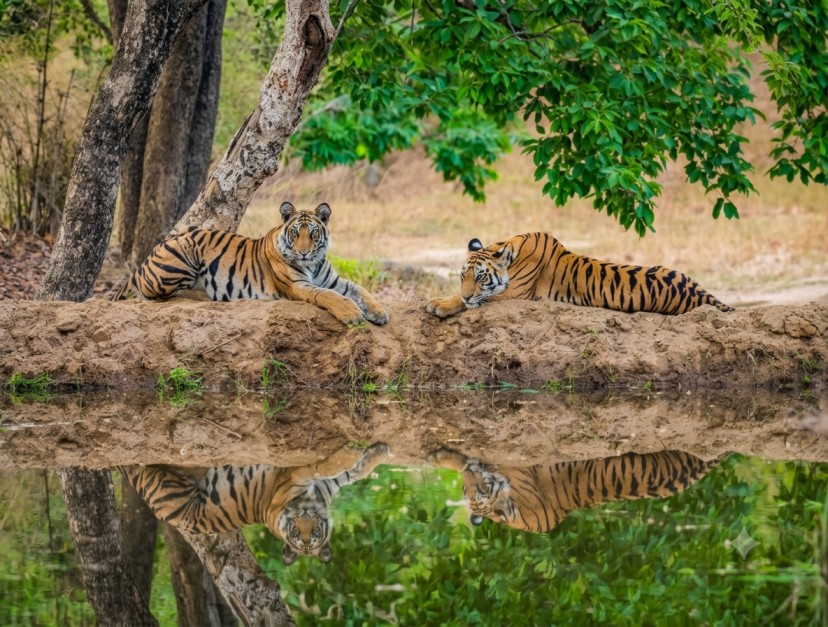
Kahna National Park : The Land Of The Royal Bengal Tiger
Picture yourself driving through mist-covered meadows as the first rays of sunlight filter through towering sal and bamboo forests. The silence is broken only by the distant call of a peacock, the alarm cry of a deer, or the rustle of leaves as wildlife moves unseen through the jungle. Suddenly, a majestic Bengal tiger emerges from the forest, pausing for a moment before disappearing into the wilderness. This is Kanha National Park—not merely a wildlife sanctuary, but one of India's most celebrated conservation success stories and an enduring symbol of the country's rich natural heritage. Nestled in the Maikal Hills of Madhya Pradesh, Kanha offers an extraordinary blend of pristine landscapes, diverse wildlife, and unforgettable safari experiences that have inspired travelers, conservationists, and nature lovers from around the world.
```html
🐅 Kanha National Park, Madhya Pradesh
Where the Wild Heart of India Still Beats
🌿 Overview
Picture yourself driving through mist-covered meadows as the first rays of sunlight filter through towering sal and bamboo forests. The silence is broken only by the distant call of a peacock, the alarm cry of a deer, or the rustle of leaves as wildlife moves unseen through the jungle. Suddenly, a majestic Bengal tiger emerges from the forest, pausing for a moment before disappearing into the wilderness. This is Kanha National Park—not merely a wildlife sanctuary, but one of India's most celebrated conservation success stories and an enduring symbol of the country's rich natural heritage. Nestled in the Maikal Hills of Madhya Pradesh, Kanha offers an extraordinary blend of pristine landscapes, diverse wildlife, and unforgettable safari experiences that have inspired travelers, conservationists, and nature lovers from around the world.
🏛️ A Legacy of Conservation and Natural Beauty
Kanha's story stretches back centuries, when the forests of central India served as hunting grounds for local rulers and royal families. Recognizing the ecological importance of the region, the area was declared a wildlife sanctuary in 1933 and later became a national park in 1955. Today, Kanha forms the core of the Kanha Tiger Reserve and stands as one of India's most successful wildlife conservation projects.
The park gained international recognition for its efforts to protect the endangered hard-ground Barasingha, or swamp deer, a species found almost exclusively in this region. Through dedicated conservation programs, Kanha brought the species back from the brink of extinction, making it a global model for wildlife preservation.
Many believe that the lush forests and open grasslands of Kanha inspired Rudyard Kipling's famous The Jungle Book, lending the park an almost mythical appeal. Whether or not this connection is entirely factual, visitors quickly understand why the landscape evokes images of Mowgli, Baloo, and Shere Khan.
🌄 A Landscape That Feels Untouched by Time
The moment you enter Kanha National Park, you understand why it is often considered one of India's most beautiful wildlife destinations. The park covers over 940 square kilometers of core area, surrounded by an extensive buffer zone that protects its delicate ecosystem.
Unlike many forests that feel dense and impenetrable, Kanha's landscape is wonderfully varied. Vast meadows open suddenly between thick sal forests, creating spectacular wildlife-viewing opportunities. Rolling hills, seasonal streams, bamboo groves, and tranquil water bodies add to the park's diverse scenery.
The famous Kanha Meadows are among the park's most iconic features. During early morning safaris, these grasslands come alive with herds of deer grazing peacefully while predators remain hidden in the surrounding vegetation. The beauty of the landscape changes with every season, ensuring that no two visits are ever the same.
🐘 What Awaits Inside
🐅 Bengal Tiger
The Bengal tiger is undoubtedly the star attraction, drawing wildlife enthusiasts from across the globe.
🦌 Barasingha & Herbivores
The endangered Barasingha remains the park's conservation icon, often seen grazing in the meadows alongside spotted deer, sambar, and gaur—the largest wild cattle species in the world.
🦊 Predators
The park supports healthy populations of leopards, sloth bears, wild dogs, jackals, and Indian wolves.
🦅 Birdlife
Hundreds of bird species inhabit the park, including crested serpent eagles, paradise flycatchers, kingfishers, hornbills, and numerous migratory visitors.
Kanha is home to an extraordinary variety of wildlife, making every safari an adventure filled with anticipation. The Bengal tiger is undoubtedly the star attraction, drawing wildlife enthusiasts from across the globe. However, Kanha's appeal extends far beyond tiger sightings.
The park supports healthy populations of leopards, sloth bears, wild dogs, jackals, and Indian wolves. The endangered Barasingha remains the park's conservation icon, often seen grazing in the meadows alongside spotted deer, sambar, and gaur—the largest wild cattle species in the world.
Bird lovers will find Kanha equally rewarding. Hundreds of bird species inhabit the park, including crested serpent eagles, paradise flycatchers, kingfishers, hornbills, and numerous migratory visitors. Every safari reveals a new chapter in the park's vibrant ecological story.
The experience itself is unforgettable. Open jeep safaris allow visitors to explore different zones of the park accompanied by expert naturalists who interpret animal behavior, track wildlife movements, and reveal the hidden wonders of the forest.
🎭 Culture, Communities, and Living Heritage
Beyond its wildlife, Kanha is deeply connected to the indigenous communities that have lived alongside these forests for generations. Tribal groups such as the Baiga and Gond have long maintained a close relationship with nature, preserving traditional knowledge that contributes to the region's cultural richness.
Visitors often have opportunities to learn about local customs, handicrafts, music, and traditions, creating a deeper understanding of how people and nature have coexisted in this remarkable landscape. This cultural dimension adds an enriching layer to the wildlife experience.
📅 Best Time to Visit
Kanha National Park is typically open from October to June, with each season offering a unique perspective on the forest. The period from October to February brings pleasant temperatures, lush landscapes, and excellent opportunities for birdwatching. March to June is considered prime wildlife-viewing season, as animals gather around water sources and vegetation becomes less dense, increasing the chances of tiger sightings.
The park remains closed during the monsoon season, generally from July to September, allowing the forest to regenerate and wildlife to thrive undisturbed.
🚗 How to Reach
Kanha National Park is well connected by air, rail, and road, making it accessible from major cities across India. The nearest airports are located in Jabalpur (approximately 160 kilometers), Raipur (around 250 kilometers), and Nagpur (approximately 265 kilometers). Jabalpur is generally the most convenient gateway for travelers visiting the park.
The nearest railway stations are Gondia, Jabalpur, and Nainpur, which offer connections to major cities such as Delhi, Mumbai, Kolkata, and Bhopal. From these stations, visitors can hire taxis or arrange transfers to reach the park.
By road, Kanha is easily accessible from Jabalpur, Raipur, Nagpur, and other major towns in Madhya Pradesh and Chhattisgarh. The drive itself is scenic, passing through rural landscapes, forests, and tribal villages that provide a glimpse into central India's natural beauty and cultural heritage.
📍 Nearby Places Worth Exploring
Several destinations complement a visit to Kanha. The historic city of Jabalpur, famous for the Marble Rocks and Dhuandhar Falls, is a popular extension. The lesser-known Pench Tiger Reserve, Bandhavgarh National Park, and Satpura National Park offer additional wildlife experiences for nature enthusiasts exploring central India.
⭐ Why You Simply Must Visit Kanha National Park
Some destinations showcase nature. Kanha allows you to become part of it.
Standing in a silent meadow as the jungle awakens around you, you are not simply observing wildlife—you are witnessing one of India's greatest natural treasures in its purest form. Every rustling leaf, every animal track, and every distant roar reminds you that this is a landscape where nature still reigns supreme.
For wildlife photographers, Kanha offers endless opportunities. For conservation enthusiasts, it stands as a model of environmental success. For families and travelers, it provides unforgettable encounters with the wild. And for anyone seeking a deeper connection with nature, Kanha delivers an experience that remains long after the safari ends.
Drive through its forests. Watch the mist rise from its meadows. Listen to the sounds of the jungle. And discover why Kanha National Park remains one of India's most extraordinary wildlife destinations and one of the finest tiger reserves in the world.
```