Assam, India · Bhutan Border
Manas National Park — where the grassland meets the Bhutan Himalaya
Manas National Park stands as one of the most ecologically significant and visually spectacular destinations in northeastern India, a UNESCO World Heritage Site where the Manas River flows down from the foothills of Bhutan into dense forest, sweeping grassland, and riverine terrain.
A reserve built for rarity
01 — WHY VISITThe recognition of Manas as a UNESCO World Heritage Site, a Project Tiger Reserve, an Elephant Reserve, and a Biosphere Reserve simultaneously reflects its unparalleled ecological importance, sustaining one of the most diverse assemblages of endangered species found anywhere in Asia. Its recovery from severe poaching and civil unrest in the 1990s is regarded as one of the most celebrated conservation success stories in modern Indian wildlife management.
Golden Langur
Found almost nowhere else on earth, resident on the forested hill slopes along the park's northern boundary.
Pygmy Hog
A globally significant surviving population within the grasslands and forests of Manas.
Bengal Florican
Present in the core zone grasslands, a species of global conservation significance.
Hispid Hare
Surviving in numbers of global conservation significance within the park's grassland habitat.
Landscape highlights
02 — WITHIN THE PARKThe Manas River
Its clear waters flow from the Bhutan hills through forested gorges before spreading across the broad alluvial plains that support the park's celebrated grassland ecosystem.
Grasslands
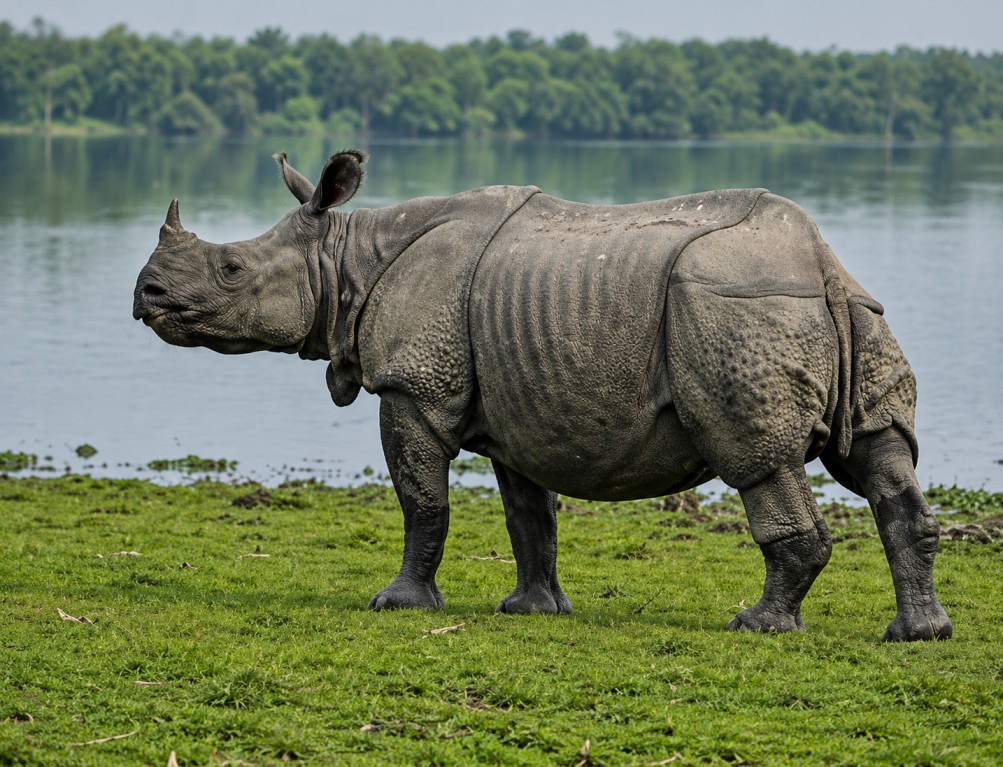
Critical habitat for the Bengal florican and pygmy hog, and for the Assam population of the one-horned rhinoceros, successfully reintroduced as part of the park's conservation recovery.
Forested Hill Slopes
Support populations of golden langur alongside clouded leopard and a rich diversity of other forest mammals.
Bhutan Himalaya
Panoramic views across the Manas landscape toward the distant Bhutan Himalaya add a further dimension of scenic grandeur to the wildlife experience.
On-ground experiences
03 — ACTIVITIESJeep Safari
Through the park's core and buffer zones, offering opportunities to observe tiger, elephant, rhinoceros, and the park's remarkable diversity of grassland and forest wildlife.
River & Rafting Safari
Along the Manas River, providing a distinctive and scenic route into areas otherwise difficult to reach by road.
Birdwatching
Exceptionally rewarding across the park, with over five hundred bird species recorded, including the critically endangered Bengal florican.
Seasonality
04 — OPERATING WINDOWThe most favorable period to visit is November to April, when the park is open and wildlife sightings are at their most reliable.
Monsoon months from June to September bring heavy flooding from the Manas River, closing the park entirely.