Megamalai-Wildlife-Sanctuary : The Hidden Gem Of The Western Ghats
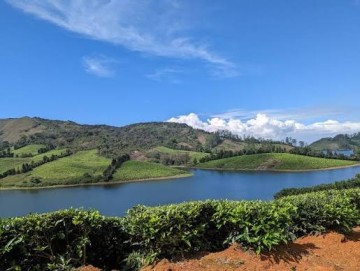
There's a place in the deep south of Tamil Nadu where the fog doesn't just visit — it lives there. Where tea bushes climb the slopes in soft green waves, and the road up is a string of hairpin bends that feel less like a drive and more like an initiation. That's Megamalai for you — a name that locals also call Paccha Kumachi, the Green Hills, and one visit will tell you exactly why. Tucked into the Western Ghats in Tamil Nadu's Theni district, Megamalai isn't a postcard hill station built for crowds. It's a wild, working landscape that has quietly stayed itself while the world rushed past.
🌿 Megamalai Wildlife Sanctuary, Tamil Nadu – The Hills That Wear Clouds
There's a place in the deep south of Tamil Nadu where the fog doesn't just visit — it lives there. Where tea bushes climb the slopes in soft green waves, and the road up is a string of hairpin bends that feel less like a drive and more like an initiation. That's Megamalai for you — a name that locals also call Paccha Kumachi, the Green Hills, and one visit will tell you exactly why. Tucked into the Western Ghats in Tamil Nadu's Theni district, Megamalai isn't a postcard hill station built for crowds. It's a wild, working landscape that has quietly stayed itself while the world rushed past.
📜 A Little Bit of History First
Megamalai's other name, the High Wavy Mountains, comes from the British era, when planters first carved tea and cardamom estates into these remote slopes. The Meghamalai Wildlife and Environment Association, started under Hindustan Unilever's management of the estates, worked with the forest department for years to protect endangered species across the region. For decades, this remained a forgotten corner of Tamil Nadu — too remote, too roadless, too wild to attract the tourist trail that found Ooty or Kodaikanal. That isolation turned out to be its blessing. In April 2021, the Government of India approved the creation of the Meghamalai Tiger Reserve, bringing together the Srivilliputhur Grizzled Squirrel Wildlife Sanctuary and the Tirunelveli Wildlife Sanctuary under one protected umbrella — making it Tamil Nadu's fifth tiger reserve. It now forms a vital green corridor connecting to the Periyar Tiger Reserve, helping wildlife move safely between forests across the southern Western Ghats. Wikipedia + 2
🐾 The Wild Heart of the Sanctuary
This is where Megamalai earns its name as a true wildlife sanctuary rather than just a scenic detour. The forest shelters elephants, leopards, the elusive Nilgiri tahr, gaur, spotted deer, sambar, sloth bears, the lion-tailed macaque, and even flying squirrels, alongside birds like the Asian paradise flycatcher and the long-tailed shrike. Bird-lovers in particular find this stretch of the Ghats rewarding, with a startling range of species moving through its shola forests and grasslands. There's even a creature found nowhere else on Earth — a wood snake species that is point-endemic to Megamalai, meaning this patch of forest is its entire known world. Spotting wildlife here takes patience and a bit of luck; this is not a jeep-safari park with guaranteed sightings, but a genuinely wild forest where every glimpse feels earned. TrawellTrawell
🚗 Getting There — and Why the Journey Is Part of the Magic
The drive into Megamalai is famous for its drama. You wind up roughly eighteen hairpin bends, and fog seems to be a near-permanent companion, gliding over the hills and settling across the tea plantations and green ranges like a living thing. Some travelers describe ten to twelve sharp bends on the approach roads alone, with the going getting genuinely rough beyond a certain point — locals recommend swapping your own car for a sturdier tourist vehicle (a Tata Sumo or Bolero) for the final stretch, since the terrain can be unkind to regular ground clearance. It's an adventure rather than a commute, and that's precisely the appeal. Tamilnadu Tourism
📍 What to See Along the Way
Megamalai rewards the unhurried traveler. Notable landmarks scattered through the region include the wildlife sanctuary itself, the Meghamalai and Suruli waterfalls, several dams, the Maharaja Mettu viewpoint, and the tea and cardamom plantations that blanket the slopes. From Manalar Dam, the view opens up dramatically over the Cumbum Valley, with little hamlets scattered across the landscape below. Tea estate visits are a quiet highlight — walking through neat rows of tea bushes with the scent of fresh leaves in the air, sometimes paired with a visit to a working tea factory to see how the leaf becomes the cup. Irukkanji Dam and its surrounding viewpoints offer cloud-watching at its finest — on a good day, you're looking down at clouds rather than up at them. For those who prize silence over selfie spots, this is the rare Tamil Nadu destination where you might not see another vehicle for an hour. Tamilnadu TourismTamilnadu Tourism
🌤️ Best Time to Visit
October to May counts as the sweetest stretch to visit Megamalai, when mist gives the hills a mysterious quality and the cool, clean air makes every walk feel like a small reward. Winter, particularly October through February, is widely considered the best window, when the fog rolls thick across the tea gardens and the temperatures stay pleasantly crisp. Monsoon months bring lush, dramatic greenery but also slippery roads and reduced visibility, so plan with some flexibility. My Holiday HappinessTamilnadu Tourism
🧭 A Few Honest Travel Notes
Megamalai isn't built for comfort-seekers — that's rather the point. Accommodation is limited to a handful of estate stays and government guest houses, so book well ahead and carry your own food and water, since shops thin out fast once you're past the main checkpoint. Network connectivity is patchy at best, which, depending on your mood, is either the biggest drawback or the biggest gift. A sturdy vehicle, comfortable shoes, and a bit of patience for winding roads will serve you well. And please, carry your trash back down with you — this forest has stayed wild because so few people have passed through carelessly, and that's worth protecting.
🌄 Why Megamalai Deserves a Place on Your List
If Kodaikanal is the hill station that welcomes you with open arms, Megamalai is the one that makes you earn the welcome — and rewards you generously for it. This is Tamil Nadu at its most untouched: a tiger reserve cloaked in permanent mist, tea gardens climbing into the clouds, and a silence so complete you can hear your own footsteps on the forest floor. For trekkers, birders, and anyone tired of destinations that feel rehearsed, Megamalai offers something increasingly rare — a landscape that hasn't yet learned to perform for visitors. It simply exists, wild and green, exactly as it always has.