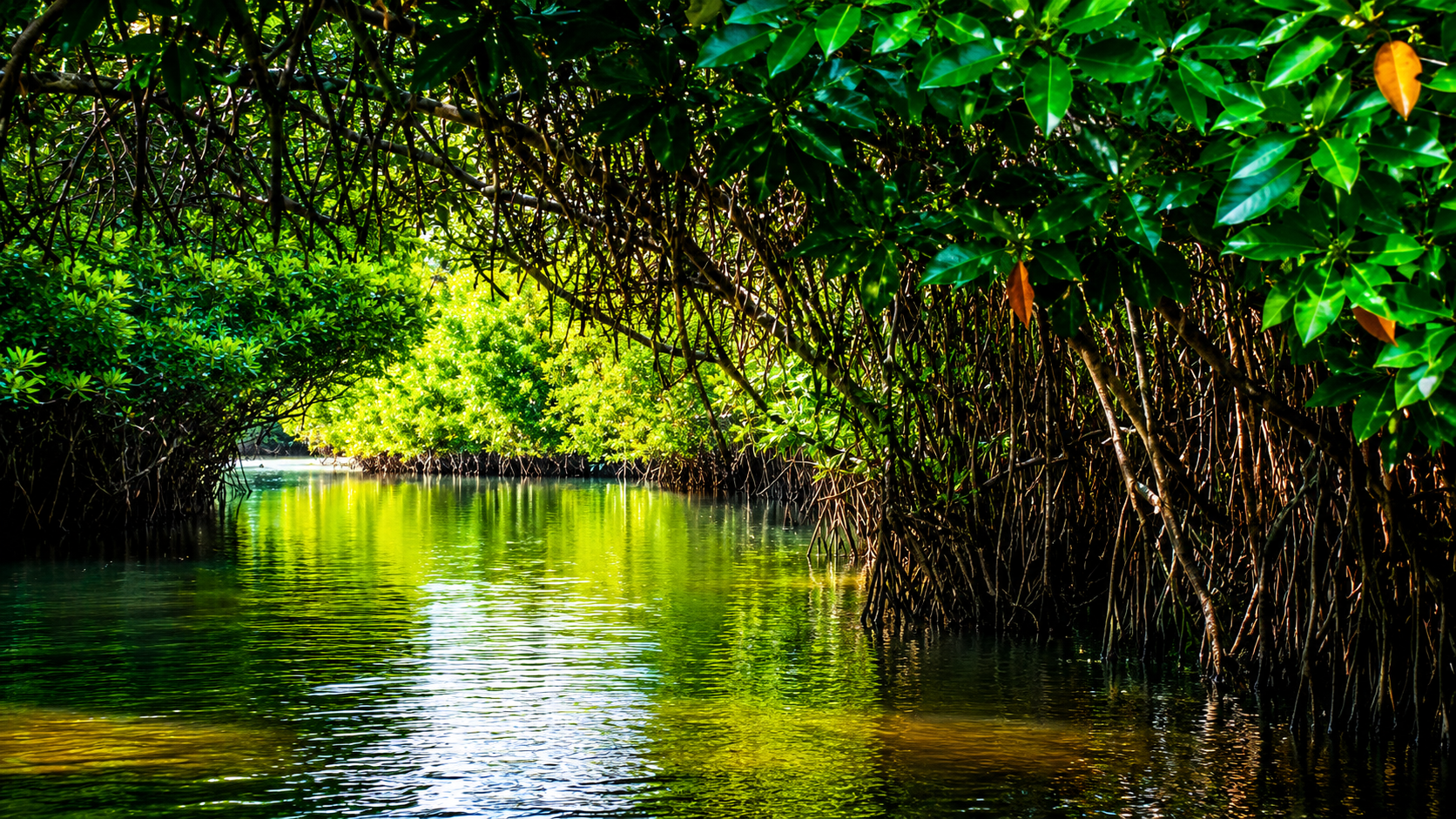
Pichavaram Mangrove Forest : A Natural Wonder Of Tamil Nadu
Pichavaram Mangrove Forest stands as one of the most serene, visually enchanting, and ecologically significant natural destinations in southern India, a labyrinthine world of water channels, dense mangrove canopy, and tidal creeks that together create a landscape of quiet, otherworldly beauty unlike anything else available along the Coromandel Coast. Located in the Cuddalore district of Tamil Nadu, approximately two hundred and fifty kilometres south of Chennai and three kilometres from the pilgrim town of Chidambaram, Pichavaram encompasses one of the largest mangrove forests in India, second only to the Sundarbans in extent, covering an area of approximately one thousand one hundred hectares of interconnected waterways, mud islands, and tidal channels that separate the backwaters from the Bay of Bengal through a narrow barrier of coastal land. The destination draws nature enthusiasts, birdwatchers, photographers, ecology students, and those simply drawn by the prospect of gliding silently by boat through a forest that grows from the water itself, its arching roots and interlocking canopy creating a quality of enclosed, dappled light and natural stillness that produces an immediate and lasting sense of calm.
🌿 Pichavaram Mangrove Forest (Tamil Nadu)
🌊 Overview
Pichavaram Mangrove Forest stands as one of the most serene, visually enchanting, and ecologically significant natural destinations in southern India, a labyrinthine world of water channels, dense mangrove canopy, and tidal creeks that together create a landscape of quiet, otherworldly beauty unlike anything else available along the Coromandel Coast. Located in the Cuddalore district of Tamil Nadu, approximately two hundred and fifty kilometres south of Chennai and three kilometres from the pilgrim town of Chidambaram, Pichavaram encompasses one of the largest mangrove forests in India, second only to the Sundarbans in extent, covering an area of approximately one thousand one hundred hectares of interconnected waterways, mud islands, and tidal channels that separate the backwaters from the Bay of Bengal through a narrow barrier of coastal land. The destination draws nature enthusiasts, birdwatchers, photographers, ecology students, and those simply drawn by the prospect of gliding silently by boat through a forest that grows from the water itself, its arching roots and interlocking canopy creating a quality of enclosed, dappled light and natural stillness that produces an immediate and lasting sense of calm.
What distinguishes Pichavaram from other mangrove destinations in India is the particular intimacy and accessibility of its waterway network, where the channels between the mangrove islands are narrow enough to create a sense of enclosed immersion within the forest rather than mere passage through it, yet sufficiently navigable by small flat-bottomed boat to allow visitors to penetrate deep into the interior of the forest without the need for specialised equipment or extended physical effort. The interplay of water, root, canopy, and sky within the Pichavaram channels creates a visual experience of unusual poetic quality, where the reflection of the mangrove canopy in the still water of the narrower creeks produces a symmetry of natural form that photographers and painters have found endlessly compelling. The proximity of Pichavaram to the great Chola temple town of Chidambaram and the coastal heritage site of Poompuhar further situates the forest within a landscape of layered cultural and natural richness that rewards those who approach it as part of a broader engagement with the Tamil Nadu coastline.
🌱 Why Visit Pichavaram Mangrove Forest
The ecological significance of Pichavaram rests on its function as a critical nursery habitat for commercially important fish and crustacean species, a roosting and nesting ground for a remarkable diversity of waterbirds and waders, and a natural coastal barrier whose dense root systems provide measurable protection to the shoreline and inland communities against storm surges and the destructive energy of cyclones and tsunamis. The forest's role in coastal protection was dramatically demonstrated during the 2004 Indian Ocean tsunami, when the mangrove belt provided meaningful attenuation of wave energy along the sections of coastline it protected, a demonstration of natural infrastructure value that has since informed conservation and restoration efforts across the Tamil Nadu coast.
One of the most compelling reasons to visit is the boat journey through the forest's interior channels, an experience of natural immersion that operates at a pace and scale entirely different from conventional wildlife tourism. Moving silently through the narrow waterways by flat-bottomed boat, with the mangrove canopy meeting overhead and the roots of the trees rising from the water on either side in their extraordinary architectural complexity, produces a quality of sensory engagement that is meditative and deeply pleasurable in equal measure. The sounds of the forest, the calls of waterbirds, the splash of a kingfisher diving, and the gentle movement of water around the roots, reach the visitor with an immediacy and clarity that the more open landscapes of conventional wildlife destinations do not provide in the same way.
Additionally, Pichavaram offers a birdwatching experience of considerable quality and diversity, with the mangrove and associated mudflat habitats supporting populations of herons, egrets, cormorants, spoonbills, ibises, kingfishers, and a variety of migratory waders during the winter months that together create a spectacle of avian richness immediately accessible from the boat. The combination of resident waterbird colonies nesting within the mangrove canopy and the seasonal influx of migratory species along the Coromandel Coast gives Pichavaram a year-round birdwatching appeal that rewards both dedicated ornithologists and casual observers.
🛶 Key Highlights Within the Forest
The inner channel network of the Pichavaram forest, accessible by flat-bottomed boat from the main boating centre at the forest edge, represents the most intimate and ecologically rich portion of the mangrove system, where the narrowest waterways penetrate deepest into the interior of the forest and the sense of enclosure within the mangrove canopy is most complete. Moving through these inner channels, where the boat must sometimes navigate between root systems that press close on either side and the canopy overhead filters the light into a shifting pattern of green and gold, produces an experience of natural beauty and quiet that is the defining memory of a Pichavaram visit for most who make it.
The bird island within the forest, a small elevated area of firmer ground within the mangrove system that serves as a communal nesting and roosting site for large colonies of painted storks, open-billed storks, night herons, and egrets, is one of the most spectacular wildlife concentrations visible from the boat, particularly during the nesting season when the trees are laden with birds at every level and the noise and activity of the colony carries across the surrounding water. Approaching the bird island by boat in the early morning, when the colony is most active and the light most favorable, is one of the most rewarding wildlife experiences Pichavaram offers.
The outer channels of the forest, where the mangrove system opens toward the broader backwater and the distant line of the coastal barrier separating Pichavaram from the Bay of Bengal becomes visible, offer a different and more expansive visual experience than the enclosed inner waterways, with wider skies, longer sightlines across the water, and the possibility of observing dolphins and other marine species that occasionally enter the backwater system from the sea. The transition between the enclosed inner forest and the open outer water creates a journey of changing perspectives and shifting natural atmospheres that gives the Pichavaram boat experience a satisfying sense of narrative progression.
The mangrove species diversity visible along the channel edges rewards those with a botanical interest in the extraordinary range of adaptive strategies that different mangrove species have evolved for surviving in the saline, waterlogged, and tidally dynamic conditions of the coastal zone. The variety of root architectures, from the pneumatophores of the Avicennia species rising like fingers from the mud to the arching prop roots of the Rhizophora that create the most visually dramatic and architecturally complex forest interiors, constitutes a living demonstration of evolutionary ingenuity that is as intellectually engaging as it is visually beautiful.
🚣 Activities
Boating through the mangrove channels is the primary and most essential activity at Pichavaram, with flat-bottomed boats available for hire at the Tamil Nadu Forest Department boating centre near the forest entrance. Visitors have the option of hiring a rowboat for a quieter and more intimate experience of the inner channels or a motorised boat for covering more of the forest's extent in a given period, and the choice between these modes significantly shapes the character of the experience. The rowboat journey through the narrowest channels, conducted at the pace of the oars with minimal mechanical noise, produces conditions of sound and stillness that allow the full sensory richness of the forest interior to reach the visitor without interruption.
Birdwatching from the boat across both the inner mangrove channels and the outer backwater margins rewards those who combine the boat journey with patient and attentive observation of the avian life visible along the channel edges and at the bird island. Bringing binoculars and allowing the boatman to slow or pause at points of particular bird activity significantly increases the quality and diversity of species encountered during the journey, and the early morning hours produce conditions of light and bird activity that are measurably superior to the midday and afternoon periods for ornithological observation.
Visiting Chidambaram, located approximately three kilometres from the forest, as a cultural complement to the natural experience of Pichavaram, allows visitors to engage with one of the most important and architecturally magnificent temple complexes in Tamil Nadu, the Nataraja temple, whose towering gopurams and sacred tank create a spiritual and artistic experience of the first order. The combination of a morning boat journey through the mangrove forest and an afternoon visit to the Chidambaram Nataraja temple constitutes a day of exceptional variety and richness that takes full advantage of the cultural and natural resources concentrated within this small area of the Tamil Nadu coastline.
Exploring the nearby coastal heritage site of Poompuhar, where the ancient Chola port of Kaveripattinam once stood at the mouth of the Kaveri river and where a modest but evocative archaeological museum and shoreside memorial now commemorate a civilisation of considerable maritime achievement, adds a historical dimension to the broader Pichavaram visit that situates the natural landscape within the long continuity of human settlement and cultural activity along the Coromandel Coast.
📅 Best Time to Visit
The most favorable period to visit Pichavaram Mangrove Forest is from November to March, when the northeast monsoon has concluded, the air along the Tamil Nadu coast is at its most pleasant, and the winter influx of migratory waterbirds dramatically increases the avian diversity visible from the boat and along the forest margins.
The months of February and March offer excellent birdwatching conditions as the migratory species begin their pre-departure congregation, with the coastal mudflats and backwater margins supporting high densities of waders, terns, and larger waterbirds that provide some of the most productive birdwatching of the year.
The northeast monsoon from October to December brings significant rainfall to the Tamil Nadu coastline, and while the forest itself is unaffected in its accessibility, boat trips during the height of the monsoon rains are less comfortable and the overcast conditions reduce the quality of both the natural light within the channels and the birdwatching visibility along the forest margins.