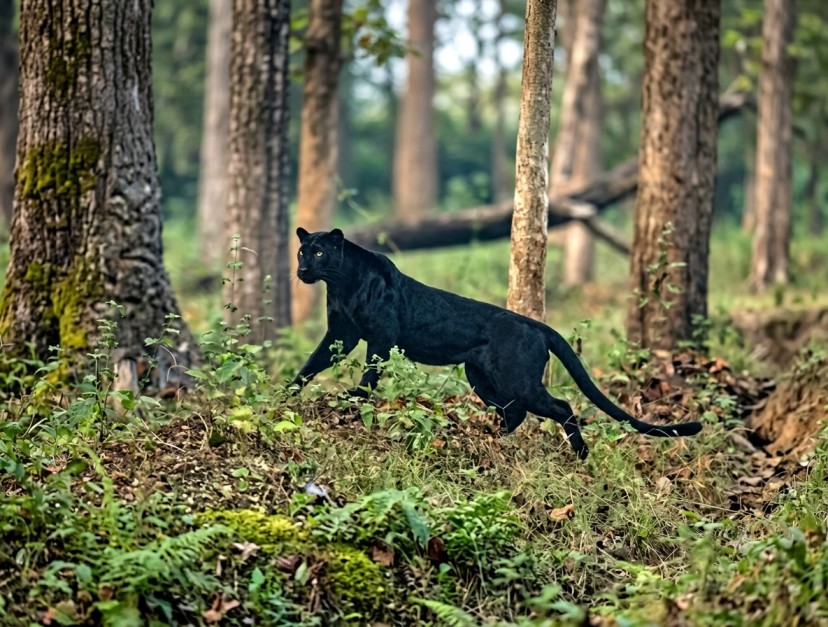
Bandipur-National-park : Where The Wild Roams Free
Imagine the hush that falls just before dawn, broken only by the distant trumpet of an elephant and the sharp alarm call of a spotted deer cutting through the mist-draped sal forests. The air smells of damp earth and wild grass, and somewhere beyond the treeline, a tiger is padding silently through its ancient domain. That's Bandipur for you — not merely a national park, but a living, breathing wilderness that humbles you the moment you enter. Spread across 874 sq km in the Chamarajanagar district of Karnataka, Bandipur National Park sits at the heart of one of Asia's largest protected forest complexes, and once you've driven through its dusty trails with the sun setting behind the Nilgiri Hills, you'll carry that feeling with you for the rest of your life.
🌿 Bandipur National Park, Karnataka – Where the Wild Calls and the Forest Answers
🐘 A Journey Into One of India's Greatest Wilderness Landscapes
Imagine the hush that falls just before dawn, broken only by the distant trumpet of an elephant and the sharp alarm call of a spotted deer cutting through the mist-draped sal forests. The air smells of damp earth and wild grass, and somewhere beyond the treeline, a tiger is padding silently through its ancient domain. That's Bandipur for you — not merely a national park, but a living, breathing wilderness that humbles you the moment you enter. Spread across 874 sq km in the Chamarajanagar district of Karnataka, Bandipur National Park sits at the heart of one of Asia's largest protected forest complexes, and once you've driven through its dusty trails with the sun setting behind the Nilgiri Hills, you'll carry that feeling with you for the rest of your life.
📜 A Little Bit of History First
Bandipur's story is rooted in royal stewardship and conservation legacy. The forests here were once the private hunting grounds of the Wadiyar kings of Mysore, who, with remarkable foresight, also became some of India's earliest wildlife protectors. In 1931, Krishnaraja Wadiyar IV established the Venugopala Wildlife Park across part of this territory. It was later expanded and declared a Tiger Reserve in 1973 under Project Tiger — one of the first nine reserves in the country — making Bandipur a cornerstone of India's modern conservation story. What was once a royal hunting preserve became a sanctuary for the very animals that were once hunted, and today that transformation stands as one of the most significant conservation success stories on the subcontinent.
🌲 The Attractions That Will Leave You Breathless
The forest itself is the star. Bandipur is part of the magnificent Nilgiri Biosphere Reserve, sharing its borders with Mudumalai in Tamil Nadu, Wayanad in Kerala, and Nagarhole in Karnataka — together forming one of the largest contiguous wildlife habitats in South Asia. For wildlife lovers, this is as close to paradise as it gets.
The safari experience here is unlike anywhere else in India. Government-run forest department jeep and bus safaris roll through the core zones at dawn and dusk, and the odds of a remarkable sighting are genuinely high. Herds of gaur (Indian bison) graze in forest clearings, their massive dark frames glowing copper in the early light. Elephants move in family groups through the dry deciduous woodland, and if you're patient and lucky, a Bengal tiger may cross your path — Bandipur hosts a healthy population, making it one of the more reliable parks for tiger sightings in southern India. Leopards, dholes (Indian wild dogs), sloth bears, and four-horned antelopes also roam these forests.
The birdlife is spectacular too — over 200 species have been recorded here, including the crested serpent eagle, Indian pitta, Malabar pied hornbill, and the stunning paradise flycatcher. Birdwatchers could spend days here and still not see everything.
The landscape itself is breathtaking — a mosaic of dry deciduous forest, moist deciduous patches, scrubland, and grassy glades watered by the Kabini and Moyar rivers. The Gopalaswamy Betta, a small hillock inside the park crowned with an ancient temple, offers a rare elevated view over the canopy stretching to the horizon. The drive up is an experience in itself.
🍛 Culture, People, and Food
The region around Bandipur has a quiet, unhurried character deeply connected to the land. The nearby town of Gundlupet serves as the main gateway and reflects the cultural blend of Karnataka's southern districts — warm, predominantly Kannada-speaking communities with strong agricultural traditions. The indigenous Jenu Kuruba and Betta Kuruba tribal communities have lived in and around these forests for generations, their knowledge of the land forming an invisible but vital thread in the fabric of conservation here.
For food, you won't find fine dining inside the park — and that's exactly the point. The forest lodges and resorts on the periphery serve wholesome, unpretentious meals: Karnataka-style rice plates with sambar and rasam, fluffy idlis with coconut chutney, and simple but satisfying dinners after a long day in the wild. The mood around the dinner table after an evening safari — with everyone sharing their sightings and the sounds of the forest drifting in from just beyond the fence — is something that no restaurant in a city can replicate.
🌤️ Best Time to Visit
Bandipur is worth visiting through much of the year, but the winter months from October to February are generally considered the best — the weather is cool and pleasant, visibility in the forest is excellent, and animals tend to gather near water sources, making sightings more reliable. March to May brings dry, warm conditions but also drives animals to the remaining water bodies, which can mean excellent wildlife encounters. The park typically closes during the monsoon season (July–September) for the safety of both visitors and the regenerating forest.
✈️ By Air
The nearest major airport is Bengaluru Kempegowda International Airport, approximately 220 km from Bandipur. Mysuru also has a smaller airport with select connections. From Bengaluru or Mysuru, taxis and private cabs to the park are readily available.
🚆 By Rail
The most convenient railway station is Mysuru Junction, about 80 km from Bandipur. Mysuru is extremely well-connected to Bengaluru, Chennai, and several other cities. From Mysuru, buses and hired cabs cover the remaining distance on the scenic NH181.
🚗 By Road
Bandipur lies directly on the Mysuru–Ooty highway, making road access straightforward and, frankly, beautiful. State-run KSRTC buses and private services run regularly between Mysuru and Ooty, passing through the park. If you're driving from Bengaluru, the 4.5–5 hour journey through Mysuru is well worth it, especially as the forest gradually closes in around the highway.
📍 Nearby Places Worth Exploring
Bandipur's location at the tri-junction of three states makes it a superb base for a wider wildlife circuit. Nagarhole National Park (about 90 km away) offers another spectacular forest experience, particularly around the Kabini reservoir. Mudumalai Wildlife Sanctuary in Tamil Nadu shares a border with Bandipur and can be explored as an extension. Mysuru deserves at least a day or two — the golden-lit Mysore Palace, the vibrant Devaraja Market, and the city's legendary cuisine make it one of India's most rewarding cultural stops. Ooty in the Nilgiris is about 2 hours away for those seeking cooler air and tea-garden walks.
🎒 A Few Travel Tips Before You Go
- Book safari slots well in advance, especially for the peak October–February season — forest department online bookings fill up quickly.
- Wear muted, earthy colours inside the park; bright clothing startles wildlife and draws unnecessary attention.
- Leave before the mandatory night driving ban kicks in, as the highway through the park closes to vehicles from 9 PM to 6 AM to protect nocturnal wildlife movement.
- Carry a good pair of binoculars — they transform a safari from a pleasant drive into an extraordinary one.
⭐ Why You Simply Must Visit Bandipur
Some places you visit with your eyes. Bandipur you visit with all your senses — the rustle in the undergrowth that makes your breath catch, the deep, resonant rumble of an elephant herd moving through the trees, the way the golden afternoon light falls through the canopy onto a group of chital deer pausing to listen. It's a reminder, necessary and profound, that we are not at the top of every story. Here, in these forests, something older and wilder holds sway.
Whether you're a serious wildlife photographer tracking the perfect frame, a family wanting children to understand where animals truly belong, a couple seeking stillness far from every screen, or simply a traveller who needs to remember what awe feels like — Bandipur will deliver. Come with patience, leave with wonder, and you'll spend the rest of your days finding excuses to return to Karnataka's wildest corner.