Belta National Park : The Wild Heart Of Jharkhand
Betla National Park stands as one of the most significant and historically distinguished wildlife destinations in eastern India, combining a landscape of dense sal forests, rocky plateaus, and river valleys with a conservation legacy that places it among the earliest protected areas to be included under Project Tiger. Located in the Latehar district of Jharkhand, within the broader Palamu Tiger Reserve, approximately one hundred and seventy kilometres northwest of Ranchi, the park occupies a dramatic terrain of the Chota Nagpur plateau where the Koel and Auranga rivers carve through forested hillsides to create a habitat of exceptional ecological richness. The destination draws wildlife enthusiasts, naturalists, birdwatchers, and heritage travelers drawn not only by the prospect of encountering tigers, elephants, and leopards in their natural habitat but also by the remarkable Palamu Fort ruins that stand within the forest, adding a historical dimension unusual among Indian national parks.
🌿 Betla National Park (Jharkhand)
Wildlife • Heritage • Forests • Rivers • Conservation Legacy
📖 Overview
Betla National Park stands as one of the most significant and historically distinguished wildlife destinations in eastern India, combining a landscape of dense sal forests, rocky plateaus, and river valleys with a conservation legacy that places it among the earliest protected areas to be included under Project Tiger. Located in the Latehar district of Jharkhand, within the broader Palamu Tiger Reserve, approximately one hundred and seventy kilometres northwest of Ranchi, the park occupies a dramatic terrain of the Chota Nagpur plateau where the Koel and Auranga rivers carve through forested hillsides to create a habitat of exceptional ecological richness. The destination draws wildlife enthusiasts, naturalists, birdwatchers, and heritage travelers drawn not only by the prospect of encountering tigers, elephants, and leopards in their natural habitat but also by the remarkable Palamu Fort ruins that stand within the forest, adding a historical dimension unusual among Indian national parks.
What distinguishes Betla from other wildlife destinations in the region is this rare convergence of natural and historical heritage within a single protected landscape. The park's forests shelter a significant population of elephants alongside tigers, sloth bears, gaur, and a richly diverse birdlife, while the crumbling medieval fortifications of the Chero dynasty rise unexpectedly from the forest floor, lending the landscape an atmosphere of layered time that deepens the experience of moving through it. Betla rewards those who approach it not merely as a game-viewing destination but as a place where wilderness, history, and the enduring culture of the region's Adivasi communities converge in a landscape of considerable depth and character.
⭐ Why Visit Betla National Park
The designation of Palamu as one of the original nine tiger reserves under Project Tiger in 1973 reflects the ecological importance of the landscape within which Betla sits, and the park continues to represent one of the most meaningful opportunities in eastern India to experience a functioning tiger habitat within a setting of genuine wilderness character. Unlike some of India's more heavily visited wildlife destinations, Betla retains a quality of relative quietude that allows for unhurried immersion in the forest environment.
One of the most compelling reasons to visit is the diversity of large mammals that the park supports within its varied terrain of sal forest, grassland patches, and riverine corridors. Elephants are frequently encountered and represent perhaps the most reliable wildlife highlight of a Betla visit, moving through the forest in family groups in a manner that conveys the full scale and dignity of these animals in their natural setting. The presence of tigers, leopards, sloth bears, wild dogs, and gaur within the same landscape makes Betla one of the more species-rich wildlife destinations accessible from Jharkhand.
Additionally, the Palamu Fort complex within the park boundaries provides a genuinely distinctive reason to visit that sets Betla apart from comparable wildlife destinations. The ruins of both the old and new Palamu forts, built by the Chero kings and later contested by the Mughals, rise from the forest in a state of romantic dilapidation that rewards exploration on foot in the company of a guide. The combination of jungle safari and fort exploration within the same visit creates an itinerary of unusual richness that few wildlife destinations in India can replicate.
🏞️ Key Highlights Within the Area
🌳 Sal Forests
The sal forests that cover the greater part of Betla's core zone form the ecological and aesthetic heart of the park, a landscape of tall, straight-trunked trees whose canopy creates a quality of filtered light on the forest floor that is distinctive and deeply atmospheric. Moving through these forests by jeep in the early morning, when the mist sits low between the trees and the forest is alive with birdsong, constitutes one of the most memorable wildlife experiences the park offers, independent of any particular animal sighting.
🐘 Elephant Population
The elephant population of Palamu Tiger Reserve is one of the defining wildlife highlights of Betla, with herds regularly encountered in the grassland clearings and along the river corridors that thread through the forest. The sight of elephants moving freely through their natural habitat, undisturbed and at ease, is an experience of a different quality from that offered by more heavily touristed wildlife destinations, and the relative intimacy of Betla's visitor numbers enhances the sense of genuine wilderness encounter.
🏰 Palamu Fort Ruins
The Palamu Fort ruins, accessible from within the park, represent one of the most unusual and rewarding heritage experiences available within any Indian national park. The old fort, perched on a rocky promontory above the Auranga river, and the new fort dating from the seventeenth century offer a compelling combination of architectural remains, riverside setting, and forest atmosphere that rewards unhurried exploration. The contrast of crumbling battlements and jungle vegetation creates a visual drama of considerable power.
🌊 Koel & Auranga Rivers
The Koel and Auranga rivers, which flow through and around the park, sustain the riverine habitats that support much of the park's wildlife diversity. The waterholes and river banks along these corridors attract animals throughout the day, and the elevated machans and watch towers positioned at strategic points along the water sources offer particularly productive vantage points for patient wildlife observation.
🎯 Activities
🚙 Jeep Safaris
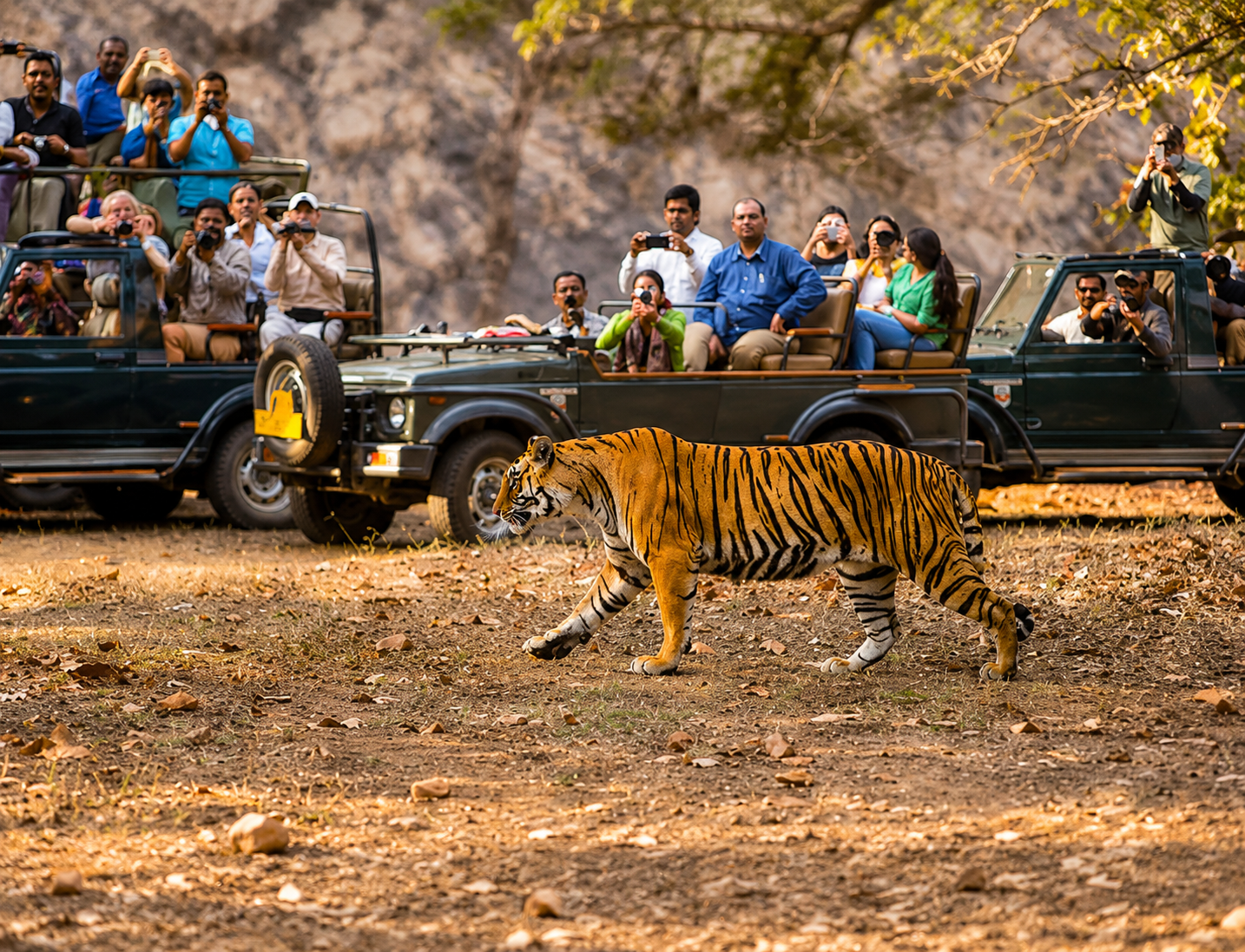
Jeep safaris through the designated forest routes are the primary wildlife activity at Betla, conducted in the early morning and late afternoon hours when animal activity is at its highest. The park's network of forest tracks passes through a variety of habitat types, from dense sal forest to open grassland clearings and riverine stretches, offering a varied and engaging safari experience across a single outing. Booking safaris through the park's official channels in advance is advisable, particularly during the peak winter months when visitor numbers increase.
🐘 Elephant Safaris
Elephant safaris, where available, offer an alternative mode of moving through the forest that allows access to terrain beyond the jeep tracks and provides a different perspective on the wildlife and vegetation. The elevated vantage point and the relative silence of elephant movement through the forest make this a particularly rewarding way to experience the denser sections of the sal woodland.
🏰 Fort Exploration
Exploration of the Palamu Fort ruins is strongly recommended as a complement to the wildlife safaris, offering a complete change of register within the same visit. Walking through the fort precincts in the company of a knowledgeable guide, who can contextualise the Chero dynasty history and point out the architectural details that survive amid the encroaching vegetation, adds a historical and cultural richness to the Betla experience that extends well beyond conventional wildlife tourism.
🦜 Birdwatching
Birdwatching across the park's varied habitats rewards those who dedicate time to quieter observation along the forest edges, river banks, and grassland clearings. The park's bird checklist is extensive, encompassing forest species, raptors, and waterbirds associated with the river corridors, and the relative absence of crowds at Betla creates ideal conditions for patient and productive birdwatching at any time of the cooler months.
📅 Best Time to Visit
The most favorable period to visit Betla National Park is from November to April, when the park is open to visitors and the conditions for wildlife observation are at their most productive. The cooler months of November through February offer the most comfortable temperatures for outdoor activity, and the reduced forest cover following the monsoon improves sightlines through the vegetation, increasing the likelihood of meaningful wildlife encounters during both morning and afternoon safaris.
The months of March and April, as the dry season advances and water sources contract, bring animals in greater concentrations to the remaining waterholes and river banks, making this arguably the most rewarding period for dedicated wildlife enthusiasts willing to tolerate the increasing heat. Tiger and elephant sightings tend to be more frequent during these months as the animals' movements become more predictable in response to the availability of water.
The park typically remains closed during the monsoon months from July to October, when the forest roads become impassable and the intense rainfall makes wildlife observation impractical. The landscape during this period undergoes a dramatic transformation, with the sal forests and surrounding hillsides turning an intense green that reaches its fullest expression by August and September, though this beauty must generally be appreciated from the park's periphery rather than its interior.
🚗 Connectivity
Betla National Park is accessible primarily from Ranchi, which serves as the nearest major city with air and rail connectivity. Ranchi Airport offers regular domestic flights from Delhi, Mumbai, Kolkata, and other major cities, and the road journey from Ranchi to Betla covers approximately one hundred and seventy kilometres, typically taking between four and five hours through the forested landscape of the Chota Nagpur plateau. The drive itself passes through scenery of considerable natural interest and forms part of the overall experience of reaching this relatively remote destination.
The town of Daltonganj, headquarters of the Latehar district and located approximately twenty-five kilometres from the park entrance, serves as the nearest significant urban centre and provides the most practical base for those wishing to spend multiple days exploring the park and the surrounding Palamu landscape. Daltonganj is connected by rail to Ranchi and other points in Jharkhand and Bihar, offering an alternative to road travel for those approaching from further afield. The relative remoteness of Betla is part of its character, and the journey through the plateau landscape that precedes arrival at the park contributes meaningfully to the sense of entering a place of genuine wilderness.