Buxa Tiger Reserve : Gateway To The Wild Dooars
Imagine standing at the edge of a dense forest at dawn, the air thick with the scent of damp earth and wild orchids, a chorus of birds filling the silence before the world has fully woken up. Somewhere deep in the trees, a rustle. A shadow. The jungle breathes, and you breathe with it. That's Buxa for you — not just a wildlife reserve, but an experience that gets under your skin. Tucked away in the Alipurduar district of northern West Bengal, bordering Bhutan to the north and Assam to the east, Buxa Tiger Reserve is one of India's most biodiverse and historically layered wilderness destinations. It's the kind of place that makes you feel small in the best possible way.
🌳 Buxa Tiger Reserve, West Bengal – Where the Jungle Holds Ancient Secrets
Imagine standing at the edge of a dense forest at dawn, the air thick with the scent of damp earth and wild orchids, a chorus of birds filling the silence before the world has fully woken up. Somewhere deep in the trees, a rustle. A shadow. The jungle breathes, and you breathe with it. That's Buxa for you — not just a wildlife reserve, but an experience that gets under your skin. Tucked away in the Alipurduar district of northern West Bengal, bordering Bhutan to the north and Assam to the east, Buxa Tiger Reserve is one of India's most biodiverse and historically layered wilderness destinations. It's the kind of place that makes you feel small in the best possible way.
📜 A Little Bit of History First
Buxa's story stretches back long before it became a protected area. The name is believed to derive from "Buxa Duar" — one of the ancient Himalayan duars (passes or gateways) that served as a trade and transit route between the Indian subcontinent and Bhutan for centuries. Salt, cotton, and silk moved through these jungle corridors, carried by merchants and mule caravans navigating dense forest paths.
During the British colonial era, Buxa took on a more sombre role. The Buxa Fort, perched high in the hills, served as a political prison where Indian freedom fighters — including those involved in the Quit India Movement — were held captive. The ruins of this fort still stand today, a quiet reminder of the price paid for independence. After 1947, the forest was declared a wildlife sanctuary in 1983 and later upgraded to a Project Tiger Reserve in the same year, making it one of India's earliest tiger conservation efforts. Today, it spans over 760 square kilometres of lush sal forests, grasslands, rivers, and hills.
🌿 The Attractions That Will Leave You Breathless
🐅 Wildlife Experiences
The heart of Buxa is its extraordinary forest itself. The reserve is part of the Terai-Dooars ecosystem, a transition zone between the Himalayan foothills and the Bengal plains, resulting in an astonishing variety of habitats — from tall sal forests and bamboo groves to open grasslands and riverine belts.
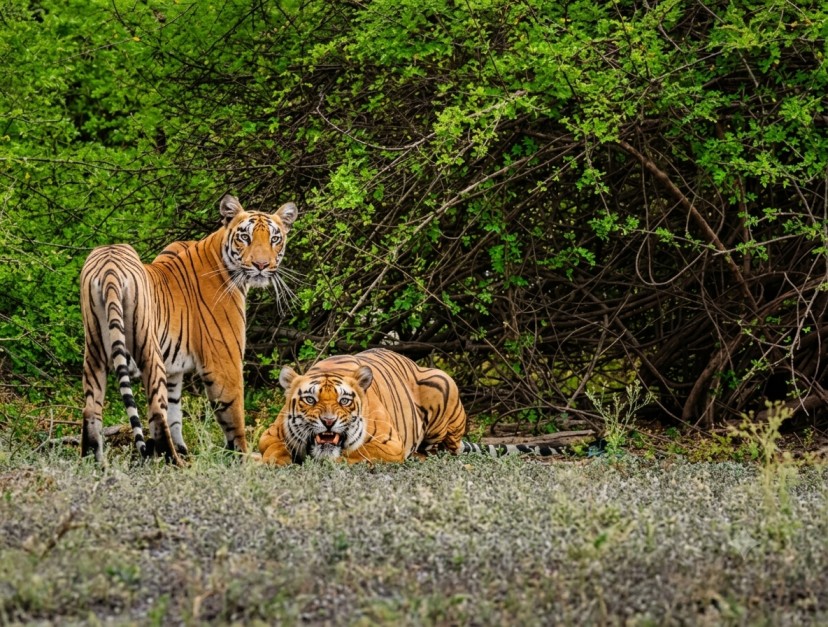
Wildlife enthusiasts will be in their element. Buxa is home to the Bengal tiger, though sightings are rare and thrilling. More commonly spotted are leopards, elephants, gaurs (Indian bison), sambar deer, barking deer, and wild boar. The reserve is also a birdwatcher's paradise with over 280 recorded species, including the rare great hornbill, Bengal florican, and Pallas's fish eagle. If you're patient and quiet, the forest will reward you.
🥾 Buxa Fort Trek
The Buxa Fort Trek is one of the reserve's most popular experiences — a scenic 7-kilometre hike through forests and tea gardens leading up to the hilltop ruins, with stunning views of Bhutan's mountains on clear days. The trail passes through Rajabhatkhawa, Jayanti, and Suntalekhola, each a picturesque hamlet worth slowing down for.
🏞️ Jayanti River
Jayanti River is a soul-soothing highlight. This clear, pebbled river flows along the forest's edge, and sitting by its banks in the early morning — watching mist rise off the water with the jungle behind you — is the kind of memory that stays with you for years. River-side camping here is nothing short of magical.
🦋 Suntalekhola
Suntalekhola is a hidden gem within the reserve — a small settlement nestled by a stream, accessible by forest trail, surrounded by birdsong and butterflies. It's particularly beloved by naturalists and photographers.
🏡 Culture, People, and Local Flavour
The communities around Buxa are as diverse as the forest itself. You'll find Rajbanshi, Koch, and various tribal communities who have lived alongside this jungle for generations, each with their own traditions, festivals, and deep knowledge of the land. The influence of Bhutanese culture is also palpable in the northern fringes — in local architecture, dress, and food.
The cuisine of the Dooars region is simple, hearty, and delicious. Freshwater fish curries cooked with mustard, steamed rice, leafy greens, and lentils form the backbone of local meals. Try masor tenga (a tangy fish curry) or simple aloo pitika (mashed potato with mustard oil and green chillies) at a local dhaba — honest food that tastes best after a morning in the forest. The region's tea estates also produce exceptional teas; a cup of freshly brewed Dooars tea is the perfect forest companion.
📅 Best Time to Visit
The best time to visit Buxa is from November to April, when the weather is pleasant, wildlife is more active near water sources, and forest trails are at their most accessible. December to February offers crisp, cool air and exceptional birdwatching. The reserve typically remains closed during the monsoon months (June to September) due to heavy rainfall and flooding, so plan accordingly. April and May can be warm but rewarding for wildlife sightings before the rains arrive.
🚗 How to Get There
✈️ By Air
By Air: The nearest airport is Bagdogra Airport (IXB), approximately 170 km from Buxa. It is well-connected to Kolkata, Delhi, and other major cities. From Bagdogra, taxis and shared cabs are available to Alipurduar or Rajabhatkhawa.
🚆 By Rail
By Rail: The most convenient railway station is Alipurduar Junction or New Alipurduar, both well-connected to Kolkata (New Jalpaiguri is also a major hub nearby). Trains like the Padatik Express and North Bengal Express serve this route. From the station, local transport reaches the reserve entrance at Rajabhatkhawa.
🛣️ By Road
By Road: National Highway 31 connects the Dooars region to the rest of West Bengal and northeastern India. State-run and private buses run from Siliguri, Jalpaiguri, and Kolkata to Alipurduar. If driving, the route through the tea gardens and forest corridors of the Dooars is a journey worth savouring in itself.
📍 Nearby Places Worth Exploring
The wider Dooars region is extraordinarily rich. Jaldapara National Park, about 30 km away, is one of the best places in India to spot the one-horned rhinoceros. Gorumara National Park offers excellent elephant and bison sightings. The charming town of Cooch Behar, with its stunning royal palace, is about 90 km away. And the gateway hill town of Siliguri — with access to Darjeeling, Sikkim, and beyond — is just a few hours' drive.
🎒 A Few Travel Tips Before You Go
Carry insect repellent — the forest is lush and moist, especially near the river. Entry into the core zone requires permits, which can be arranged through the Forest Department or your resort; book in advance during peak season. Wear muted, earthy colours for wildlife walks. Stay at the Forest Rest Houses in Rajabhatkhawa or Jayanti for an authentic, immersive experience. Always follow your forest guide's instructions — this is a wild, living ecosystem, and respect goes both ways.
🌲 Why You Simply Must Visit Buxa
Some forests you pass through. Buxa passes through you. It's a place where history, wildlife, and the quiet power of nature meet in a way that few destinations manage. Whether you're trekking to a hilltop fort that once held freedom fighters, watching a hornbill glide over the treetops, or simply sitting by the Jayanti River as the sun dips behind the Bhutan hills — Buxa reminds you that the world is far more ancient and magnificent than the noise of daily life lets you believe.
So lace up your boots, leave your schedule behind, and let Buxa do what it has always done — pull you into the forest, slow you down, and show you exactly what silence sounds like.