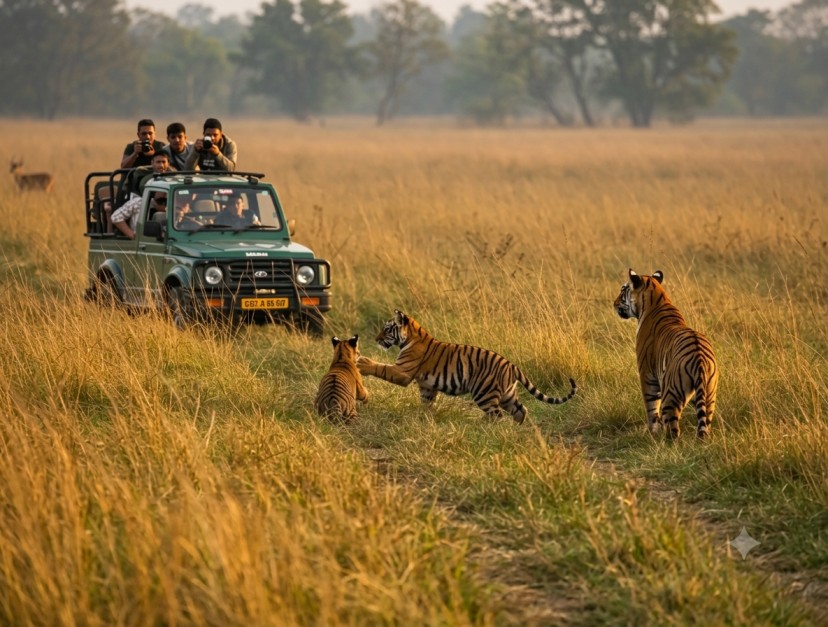
Dudhwa National Park : The Wild Terai Paradise
Picture yourself driving through mist-covered grasslands at dawn as the first rays of sunlight filter through towering sal forests. The air is fresh and alive with the calls of birds, while distant deer emerge cautiously from the tall grass. Somewhere beyond the trees, a tiger moves silently through its natural domain. The landscape feels untouched, wild, and wonderfully authentic. This is Dudhwa National Park—not merely a wildlife sanctuary, but one of India's most remarkable conservation success stories. Nestled along the Indo-Nepal border in the lush Terai region of Uttar Pradesh, Dudhwa offers visitors an extraordinary opportunity to experience nature in its purest form, where endangered species thrive amidst vast forests, wetlands, and grasslands.
🐅 Dudhwa National Park, Uttar Pradesh
Where the Wild Heart of the Terai Still Beats
📍 Location
Uttar Pradesh, India
🌿 Ecosystem
Terai Grasslands, Forests & Wetlands
🦏 Famous For
One-Horned Rhinoceros & Bengal Tigers
🦜 Bird Species
450+ Recorded Species
🌅 Introduction
Picture yourself driving through mist-covered grasslands at dawn as the first rays of sunlight filter through towering sal forests. The air is fresh and alive with the calls of birds, while distant deer emerge cautiously from the tall grass. Somewhere beyond the trees, a tiger moves silently through its natural domain. The landscape feels untouched, wild, and wonderfully authentic. This is Dudhwa National Park—not merely a wildlife sanctuary, but one of India's most remarkable conservation success stories. Nestled along the Indo-Nepal border in the lush Terai region of Uttar Pradesh, Dudhwa offers visitors an extraordinary opportunity to experience nature in its purest form, where endangered species thrive amidst vast forests, wetlands, and grasslands.
🏛️ A Conservation Legacy in the Terai
Dudhwa's story is one of dedication and preservation. Originally established as a wildlife sanctuary in 1958, it was later declared a national park in 1977 through the tireless efforts of renowned conservationist Billy Arjan Singh. His vision transformed Dudhwa into one of India's most important protected ecosystems and a refuge for endangered wildlife.
Today, Dudhwa National Park forms the core of the larger Dudhwa Tiger Reserve, which also includes Kishanpur Wildlife Sanctuary and Katarniaghat Wildlife Sanctuary. Together, these protected areas preserve one of the last remaining examples of the Terai ecosystem—a unique landscape that once stretched across the foothills of the Himalayas.
Unlike many wildlife destinations that have become heavily commercialized, Dudhwa retains a sense of wilderness and exclusivity. Here, nature still dictates the rhythm of life, creating an experience that feels both authentic and deeply immersive.
🌳 A Landscape of Extraordinary Diversity
The moment you enter Dudhwa National Park, you understand why it is considered one of India's ecological treasures. Dense sal forests blend seamlessly with vast grasslands, marshes, rivers, and wetlands, creating a mosaic of habitats that support an astonishing variety of wildlife.
The park covers nearly 500 square kilometers and is home to some of India's most iconic species. Bengal tigers roam its forests, while leopards, sloth bears, wild boars, and jackals thrive within its boundaries. The park is particularly famous for its population of swamp deer, locally known as barasingha, which can often be seen grazing in the grasslands.
Dudhwa also played a crucial role in the successful reintroduction of the Indian one-horned rhinoceros, making it one of the few places outside Assam where visitors can encounter this magnificent species. Asian elephants occasionally move through the reserve, adding to the excitement of wildlife sightings.
🦌 What Awaits Inside
Every safari in Dudhwa feels like an expedition into a forgotten wilderness. Unlike parks where wildlife sightings occur in crowded surroundings, Dudhwa offers a more intimate and peaceful experience. The absence of heavy tourism allows visitors to connect more deeply with the natural environment.
The park's grasslands provide excellent opportunities to spot deer species, including chital, sambar, hog deer, and the celebrated barasingha. Birdwatchers find Dudhwa particularly rewarding, with more than 450 species of birds recorded in the region. Hornbills, woodpeckers, kingfishers, storks, eagles, and migratory waterfowl create a paradise for nature photographers and bird enthusiasts.
The wetlands and rivers add another dimension to the park's beauty, attracting diverse aquatic life and offering spectacular scenery throughout the year.
🛡️ Wildlife and Conservation Excellence
What truly distinguishes Dudhwa is its role in wildlife conservation. The park serves as a critical habitat for several endangered species and contributes significantly to India's conservation efforts.
The successful protection of tigers, rhinoceroses, swamp deer, and numerous bird species demonstrates the importance of preserving large, interconnected ecosystems. Dudhwa stands as a model of how conservation can restore ecological balance while providing sustainable opportunities for nature-based tourism.
Visitors leave not only with memories of wildlife encounters but also with a greater appreciation for the fragile ecosystems that support biodiversity across the Indian subcontinent.
📅 Best Time to Visit
The ideal time to visit Dudhwa National Park is between November and April, when the weather is pleasant and wildlife sightings are more frequent. Winter months are particularly rewarding for birdwatchers as migratory species arrive from Central Asia and other regions.
The park generally remains closed during the monsoon season from mid-June to mid-November due to heavy rainfall and conservation requirements. Early morning and late afternoon safaris offer the best opportunities for wildlife viewing and photography.
🚗 How to Reach
Dudhwa National Park is located in the Lakhimpur Kheri district of Uttar Pradesh, close to the Nepal border. The nearest airport is Chaudhary Charan Singh International Airport in Lucknow, approximately 230 kilometers away. From Lucknow, visitors can reach the park by private vehicle or taxi in about five to six hours.
The nearest railway station is Dudhwa Railway Station, situated close to the park entrance and connected to major railway networks through Shahjahanpur, Lucknow, and other cities in North India. Road connectivity is also good, with regular access from Lucknow, Bareilly, Shahjahanpur, and Lakhimpur Kheri. Most travelers prefer to enter the park through the Dudhwa Gate, where safari bookings and accommodations are readily available.
🏞️ Nearby Places Worth Exploring
The larger Dudhwa Tiger Reserve offers additional opportunities for wildlife exploration through Kishanpur Wildlife Sanctuary and Katarniaghat Wildlife Sanctuary. These protected areas provide diverse landscapes, river ecosystems, and excellent chances for wildlife observation.
Visitors interested in rural culture can also explore nearby Terai villages, where traditional lifestyles and close connections to nature continue to thrive.
✨ Why You Simply Must Visit Dudhwa National Park
Some wildlife destinations promise sightings. Dudhwa offers wilderness.
Standing amidst its towering forests and endless grasslands, you realize that this is not a zoo-like safari experience but a genuine encounter with nature at its most authentic. The silence, the unpredictability, and the sheer diversity of life create a sense of adventure that few destinations can match.
For wildlife enthusiasts, Dudhwa offers opportunities to see rare species in their natural habitat. For photographers, every sunrise reveals a new masterpiece of light and landscape. For birdwatchers, it is one of India's finest avian destinations. And for travelers seeking a deeper connection with the natural world, Dudhwa provides an experience that is both humbling and unforgettable.
Drive through its forest trails. Listen to the calls of the wild. Watch the grasslands come alive at dawn. And discover why Dudhwa National Park remains one of India's most extraordinary wildlife sanctuaries—a place where nature still reigns supreme and the spirit of the Terai continues to thrive.