Evakulam National Park : A Misty Paradise Of The Western Ghats
Eravikulam National Park stands as one of the most visually striking and ecologically significant destinations in southern India, representing a rare highland wilderness of rolling grasslands, shola forests, and mist-draped peaks that together form one of the most distinctive landscapes on the Indian subcontinent. Situated in the Devikulam taluk of Idukki district in Kerala, perched across the high-altitude terrain of the Anamalai Hills in the Southern Western Ghats, the park rises to elevations exceeding 2600 metres, encompassing the summit of Anamudi, the highest peak in India south of the Himalayas. The destination draws naturalists, trekkers, and travelers from across the country, offering a landscape defined by open montane grasslands, dense shola woodland patches, cascading streams, and an atmosphere of cool highland solitude rarely experienced in peninsular India.
🏔️ Eravikulam National Park (Kerala)
Overview
🌿 Destination Type
National Park & Highland Wilderness
📍 Location
Devikulam Taluk, Idukki District, Kerala
⛰️ Elevation
Above 2600 Metres
🦌 Signature Wildlife
Nilgiri Tahr
🌄 Overview
Eravikulam National Park stands as one of the most visually striking and ecologically significant destinations in southern India, representing a rare highland wilderness of rolling grasslands, shola forests, and mist-draped peaks that together form one of the most distinctive landscapes on the Indian subcontinent. Situated in the Devikulam taluk of Idukki district in Kerala, perched across the high-altitude terrain of the Anamalai Hills in the Southern Western Ghats, the park rises to elevations exceeding 2600 metres, encompassing the summit of Anamudi, the highest peak in India south of the Himalayas. The destination draws naturalists, trekkers, and travelers from across the country, offering a landscape defined by open montane grasslands, dense shola woodland patches, cascading streams, and an atmosphere of cool highland solitude rarely experienced in peninsular India.
What distinguishes Eravikulam from other protected areas in the region is not merely its elevation or scenic grandeur, but the unique combination of globally endangered wildlife, extraordinary floral spectacle, and dramatic mountain terrain embedded within this compact highland sanctuary. The park is the primary stronghold of the Nilgiri tahr, one of India's most endangered mountain ungulates, and is further celebrated for the phenomenon of Neelakurinji, a flowering shrub that blankets the hillsides in a breathtaking carpet of violet-blue once every twelve years. This layered character elevates Eravikulam beyond a simple national park into a destination of genuine natural wonder and conservation importance.
⭐ Why Visit Eravikulam National Park
The recognition of Eravikulam as a UNESCO World Heritage component site within the Western Ghats reflects its unparalleled importance within India's biodiversity landscape. Unlike lowland wildlife reserves or forest-dominated sanctuaries, Eravikulam offers a cohesive experience where open montane grasslands, shola forest ecosystems, high-altitude rivers, and rare endemic fauna work together to create a profoundly distinctive natural destination.
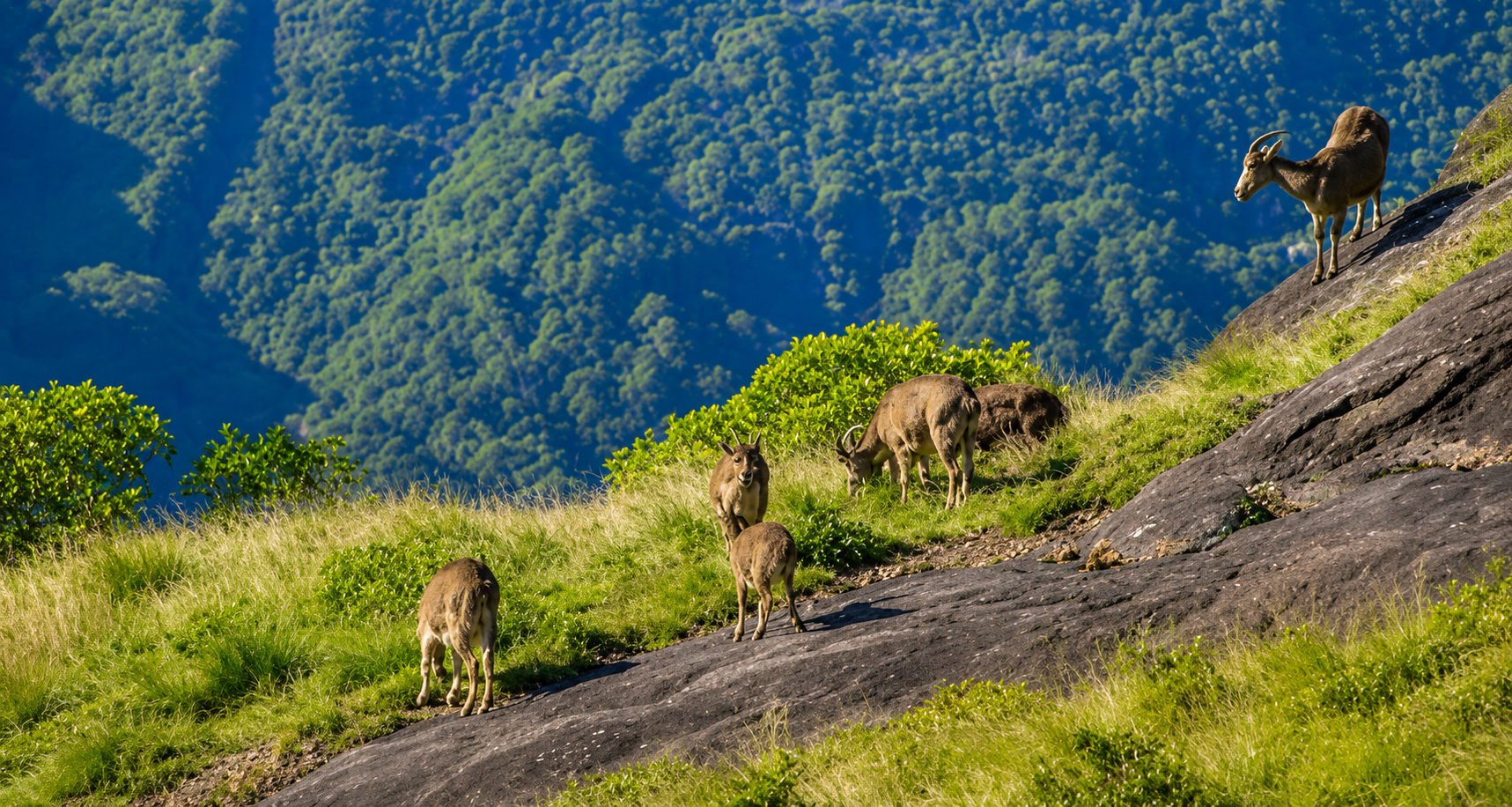
One of the most compelling reasons to visit is the remarkable accessibility of the Nilgiri tahr, a sturdy and sure-footed wild goat found nowhere else in the world outside the Southern Western Ghats. Unlike many endangered species that require long hours of patient searching, the tahr population at Eravikulam has grown sufficiently accustomed to human presence that sightings at close range are a near-certainty along the park's visitor trail. This extraordinary encounter with a globally threatened species in its natural habitat offers an experience of rare immediacy and intimacy.
Additionally, Eravikulam showcases a strong sense of floral and scenic drama through the sweeping vistas across its open grassland plateau, where the undulating terrain reveals successive ridgelines dissolving into mist. The combination of high-altitude scenery, endemic wildlife, and proximity to the popular hill station of Munnar further strengthens its appeal as an unmissable destination for anyone traveling through the highlands of Kerala.
📍 Key Highlights Within the Area
🌾 Rajamala Grassland Plateau
Among the natural landmarks, the open grassland plateau of Rajamala stands out as the most iconic and atmospherically distinctive feature of Eravikulam. Stretching across the upper reaches of the park, this high-altitude grassland offers a setting framed by the movement of Nilgiri tahr herds, the constant shifting of mist across the ridgelines, and the vast open sky that defines montane landscapes at this elevation. The visual experience of standing on the plateau with tahr grazing nearby and peaks dissolving into cloud above is one of the most memorable encounters southern India's natural world has to offer.
⛰️ Anamudi Peak
Anamudi Peak, rising to 2695 metres as the highest point in peninsular India, is another significant highlight. Though the summit itself lies within the restricted core zone, its commanding presence dominates the skyline of the park and lends the entire landscape a sense of scale and grandeur that distinguishes Eravikulam from every other protected area in Kerala.
🌸 Neelakurinji Bloom
The Neelakurinji flowering event, occurring once every twelve years with the most recent blooming in 2018, is perhaps the most spectacular botanical phenomenon in India. When the Strobilanthes kunthiana shrubs that carpet the hillsides simultaneously burst into violet-blue flower, the transformation of the entire landscape is a natural spectacle of extraordinary scale and beauty, drawing visitors from across the world to witness it.
The visual experience of Eravikulam changes considerably with the seasons, as the winter months bring frost to the higher elevations and a golden clarity to the grasslands, while the monsoon cloaks the plateau in swirling mist and fills its streams to fullness. This seasonal variation adds depth to the visitor experience, making each visit a distinct encounter with the park's ever-shifting highland atmosphere.
🥾 Activities
Walking along the designated visitor trail from the Rajamala entry point is the primary activity at Eravikulam, with a carefully managed route through the open grassland offering close encounters with Nilgiri tahr and sweeping views across the surrounding peaks. This trail provides a rare opportunity to observe endangered wildlife on foot at a comfortable pace, accompanied by the cool highland air and the dramatic scenery of the Anamalai range.
Birdwatching is a particularly rewarding pursuit within the park, with the shola forest edges and grassland mosaic supporting a remarkable variety of endemic species including the Nilgiri pipit, Nilgiri flycatcher, and the vividly coloured Kerala laughingthrush. Early morning hours are especially favorable, as bird activity peaks in the transitional zone between open grassland and shola woodland where species diversity is at its highest.
Photography of the highland landscape, Nilgiri tahr herds, and the shola forest interiors is widely undertaken throughout the park, rewarding those who invest time in the changing light conditions of the plateau with images of genuine rarity and beauty. Visiting the interpretation center at the park entrance is also highly recommended, offering essential context about the ecology of montane shola-grassland ecosystems, the biology of the Nilgiri tahr, and the conservation history of this remarkable protected area.
🗓️ Best Time to Visit
The most favorable period to visit Eravikulam National Park is from December to April, when the grasslands are dry and accessible, the skies offer clear views of Anamudi and the surrounding peaks, and Nilgiri tahr sightings are at their most reliable. During these months, the crisp highland air and settled conditions make the plateau trail particularly enjoyable, and the cool temperatures at elevation provide a refreshing contrast to the warmth of the plains.
The post-monsoon months of October and November offer a lush and vibrantly green plateau fresh from the rains, with the grasslands and shola forests at their most photogenic and the streams flowing freely through the landscape, making this a particularly rewarding period for nature photography.
The monsoon season from June to September brings extremely heavy rainfall to this part of the Western Ghats, and the park remains closed to visitors during these months as trails become inaccessible and the high-altitude terrain is enveloped in continuous mist and rain.
🚗 Connectivity
Eravikulam National Park is conveniently accessible from the popular hill station of Munnar, located approximately 13 kilometres from the Rajamala park entrance, which serves as the most practical base for visitors and offers a wide range of accommodation options at varying price points. Ernakulam, also known as Kochi, situated approximately 130 kilometres away, is the nearest major city with a well-connected international and domestic airport offering flights from across India and beyond.
Rail connectivity is well established, with Aluva and Ernakulam Junction serving as the nearest major railway stations, both offering regular services from Chennai, Mumbai, Delhi, and other major cities across the country. Road connectivity from Munnar, Kochi, and Coimbatore is efficient, with scenic mountain roads winding through tea estates and forested hillsides up to the park entrance. This makes Eravikulam a highly practical inclusion in highland nature itineraries across Kerala, as well as a natural companion destination for travelers exploring Munnar's tea landscape, the Chinnar Wildlife Sanctuary, and the broader Western Ghats conservation corridor.