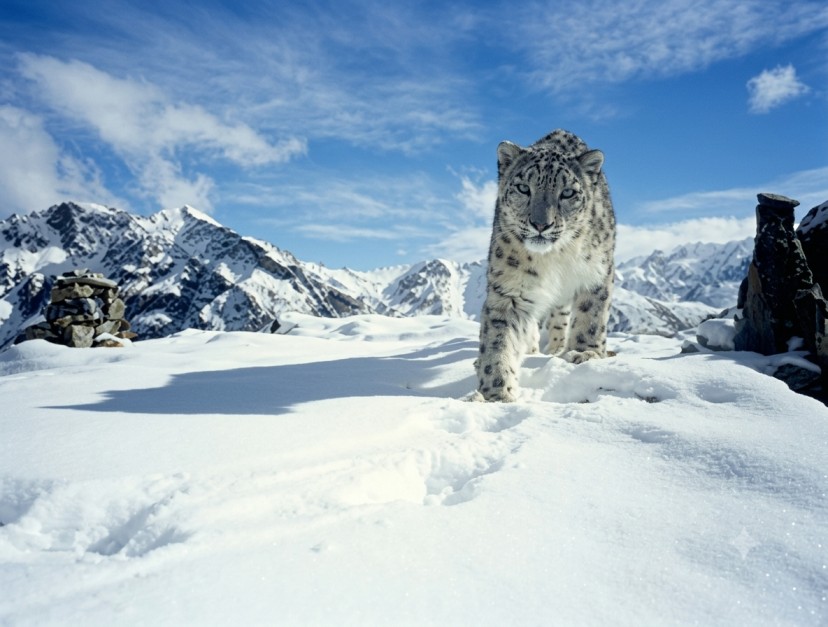
Hemis-National-Park : Land Of The Snow Leopard
Imagine yourself standing amidst a vast wilderness where towering snow-clad peaks touch an endless blue sky. The silence is profound, broken only by the distant whistle of the wind sweeping through deep valleys and rugged mountain passes. Golden eagles soar overhead, blue sheep navigate steep cliffs with effortless grace, and somewhere among the rocky slopes moves one of the world's most elusive predators—the legendary snow leopard. This is Hemis National Park—not merely a protected wilderness, but one of the most extraordinary high-altitude ecosystems on Earth. Nestled in the heart of Ladakh, Hemis National Park offers an unparalleled blend of dramatic landscapes, rare wildlife, ancient culture, and untouched Himalayan beauty.
🏔️ Hemis National Park, Ladakh
Where the Ghost of the Mountains Roams Free
📍 Location
Ladakh, India
🐆 Famous For
Snow Leopard Habitat
🏞️ Area
Over 4,400 Square Kilometers
⛰️ Specialty
India's Largest National Park
🌄 Overview
Imagine yourself standing amidst a vast wilderness where towering snow-clad peaks touch an endless blue sky. The silence is profound, broken only by the distant whistle of the wind sweeping through deep valleys and rugged mountain passes. Golden eagles soar overhead, blue sheep navigate steep cliffs with effortless grace, and somewhere among the rocky slopes moves one of the world's most elusive predators—the legendary snow leopard. This is Hemis National Park—not merely a protected wilderness, but one of the most extraordinary high-altitude ecosystems on Earth. Nestled in the heart of Ladakh, Hemis National Park offers an unparalleled blend of dramatic landscapes, rare wildlife, ancient culture, and untouched Himalayan beauty.
🏔️ A Wilderness Unlike Any Other
Established in 1981, Hemis National Park is the largest national park in India and one of the highest-altitude protected areas in the world. Spanning over 4,400 square kilometers across the rugged terrain of Ladakh, the park encompasses deep gorges, alpine meadows, barren mountains, and remote valleys that seem untouched by time.
Named after the nearby Hemis Monastery, one of Ladakh's most important Buddhist centers, the park represents a unique meeting point between nature and spirituality. Unlike dense tropical forests or grassland reserves, Hemis captivates visitors through its raw, dramatic landscapes where survival depends on extraordinary adaptation and resilience.
The park's remote location and harsh climate have helped preserve one of the most pristine mountain ecosystems in Asia, making it a dream destination for wildlife enthusiasts, photographers, trekkers, and nature lovers.
🐆 The Realm of the Snow Leopard
What truly sets Hemis National Park apart is its reputation as one of the best places in the world to spot the elusive snow leopard. Often called the "Ghost of the Mountains," this magnificent predator remains one of nature's greatest mysteries. During winter, when prey descends into lower valleys, Hemis becomes a global hotspot for snow leopard tracking and wildlife expeditions.
The park is also home to an impressive variety of Himalayan wildlife. Blue sheep, known locally as bharal, roam the rocky slopes in large numbers and serve as the primary prey of snow leopards. Visitors may also encounter Himalayan ibex, Tibetan wolves, red foxes, Eurasian brown bears, Himalayan marmots, and numerous species of birds, including golden eagles, lammergeiers, and Himalayan griffon vultures.
Every sighting feels special because wildlife here exists entirely on nature's terms. There are no guarantees—only the thrill of exploring one of the world's last truly wild landscapes.
🌅 Landscapes That Leave You Speechless
The moment you enter Hemis National Park, you understand why it is considered one of Ladakh's greatest natural treasures. The scenery is both harsh and breathtaking. Jagged mountain ridges rise dramatically above winding rivers, while vast valleys reveal ever-changing colors as sunlight moves across the terrain.
Unlike many national parks defined by lush greenery, Hemis derives its beauty from contrast. Stark mountains stand against brilliant skies. Snow-covered peaks overlook barren valleys. Crystal-clear streams carve pathways through ancient rock formations. The result is a landscape that feels almost otherworldly.
Throughout the park, visitors encounter remote villages and centuries-old monasteries that add a cultural dimension to the wilderness. Prayer flags flutter in the mountain breeze, reminding travelers that this is not only a natural sanctuary but also a land deeply connected to Buddhist traditions.
🥾 Adventure and Exploration
Hemis National Park is a paradise for trekkers and outdoor enthusiasts. Several renowned trekking routes pass through the park, including trails connecting Hemis to Stok, Markha Valley, and other remote regions of Ladakh. These journeys offer opportunities to experience dramatic scenery, traditional mountain villages, and incredible wildlife habitats.
Winter expeditions focused on snow leopard tracking have become increasingly popular among international travelers. Accompanied by expert naturalists and local trackers, visitors spend days scanning mountain slopes in search of one of the world's most sought-after wildlife encounters.
For photographers, every season offers unique opportunities—from snow-covered landscapes in winter to vibrant alpine meadows during the brief Himalayan summer.
🚗 How to Reach
Hemis National Park is located approximately 40 kilometers southeast of Leh, the capital of Ladakh. The nearest airport is Kushok Bakula Rimpochee Airport in Leh, which is well connected to major Indian cities such as Delhi, Mumbai, and Srinagar. From Leh, visitors can reach the park by road in around one to two hours depending on the chosen entry point and weather conditions.
The nearest major railway station is Jammu Tawi, located several hundred kilometers away. Most travelers prefer flying directly to Leh due to the region's remote Himalayan location. Visitors arriving by air are advised to spend at least one or two days acclimatizing in Leh before venturing into the park, as the high altitude can affect those unaccustomed to mountain environments.
📅 Best Time to Visit
The best time to visit Hemis National Park depends on the experience you seek. From May to September, the weather is relatively mild, making it ideal for trekking, wildlife viewing, and exploring the park's stunning landscapes. During these months, alpine vegetation flourishes and access to remote valleys becomes easier.
For snow leopard enthusiasts, the winter months from January to March offer the greatest chance of sightings. Although temperatures can drop well below freezing, this season attracts wildlife photographers and researchers from around the world.
✨ Why You Simply Must Visit Hemis National Park
Some national parks are about scenery. Others are about wildlife. Hemis National Park offers both in extraordinary abundance.
Standing amid its vast valleys, surrounded by towering Himalayan peaks, you are not merely observing nature—you are experiencing one of the planet's last great wildernesses. Every mountain holds the possibility of a snow leopard sighting. Every trail reveals landscapes untouched by modern development. Every moment feels authentic, raw, and unforgettable.
For wildlife enthusiasts, Hemis is among the world's finest high-altitude destinations. For trekkers, it offers some of the most spectacular routes in the Himalayas. For photographers, the dramatic landscapes provide endless inspiration. And for travelers seeking a deeper connection with nature, few places can rival its sense of solitude and wonder.
Walk its mountain paths. Listen to the silence of the Himalayas. Search the cliffs for the Ghost of the Mountains. And discover why Hemis National Park remains one of India's most remarkable natural treasures and one of the greatest wildlife destinations on Earth.