Landscape & ecosystem
A working overlap of forest and wetland habitat, rare within Rajasthan's largely arid protected-area network.
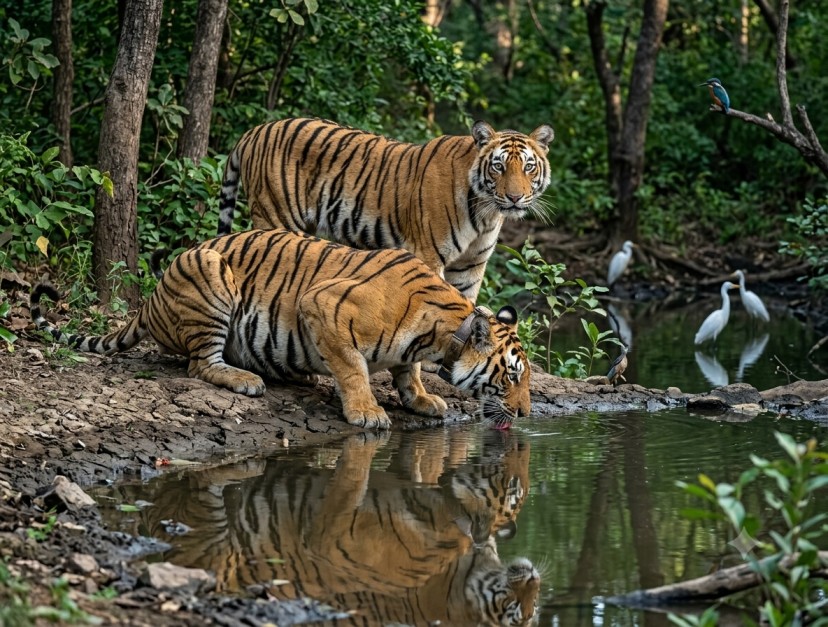
The sanctuary combines dry deciduous forest, rocky hills, grasslands, and wetlands around Jaisamand Lake. Conditions shift markedly with the seasons — forest cover turns lush green after the monsoon, while the lake reaches its fullest extent, improving both scenery and wildlife visibility.
Wooded hills and small islands surround the lake, with sunrise and sunset producing strong colour conditions across the water. The forest-wetland overlap supports a wider range of species than a single-habitat reserve typically allows.
History & cultural context
A 17th-century engineering project that created one of India's most significant man-made lakes.
Jaisamand Lake was constructed in 1685 under Maharana Jai Singh of Mewar, formed by a marble dam built across the Gomati River to secure water supply for the region. The surrounding forest has long supported local Bhil and Meena tribal communities, who continue to maintain traditional forest knowledge and contribute to the region's craft and folk heritage.
Key attractions on and around the lake
Jaisamand Lake
Boating access with views across surrounding hills, islands, and lake-edge birdlife.
Jaisamand Dam
Marble dam structure with carved pavilions and chhatris reflecting Mewar-era architecture.
Safari routes
Designated forest routes through the sanctuary for wildlife observation and photography.
Jaisamand Island Resort
A lake-island property offering an alternate vantage point over the water and shoreline.
Ruthi Rani Palace
A historic palace structure within the wider Jaisamand heritage grounds.
Hawa Mahal (Jaisamand)
A lakeside pavilion distinct from Jaipur's landmark of the same name, set along the shoreline.
Wildlife & birdlife
The sanctuary supports leopards, hyenas, jackals, jungle cats, chital, sambar deer, nilgai, wild boar, Indian wolves, crocodiles, and a range of reptile species. Sightings vary by season and are not guaranteed on any single visit, consistent with dry-forest safari conditions elsewhere in Rajasthan.
Birdlife is a stronger year-round draw, with more than 150 resident and migratory species recorded around the lake, including peafowl, kingfishers, eagles, herons, cormorants, owls, parakeets, and waterfowl.
Cuisine & markets in Udaipur
Regional dishes
Udaipur craft & markets
Seasonality & transport reference
| Recommended season | October to March, for comfortable safari, boating, and sightseeing conditions. |
| Nearest airport | Maharana Pratap Airport, Udaipur, approximately 50 km from the sanctuary. |
| Rail access | Udaipur City Railway Station, well connected to major Indian cities. |
| Road access | Taxi and bus connections available from Udaipur city to the sanctuary. |
| Managing authority | Protected as a wildlife sanctuary since 1957; safari access is regulated through forest guides. |
Traveler segments this sanctuary serves
Leopard, hyena, and deer populations across designated safari routes suit dedicated wildlife-viewing itineraries.
Over 150 recorded species around the lake make this a year-round draw for dedicated birding groups.
Boating and lakeside scenery offer a lower-intensity nature day suited to family itineraries out of Udaipur.
The 1685 marble dam, chhatris, and lakeside pavilions add a Mewar heritage layer to a nature-focused visit.
Lake reflections, forested hills, and consistent birdlife support both landscape and wildlife photography formats