Jim-Corbett-National-Park : The Legacy Of India's First Tiger Reserve
India is home to some of the world's most extraordinary wildlife destinations, but few carry the legacy, mystique, and biodiversity of Jim Corbett National Park. Nestled in the foothills of the Himalayas in Uttarakhand, Corbett is India's oldest and most celebrated national park, established in 1936 and named in honor of the legendary conservationist Jim Corbett. Spanning over 520 square kilometers of dense forests, river valleys, and grasslands, it was also the birthplace of Project Tiger in 1973 — India's landmark initiative to protect the Bengal tiger. For international travel agencies, tour operators, wholesalers, and destination management companies (DMCs), Jim Corbett National Park presents an unmatched opportunity to offer travelers one of Asia's finest wildlife safari experiences.
🐅 Jim Corbett National Park, Uttarakhand
Where the Wild Heart of India Still Roams Free
📍 Location
Uttarakhand, India
🌿 Established
1936
🐅 Famous For
Bengal Tigers & Wildlife Safaris
🦅 Bird Species
Over 600 Recorded Species
🌲 Introduction
Picture yourself entering a landscape where mist rises gently above riverbanks, ancient sal forests stretch endlessly toward the horizon, and the distant call of a bird breaks the silence of dawn. As the first rays of sunlight filter through the forest canopy, the wilderness slowly awakens. A herd of spotted deer grazes cautiously in a meadow, langurs leap between towering trees, and somewhere deep within the jungle, the elusive Bengal tiger begins its daily patrol. This is Jim Corbett National Park—not merely a wildlife reserve, but a living, breathing kingdom of nature where India's most iconic wildlife thrives in its natural habitat. Nestled in the foothills of the Himalayas in Uttarakhand, Jim Corbett is India's oldest national park and one of the country's most celebrated wildlife destinations.
🏛️ A Legacy of Conservation Since 1936
Jim Corbett National Park's story is deeply intertwined with India's conservation history. Established in 1936 as Hailey National Park, it was the first national park created in India. Later renamed in honor of the legendary hunter-turned-conservationist Jim Corbett, the park became a pioneering symbol of wildlife protection in the country.
Corbett's efforts to safeguard India's forests and wildlife helped shape modern conservation practices. Today, the park remains a cornerstone of Project Tiger, India's flagship initiative to protect the endangered Bengal tiger. What began as a small protected area has evolved into one of Asia's most important wildlife reserves, attracting nature enthusiasts, photographers, and adventure seekers from across the globe.
Spread across more than 500 square kilometers, the park encompasses a diverse range of ecosystems, including dense forests, grasslands, riverine belts, marshlands, and hills. This extraordinary biodiversity creates one of the richest wildlife habitats in India.
🌄 Nature's Masterpiece in the Himalayan Foothills
The moment you enter Jim Corbett National Park, you understand why it is regarded as one of India's most beautiful wilderness destinations. Unlike many wildlife reserves dominated by a single landscape, Corbett offers remarkable ecological diversity.
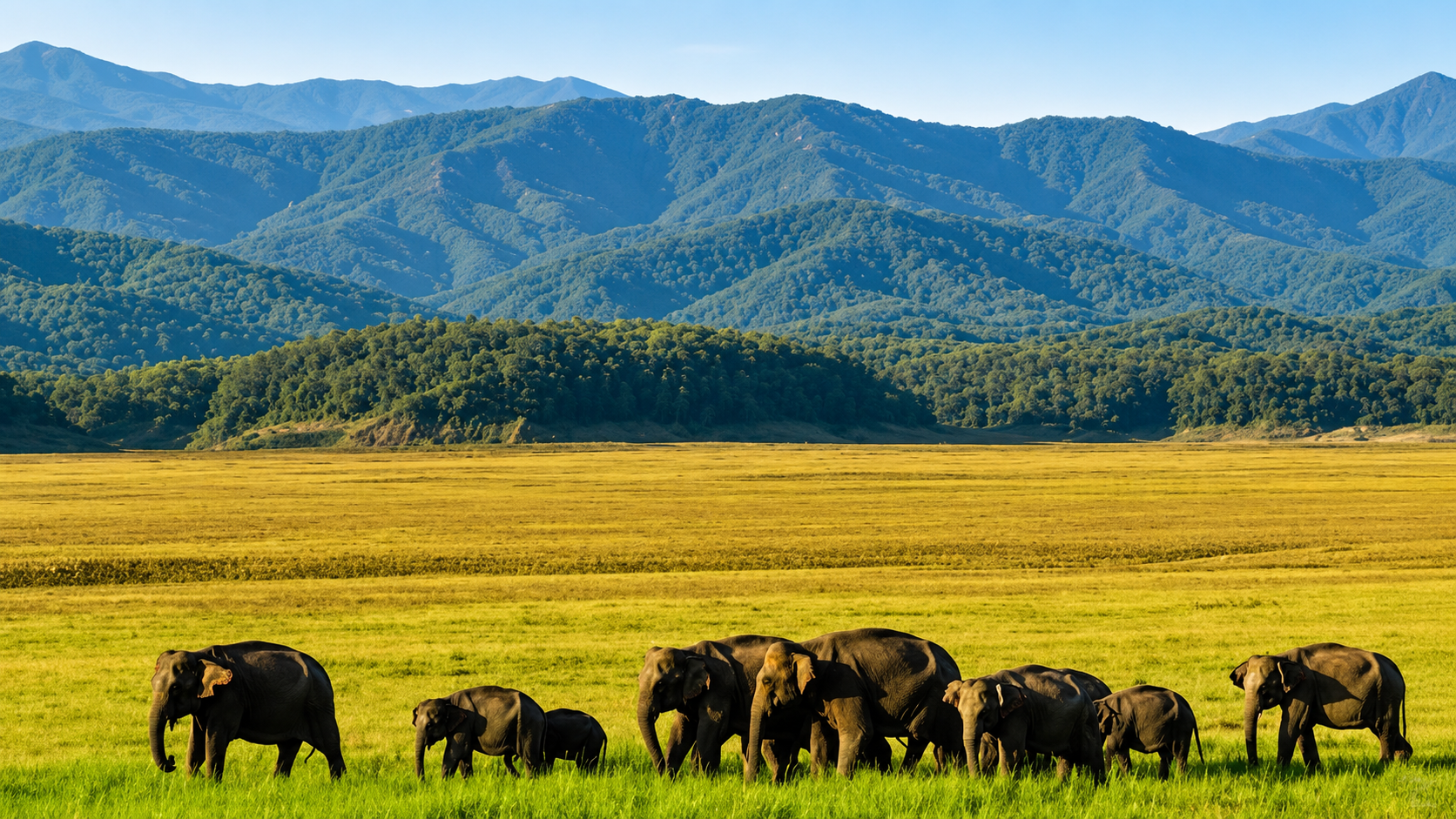
Towering sal forests create emerald corridors teeming with life, while vast grasslands provide grazing grounds for herbivores. The crystal-clear Ramganga River meanders through the park, nourishing countless species and adding scenic beauty to the landscape. During sunrise and sunset, the interplay of light and shadow transforms the forest into a breathtaking natural spectacle.
Every season reveals a different side of Corbett. Winter brings pleasant weather and excellent wildlife sightings, while the post-monsoon months cloak the landscape in vibrant shades of green.
🐘 What Awaits Inside
The park is divided into several tourism zones, each offering a unique wildlife experience. The famous Dhikala Zone is considered the crown jewel of Corbett, known for its expansive grasslands, stunning river views, and exceptional opportunities for wildlife observation.
Jeep safaris and canter safaris allow visitors to explore the forest under the guidance of experienced naturalists. Every drive into the wilderness carries a sense of anticipation. Around each bend lies the possibility of encountering elephants, deer, crocodiles, wild boars, jackals, or even the majestic Bengal tiger.
Bird lovers are equally rewarded. With over 600 recorded bird species, Jim Corbett is a paradise for ornithologists and photographers. From vibrant kingfishers and hornbills to majestic eagles and migratory birds, the park offers exceptional birdwatching opportunities throughout the year.
The experience extends beyond wildlife sightings. The tranquility of the forest, the sound of flowing rivers, and the sheer scale of the wilderness create an immersive connection with nature that few destinations can match.
🐅 Wildlife and Conservation Heritage
What truly distinguishes Jim Corbett National Park is its role as a sanctuary for some of India's most iconic species. The park supports a healthy population of Bengal tigers, Asian elephants, leopards, otters, gharials, and numerous other animals.
Beyond its wildlife, Corbett serves as an important conservation success story. It demonstrates how protected areas can preserve biodiversity while promoting responsible tourism and environmental awareness. The park continues to inspire conservation efforts across India and remains a symbol of coexistence between humans and nature.
📅 Best Time to Visit
The ideal time to visit Jim Corbett National Park is between November and June. Winter months from November to February offer pleasant temperatures and excellent birdwatching opportunities. The period from March to June is particularly favorable for wildlife sightings as animals frequently gather around water sources.
Certain tourism zones may close during the monsoon season due to heavy rainfall and conservation requirements. Visitors should check zone availability before planning their trip.
To fully experience the park, a stay of two to three nights is highly recommended, allowing time for multiple safaris and nature-based activities.
🚗 How to Reach
Jim Corbett National Park is easily accessible from major cities in North India. The nearest town and primary gateway to the park is Ramnagar, located approximately 260 kilometers from Delhi.
The nearest railway station is Ramnagar Railway Station, which is well connected to Delhi and several other cities in northern India. Travelers arriving by air can use Pantnagar Airport, located about 80 kilometers away, though many visitors prefer flying into Delhi and continuing by road.
From Delhi, the journey to Corbett takes approximately 5 to 6 hours by car through scenic countryside and foothill landscapes. Private taxis, self-drive vehicles, and regular bus services make the park conveniently accessible for both domestic and international travelers.
🏞️ Nearby Places Worth Exploring
The region surrounding Corbett offers several rewarding excursions. The picturesque hill stations of Nainital and Bhimtal provide cool mountain retreats, while Garjiya Devi Temple on the banks of the Kosi River is an important local pilgrimage site. Nature lovers can also explore the surrounding forests, rivers, and villages that showcase the authentic culture of Uttarakhand.
✨ Why You Simply Must Visit Jim Corbett National Park
Some destinations showcase history. Others celebrate architecture. Jim Corbett National Park celebrates life itself.
Standing in the heart of the forest, listening to the sounds of the wilderness, you realize that Corbett is more than a wildlife destination—it is an experience that reconnects you with nature in its purest form. Every safari carries the thrill of discovery. Every landscape reveals a new perspective on India's natural heritage.
For wildlife enthusiasts, the chance to spot a Bengal tiger in its natural habitat is unforgettable. For photographers, the diversity of landscapes and wildlife provides endless inspiration. For families and adventure seekers, Corbett offers memories that last a lifetime.
Drive through its forests. Listen to the call of the wild. Feel the pulse of nature all around you. And discover why Jim Corbett National Park remains one of India's most treasured wilderness destinations and a shining symbol of wildlife conservation.