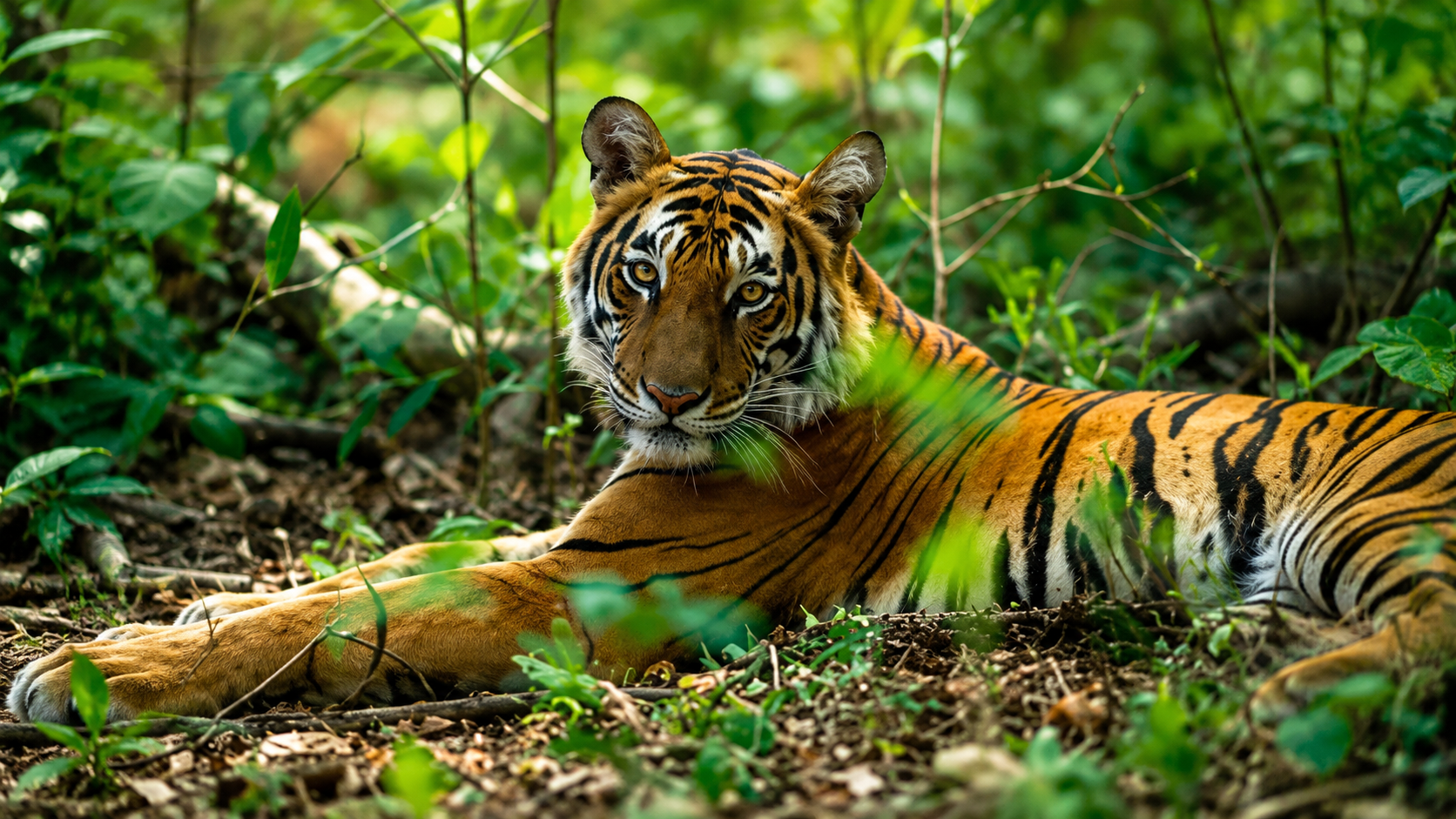
Kakakkad Mundanthurai
Kalakkad Mundanthurai Tiger Reserve stands as one of the most biologically extraordinary and ecologically significant protected areas in India, a vast wilderness of tropical rainforests, montane grasslands, riparian corridors, and rocky river valleys that together constitute the largest protected area in Tamil Nadu and one of the most important repositories of biological diversity in the entire Asian continent. Located in the Tirunelveli and Kanyakumari districts of Tamil Nadu, occupying the southernmost reaches of the Western Ghats where the mountain chain descends toward the tip of the Indian peninsula, the reserve encompasses an area of approximately eight hundred and ninety square kilometres of core zone within the broader Agasthyamalai Biosphere Reserve, whose protected landscape extends across the southern Western Ghats of both Tamil Nadu and Kerala. The destination draws naturalists, wildlife researchers, birdwatchers, botanists, trekkers, and those drawn by the prospect of engaging with one of the most species-rich and least disturbed forest systems remaining in peninsular India, a landscape whose biodiversity has been compared in its richness and endemism to the great tropical forests of the Amazon and the Congo basin.
📖 Overview
Kalakkad Mundanthurai Tiger Reserve stands as one of the most biologically extraordinary and ecologically significant protected areas in India, a vast wilderness of tropical rainforests, montane grasslands, riparian corridors, and rocky river valleys that together constitute the largest protected area in Tamil Nadu and one of the most important repositories of biological diversity in the entire Asian continent.
Located in the Tirunelveli and Kanyakumari districts of Tamil Nadu, occupying the southernmost reaches of the Western Ghats where the mountain chain descends toward the tip of the Indian peninsula, the reserve encompasses an area of approximately eight hundred and ninety square kilometres of core zone within the broader Agasthyamalai Biosphere Reserve, whose protected landscape extends across the southern Western Ghats of both Tamil Nadu and Kerala.
The destination draws naturalists, wildlife researchers, birdwatchers, botanists, trekkers, and those drawn by the prospect of engaging with one of the most species-rich and least disturbed forest systems remaining in peninsular India, a landscape whose biodiversity has been compared in its richness and endemism to the great tropical forests of the Amazon and the Congo basin.
What distinguishes Kalakkad Mundanthurai from other tiger reserves in India is the extraordinary concentration of biological endemism compressed within its forest systems, a consequence of the southern Western Ghats' long geological isolation and remarkable climatic diversity that has produced over three hundred and fifty species of birds, over fifty species of mammals, over eighty species of reptiles, and a plant diversity of such richness that the reserve is recognised as one of the global biodiversity hotspots identified by Conservation International as among the most critically important and threatened ecosystems on earth.
The reserve's rivers, eighteen of which originate within its boundaries and flow outward to sustain the agricultural and drinking water needs of millions of people in the plains below, give Kalakkad Mundanthurai an ecological importance that extends far beyond its boundaries into the social and economic fabric of southern Tamil Nadu, investing every visit with the awareness of being within a landscape of consequences that reach across an entire region.
🐅 Why Visit Kalakkad Mundanthurai Tiger Reserve
The designation of Kalakkad Mundanthurai as both a Project Tiger reserve and a core component of the UNESCO recognised Agasthyamalai Biosphere Reserve reflects a scientific consensus on its global significance as a centre of biological diversity and endemism whose conservation is of importance not merely to India but to the world.
A visit to the reserve is thus an engagement with one of the planet's most critical and irreplaceable natural systems, a landscape whose forests have been accumulating their extraordinary biological richness across millions of years of evolution in relative isolation from the rest of the subcontinent.
One of the most compelling reasons to visit is the opportunity to experience the full altitudinal gradient of the southern Western Ghats within a single protected landscape, moving from the tropical moist evergreen forests of the lower elevations through the semi-evergreen and moist deciduous zones to the montane shola forests and high-altitude grasslands of the upper Agasthyamalai range in a journey through ecological communities of progressively different character that collectively represent the full biological diversity of the southern Ghats compressed within a single reserve.
Each of these forest types harbours its own distinctive community of birds, mammals, reptiles, and plants, and the experience of moving through this altitudinal succession rewards the naturalist with a constantly changing array of species and ecological observations.
Additionally, the reserve's river systems, cascading through rocky gorges and forested valleys in a series of pools, rapids, and waterfalls of considerable natural beauty, provide a landscape of scenic drama that complements the biological richness of the forest with a visual and acoustic dimension of great power.
The Tamiraparani river, one of the most important rivers of southern Tamil Nadu, originates within the reserve and its upper reaches within the protected forest create a riverine landscape of exceptional purity and beauty that rewards those who take the time to explore the valley corridors accessible from the established entry points.
⭐ Key Highlights Within the Reserve
🌳 Tropical Evergreen Forests
The tropical evergreen forests of the Kalakkad range, forming the lower and most species-rich sector of the reserve, represent one of the finest remaining examples of southern tropical wet evergreen forest in India.
⛰️ Mundanthurai Plateau
The Mundanthurai plateau in the upper reaches of the reserve offers a landscape of sweeping scenic beauty and distinctive ecological character that contrasts markedly with the enclosed and shaded world of the lowland forest.
🏞️ River Systems
The reserve's eighteen river systems, most importantly the Tamiraparani and its tributaries in the Kalakkad sector and the Servalar river in the Mundanthurai sector, create riverine habitats of exceptional ecological importance and considerable scenic beauty.
🐒 Lion-Tailed Macaque
The endemic and threatened lion-tailed macaque, one of the most distinctive and globally rare primates in the world with its magnificent silver mane and jet black coat, inhabits the evergreen forests of the Kalakkad sector.
🥾 Activities
Guided nature walks through the forest zones accessible from the established entry points at Mundanthurai and Kalakkad, conducted with authorised forest department naturalist guides who possess an intimate knowledge of the reserve's ecological communities and the particular locations of key wildlife species, constitute the primary and most rewarding activity at Kalakkad Mundanthurai.
Birdwatching across the reserve's varied forest types and altitudinal zones is one of the most consistently productive and intellectually rewarding activities available at Kalakkad Mundanthurai, given the extraordinary avian diversity of over three hundred and fifty species distributed across the different ecological communities of the reserve.
The endemic and restricted-range species of the southern Western Ghats, including the Nilgiri flycatcher, white-bellied shortwing, broad-tailed grassbird, Malabar trogon, and numerous other species found nowhere else in the world, make the reserve a destination of the highest priority for serious birdwatchers and a rewarding and accessible spectacle for casual observers who appreciate the visual beauty of the region's extraordinary avifauna.
Visiting the Papanasam dam and reservoir within the reserve's buffer zone provides a landscape experience of open water and wooded shoreline that complements the enclosed forest walks with a more expansive visual dimension.
Trekking through the designated routes of the reserve's buffer zone, where longer and more physically demanding forest trails are available subject to forest department permission and the engagement of authorised guides, allows a depth of forest immersion and physical engagement with the Western Ghats landscape.
📅 Best Time to Visit
The most favorable period to visit Kalakkad Mundanthurai Tiger Reserve is from December to March, when the post-monsoon forest is at its most ecologically active, the bird diversity is augmented by winter migrants from the northern latitudes, the temperatures across both the lowland and montane sectors of the reserve are at their most comfortable for extended outdoor activity, and the river systems are running at a volume sufficient to maintain the scenic beauty of the waterfall and pool landscapes without the flooding and trail impassability of the peak monsoon months.
The months of January and February are particularly recommended for birdwatching, as the combination of resident endemic species at their most vocal and visible in the breeding season and the winter migratory species still present in the forest creates a diversity of avian activity that experienced birdwatchers consistently rate as among the finest available anywhere in peninsular India.
The southwest monsoon arrives in the Kalakkad Mundanthurai landscape from June and brings extremely heavy rainfall to the southern Western Ghats through July, August, and September, during which the forest undergoes its most dramatic transformation as the rivers rise to full flood, the waterfalls reach their maximum volume, and the vegetation achieves its densest and most luxuriant expression.
The reserve is typically closed to visitors during the height of the monsoon, and the northeast monsoon that follows from October to December brings a second phase of rainfall to this southernmost section of the Western Ghats that extends the wet season considerably beyond its duration further north in the range.
🚗 Connectivity
Kalakkad Mundanthurai Tiger Reserve is accessible from Tirunelveli, the nearest major city, located approximately forty kilometres from the Mundanthurai entry point and well connected by rail and road to the major cities of Tamil Nadu and the broader southern Indian region.
Tirunelveli Junction is served by numerous express trains from Chennai, Madurai, Coimbatore, Kochi, and other major cities of southern India, making rail travel a practical and comfortable option for visitors approaching from within the region.
Madurai Airport, located approximately one hundred and sixty kilometres from the reserve, serves as the nearest airport with regular domestic flight connections from Chennai, Bengaluru, Mumbai, and Delhi.
Trivandrum International Airport in Kerala, located approximately one hundred and forty kilometres from the reserve via the southern coastal route, provides an alternative air gateway with both domestic and international connectivity for visitors approaching from beyond India or combining the Kalakkad Mundanthurai visit with the wildlife and cultural destinations of southern Kerala.
The town of Ambasamudram, located approximately fifteen kilometres from the Mundanthurai entry gate, serves as the most practical local base for visitors, offering modest accommodation and transport services within comfortable distance of the reserve's principal entry points.