Kalagarh-Tiger-Reserve : Where Tiger Roam Free
Kalagarh Tiger Reserve stands as one of the most ecologically significant and lesser-explored wildlife destinations in the Pauri Garhwal region of Uttarakhand, representing an extraordinary extension of the world-renowned Corbett Tiger Reserve landscape. Situated in the scenic Pano valley near Lansdowne, this reserve was designated as the northern zone of Jim Corbett National Park following the park's establishment in 1974, and today spans over 300 square kilometres of dense sal, sheesham, and mixed deciduous forest. The destination draws wildlife enthusiasts, birdwatchers, and nature lovers seeking an authentic and comparatively uncrowded safari experience, offering a landscape defined by dense woodland, riverine tracts, and an atmosphere of genuine wilderness that reflects its position within one of India's most storied conservation landscapes.
Kalagarh Tiger Reserve
The northern zone of the Corbett Tiger Reserve landscape, spanning over 300 sq. km of sal, sheesham and mixed deciduous forest, offering a quieter safari alternative to Corbett's southern gates.
Overview
Sector: Corbett–Lansdowne LandscapeKalagarh Tiger Reserve occupies the Pano valley near Lansdowne and was designated as the northern zone of Jim Corbett National Park following the park's 1974 establishment. The reserve spans more than 300 sq. km of dense sal, sheesham and mixed deciduous forest, encompassing the Sonanadi Wildlife Sanctuary and several distinct tourism zones.
Compared to Corbett's more frequented southern gates, Kalagarh functions as a protective buffer for the wider ecosystem and offers a comparatively uncrowded safari experience, positioned as a natural pairing with a Lansdowne hill-station stay.
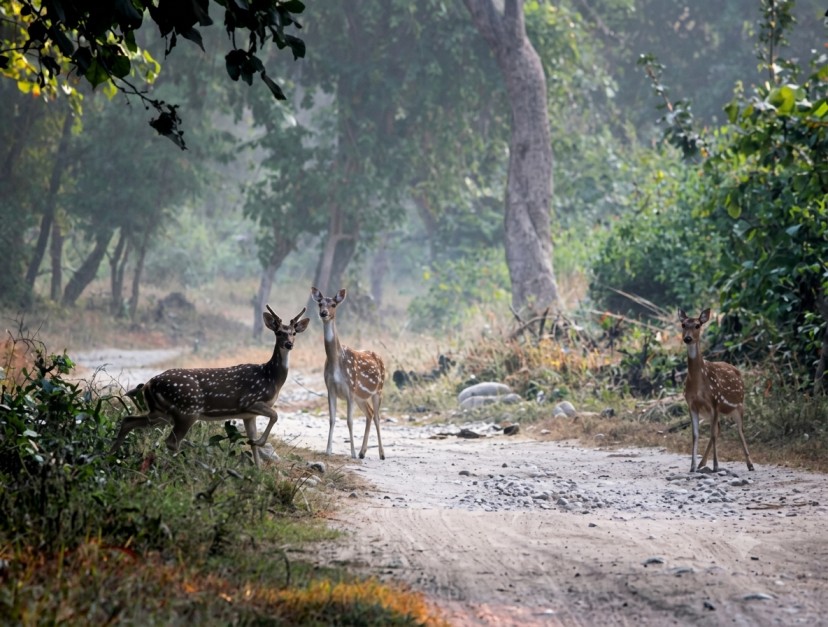
Resident wildlife includes Bengal tiger, leopard, wild elephant, sloth bear, and deer species such as chital, sambar, barking deer and hog deer, alongside goral and porcupine. The reserve's bird checklist runs past 580 recorded species, including hornbills, kingfishers, wagtails and eagles, giving it standing as a serious birdwatching destination in its own right.
Destination Rationale
Itinerary FitFactors relevant to positioning Kalagarh within a Corbett-region or Lansdowne wildlife programme.
- Wildlife Full Corbett species set — tiger, leopard, wild elephant and sloth bear alongside multiple deer species, within the same conservation landscape as Corbett proper.
- Birding 580+ species recorded — a standalone draw for dedicated birdwatching itineraries, independent of tiger-sighting probability.
- Density Lower visitor density — relative to Corbett's southern gates, supporting a quieter, less transactional safari product.
- Pairing Lansdowne proximity — approximately 13 km away, allowing a combined hill-station-plus-safari itinerary within a single base.
Site Index
4 Reference PointsSonanadi Wildlife Sanctuary
Accessed via Vatanvasa Gate; the reserve's richest zone for tiger, elephant and general wildlife sightings.
Durgadevi & Pakhro Gates
Distinct terrain profiles ranging from dense sal forest to open riverine tracts along the Ramganga and its tributaries.
Forest Rest Houses
Overnight stay points at Halduparao, Rathuwadhab, Mundiyapani, Sendhikhal and Kanda, set within the forest itself.
Resident Birdlife
Hornbills, pheasants and other notable species recorded across resident, migratory and passage categories.
Activity Matrix
Ground Operations Reference| Activity | Location / Route | Operating Note |
|---|---|---|
| Jeep safari | Vatanvasa, Pakhro, Kolhuchaur gates | Guided drives run approximately two to three hours; core-zone permits required per gate. |
| Birdwatching | Forest trails, water sources | Best conducted at quiet pace; early morning sessions recommended for peak activity. |
| Overnight forest stay | Halduparao, Rathuwadhab, Mundiyapani, Pakhro rest houses | Advance booking required; limited capacity per rest house. |
| Nature photography | Reserve-wide, riverine tracts | Forest cover and water-source proximity both yield consistent subject variety. |
Seasonality Data
Planning Reference| Period | Status | Note |
|---|---|---|
| 15 Nov – Feb | Open — cool, dry | Pleasant temperatures well suited to safari comfort and birdwatching. |
| Mar – 15 Jun | Open — drier, warmer | Sparser vegetation and water-source concentration often improve tiger-sighting odds. |
| 16 Jun – 14 Nov | Closed | Standard monsoon closure applied across the Corbett landscape. |
Access & Connectivity
Logistics ReferenceFrom Lansdowne via Duggada, where the route splits toward the hill station or the reserve's forest trails. Delhi is reachable via NH 58, approximately 275 km away.
Nearest railhead is Kotdwar; onward movement to reserve entry gates by taxi or hired vehicle.
Jolly Grant Airport, Dehradun, providing primary air connectivity for arrivals from other parts of India.