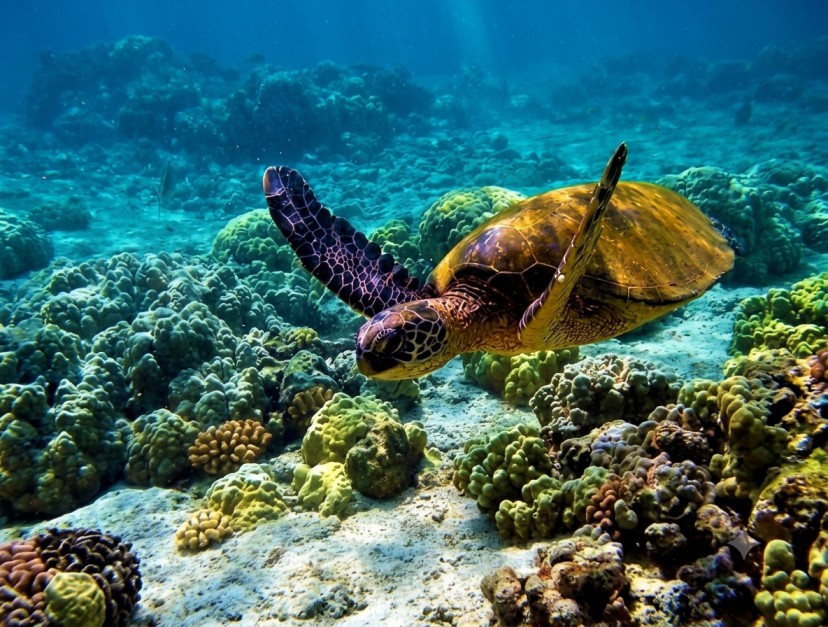
Marine-National-Park : Explore India's Underwater Paradise
Imagine standing barefoot on a sun-warmed shore as the Arabian Sea retreats with the tide, slowly unveiling a world that exists somewhere between land and ocean — a glittering, coral-studded universe that few people know exists right here in India. That's the Gulf of Khambhat's best-kept secret: the Marine National Park and Sanctuary of Gujarat, spread across the Gulf of Kutch along the Jamnagar coastline. It's not just a protected zone; it's a living, breathing ecosystem where the sea itself seems to pause, inviting you to look closer. And once you do, you'll never look at the ocean the same way again.
📜 A Little Bit of History First
The Gulf of Kutch has been a cradle of maritime life for millennia. Fishing communities like the Kharvas and Wagher people have fished these waters for generations, reading the tides with an intimacy that no instrument can replicate. The region was formally recognised for its extraordinary biodiversity when the Marine National Park was established in 1982 — the first marine national park in all of Asia. Spanning roughly 163 sq km as national park and an additional 295 sq km as a surrounding sanctuary, it covers 42 islands strung like emeralds along a 170-km stretch of the Jamnagar coast.
The park was created to protect one of India's most ecologically sensitive coastal habitats — its coral reefs, mangrove forests, and the astonishing variety of marine life they shelter. It falls under the jurisdiction of the Gujarat Forest Department, and over the decades, conservation efforts here have become a quiet success story that deserves far more attention than it receives.
🐠 The Attractions That Will Leave You Breathless
🏝️ Pirotan Island
Pirotan Island is the crown jewel of the park and the only island accessible to tourists. Just 24 km from Jamnagar, this tiny landmass feels like stepping into another dimension. During low tide, the sea pulls back dramatically to reveal vast coral beds — stony corals, table corals, brain corals — alive with colour and movement. Walking through these exposed reefs at low tide, with a forest department guide, is one of the most surreal wildlife experiences in India. Starfish, sea cucumbers, hermit crabs, and puffer fish dot the landscape like nature's own still-life painting.
🪸 Coral Reefs
The coral reefs here are among the northernmost reefs in the Indian Ocean — a remarkable geographical fact that makes them scientifically precious. Over 52 species of coral have been recorded, alongside more than 200 species of fish, making every snorkelling session a revelation.
🌿 Mangrove Forests
The park's mangrove forests are equally spectacular. Seven species of mangroves line the intertidal zones, their tangled roots acting as nurseries for juvenile fish and shelters for crabs, mudskippers, and wading birds. Walking through a mangrove forest at the edge of the Gulf of Kutch, with herons picking their way through the roots and kingfishers flashing electric blue overhead, is the kind of quiet magic that stays with you.
🦩 Flamingos & Birdlife
The skies above are just as alive. Flamingos gather here in breathtaking numbers, particularly between November and February, turning the mudflats into sheets of dusty pink. Ospreys, reef egrets, cormorants, and migratory waders make this a paradise for birdwatchers.
🐬 Wildlife, Ecology, and What Makes This Place Extraordinary
The Marine National Park is home to an astonishing roll call of creatures. Dugongs — the gentle, grass-eating sea mammals that inspired mermaid legends — have been sighted in these waters. Green sea turtles and olive ridley turtles nest along the islands. Dolphins ride the bow waves of boats, and the endangered Indian smooth-coated otter makes an occasional appearance along the creeks.
On land, the islands host nesting colonies of oystercatchers, terns, and gulls. Octopuses and lobsters hide among the rocks, and if you're fortunate, you may spot a sea snake gliding sinuously through the tidal pools. The entire ecosystem is a masterclass in interconnectedness — remove one thread and the whole tapestry unravels.
🏛️ Culture, People, and Local Flavour
The nearest major town, Jamnagar, is a city steeped in culture and history. Known as the "Jewel of Kathiawar," it is famous for its Bandhani tie-dye textiles, traditional brassware, and the magnificent Lakhota Lake at its heart. The old walled city has centuries of Rajput and later Jadeja dynasty heritage layered into its streets and temples.
The fishing communities of the Jamnagar coast carry a deep cultural relationship with the sea. Their knowledge of tidal patterns, seasonal fish movements, and coral locations is encyclopaedic — and increasingly, some community members are partnering with conservation initiatives, blending ancestral wisdom with modern ecology.
For food, Jamnagar offers outstanding Gujarati thali — the kind that arrives in relentless waves of small bowls filled with dal, shaak, rotli, and mithai. Don't leave without trying Jalebi-Fafda at a street-side stall in the old city.
📅 Best Time to Visit
The ideal window is October to May. Winters (November–February) are particularly beautiful — the water is calm, visibility underwater is good, and flamingos flock to the mudflats. Summers (March–May) are warm but still manageable for day trips to the islands. The monsoon (June–September) sees the park largely close to visitors, as rough seas make island access unsafe. Tidal timings are crucial — always check low tide schedules before planning your island visit, as coral walks are only possible when the reef is exposed.
🚗 How to Get There
✈️ By Air
By Air: Jamnagar Airport is the most convenient entry point, with direct flights from Mumbai. It sits right in the city, just a short drive from the jetty to Pirotan Island.
🚆 By Rail
By Rail: Jamnagar has its own railway station, well connected to Ahmedabad, Mumbai, and Rajkot. From Ahmedabad, trains take roughly 4–5 hours.
🛣️ By Road
By Road: Jamnagar is about 300 km from Ahmedabad via NH 947 — a comfortable 4–5 hour drive through the Gujarat plains. State buses and private coaches operate regularly.
Permits for island visits are arranged through the Gujarat Forest Department office in Jamnagar. Boats to Pirotan Island depart from Bedi Port.
📍 Nearby Places Worth Exploring
While in the region, the Rann of Kutch (roughly 3 hours away) is unmissable — especially during the Rann Utsav festival. Dwarka, one of Hinduism's seven sacred cities, is about 130 km west and deeply moving to visit. The Gir National Park — home to the last wild Asiatic lions — is about 160 km southeast, making a combined Gujarat wildlife itinerary entirely possible.
🌊 Why You Simply Must Visit
Some places remind you that the world is larger, stranger, and more beautiful than you'd remembered. The Marine National Park of Gujarat is one of those places — it asks nothing of you except attention, and in return it offers an underwater forest, a sky full of flamingos, and the rare, quiet pleasure of standing on a coral reef at low tide while the Arabian Sea rebuilds itself around your feet.
Pack light, plan around the tides, carry your curiosity, and let the Gulf of Kutch remind you that India's wild heart beats not just in its forests and mountains, but in its oldest, most patient element of all — the sea.