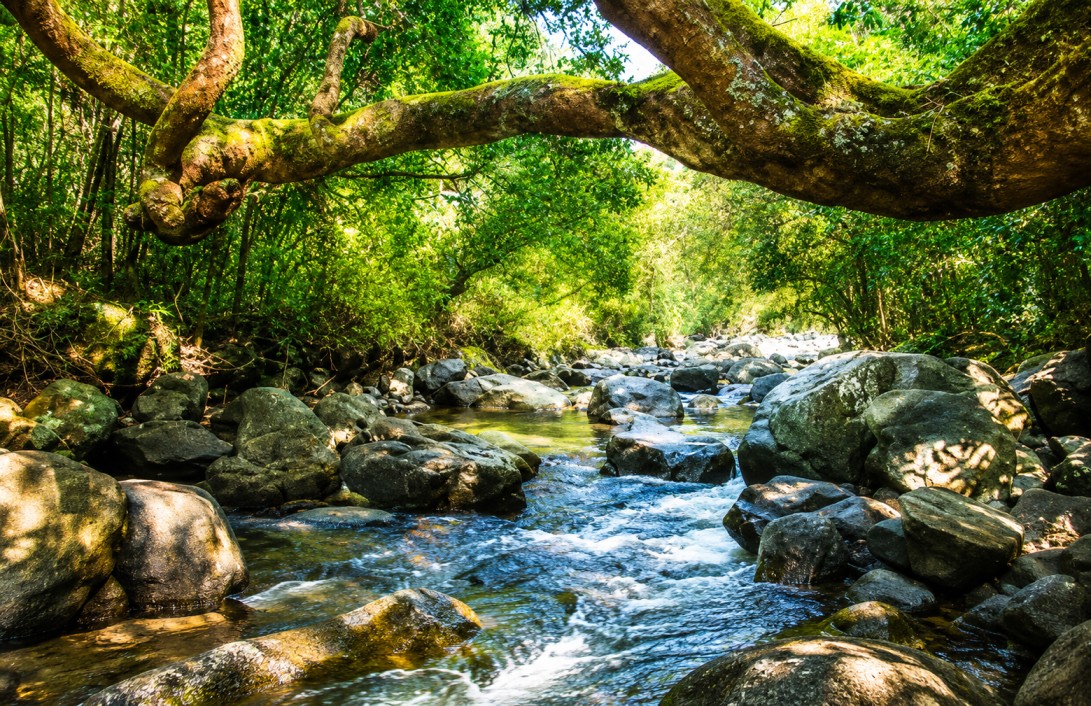
Mollem-National-Park : Goa's Lush Green Wilderness
Located in the South Goa district of Goa, Mollem National Park is one of India's most significant protected forests and a gateway to the rich biodiversity of the Western Ghats, a UNESCO World Heritage Site. Covering an area of approximately 107 square kilometers, the national park forms the core of the larger Bhagwan Mahavir Wildlife Sanctuary. Nestled along the Goa–Karnataka border near the village of Mollem, the park is renowned for its dense evergreen forests, cascading waterfalls, diverse wildlife, ancient temples, and scenic trekking trails. Mollem National Park tourism attracts wildlife enthusiasts, birdwatchers, photographers, trekkers, families, couples, and nature lovers looking to experience Goa beyond its famous beaches.
Mollem National Park
A 107 sq km protected forest in South Goa forming the core of the Bhagwan Mahavir Wildlife Sanctuary, at the foothills of the Western Ghats UNESCO World Heritage Site. This reference outlines the ecological layout, wildlife, and access relevant to Goa eco-tourism circuit planning.
Reserve character
Mollem National Park sits on the Goa–Karnataka border near Mollem village, forming the protected core of the wider Bhagwan Mahavir Wildlife Sanctuary, established in 1969, with the national park itself declared in 1978. Its tropical evergreen and semi-evergreen forest, bamboo groves, and river valleys sit at the foothills of the Western Ghats, one of the world's recognised biodiversity hotspots.
The park's best-known feature is Dudhsagar Waterfalls, where the Mandovi River descends nearly 310 metres across multiple tiers. Within the same forest cover stands the Tambdi Surla Mahadev Temple, a 12th-century Kadamba-style structure and one of Goa's oldest surviving temples, giving the reserve a layered natural-and-heritage identity.
Forest structure
Hosts hornbills, eagles, and the Malabar giant squirrel, with the Malabar pied hornbill and birds of prey most visible from clearings and forest edges.
Home to the Indian paradise flycatcher, emerald dove, grey junglefowl, and a dense concentration of butterfly and amphibian species.
Supports Indian gaur, sambar and barking deer, wild boar, sloth bear, and leopard, typically encountered on jeep safaris and guided forest walks.
Streams and the Mandovi River corridor, culminating at Dudhsagar Waterfalls, sustain riparian vegetation and remain the park's principal scenic draw.
Points of reference
Dudhsagar Waterfalls
A multi-tiered cascade descending nearly 310 metres, among the tallest waterfalls in India and the park's principal landmark.
Tambdi Surla Mahadev Temple
A 12th-century Kadamba-style stone temple set within the forest, notable for its carving and relative seclusion.
Devil's Canyon
A rock-carved river gorge near the park, forming part of the wider natural circuit around Mollem.
Salaulim Dam & Bondla Sanctuary
Nearby water and wildlife sites, along with spice plantations, extending a Mollem-based itinerary into broader inland Goa.
Recorded wildlife
- Indian gaur
- Leopard
- Sloth bear
- Sambar & barking deer
- Wild boar
- Indian civet
- Malabar giant squirrel
- Malabar pied hornbill
- Indian paradise flycatcher
- Emerald dove & grey junglefowl
- Kingfishers, eagles, woodpeckers
- Reptiles & amphibians
- Endemic butterfly species
On-ground activity
Jeep safaris
Guided vehicle-based routes through forest floor terrain, offering the most consistent wildlife viewing within the park.
Trekking & forest walks
Trails around Dudhsagar Falls and through the surrounding Western Ghats foothills, ranging from short walks to longer forest routes.
Birdwatching
Structured excursions targeting the park's recorded 200-plus bird species, best conducted in early morning hours.
Photography & camping
Waterfall, forest, and wildlife photography, with camping permitted in designated areas within the sanctuary.
Operational notes
- Access to core wildlife areas is guided, in line with the park's protected status.
- Sturdy walking shoes, insect repellent, and drinking water are advisable for all forest activity.
- Silence and adherence to designated trails are required during safaris and wildlife walks.
- Some forest activities may be restricted during peak monsoon rainfall.
Seasonality
| Period | Conditions | Notes |
|---|---|---|
| OCT — MAR | Recommended | Pleasant conditions for safaris, trekking, and sightseeing; the park's primary visiting season. |
| JUN — SEP | Monsoon | Peak water volume at Dudhsagar Waterfalls and lush forest cover, though some forest activities may be restricted. |
| APR — MAY | Pre-monsoon | Warmer conditions with lower water flow at the falls; a quieter period for visits. |
Access & connectivity
Two airport options serving Goa, both with onward road connectivity to Mollem.
Castle Rock serves certain routes directly; Madgaon (Margao) offers broader regional rail connectivity.
Regular bus, taxi, and private vehicle access to Mollem village and the park entrance.