One park, an entire vertical ecosystem
Namdapha sits in Changlang district at the eastern edge of Arunachal Pradesh, its boundary running from the Noa-Dihing River valley up through successive forest bands to permanently snow-clad peaks. The result is a single journey that crosses tropical rainforest, temperate broadleaf forest, and alpine terrain, an elevational range matched in very few protected areas globally.
That same scale and remoteness limit how much of the park is realistically accessible. Most visitor activity concentrates around the Deban entry zone in the lower valley; the park's interior and higher elevations are reserved for serious, well-prepared multi-day expeditions.
At a glance
| Nearest airport & rail | Dibrugarh, Assam, ~160 km |
| Nearest town | Miao, ~25 km from the Deban entry point |
| Elevation range | ~200 m to over 4,500 m within the park boundary |
| Core river | Noa-Dihing River, through the lower valley |
| Interior access | Multi-day trekking with experienced guides only |
Operating window
November through April is the favorable window, with drier trail conditions in the lower forest zones and the best wildlife and bird visibility. Monsoon rainfall renders much of the park inaccessible outside this period.
Four species, one boundary
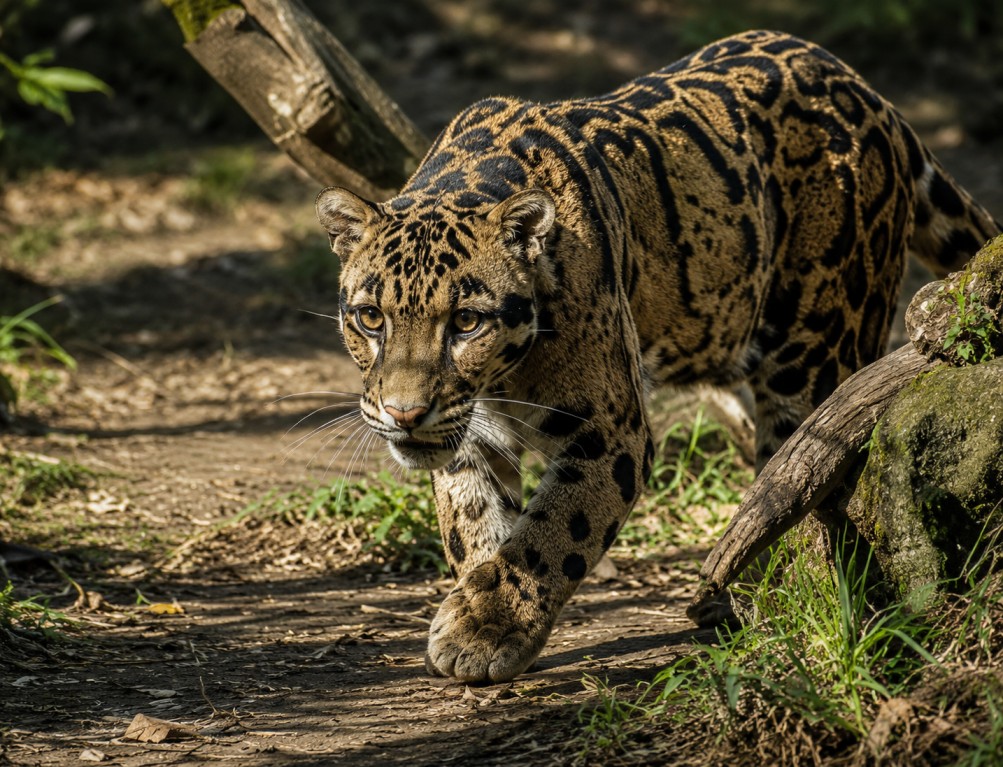
Namdapha is recognized as the only park confirmed to harbor tiger, leopard, clouded leopard, and snow leopard together within a single protected landscape, each occupying a different elevational band. Sightings of any of the four require considerable patience given dense cover and difficult terrain.
What an itinerary draws on
Deban zone walks
The most practical and accessible way to experience the park, with nature walks and wildlife trekking through the lower forest.
Birdwatching
Exceptional avian diversity through the lower forest zones, including species found nowhere else in India.
Interior expedition treks
Multi-day routes into higher elevation zones, undertaken only with experienced guides and significant logistical preparation.
Across the elevation bands
Species composition shifts markedly with elevation, from canopy-dwelling lowland wildlife to high-altitude alpine fauna, a key planning factor for any wildlife-focused brief.
Planning constraints
| Approach | Best treated as part of a longer, well-planned journey into eastern Arunachal Pradesh, given the distance from Dibrugarh |
| Guides | Experienced, park-authorized guides required for any trekking beyond the Deban zone |
| Trail access | Heavy monsoon rainfall closes most of the park June–September |
| Preparation | Multi-day interior treks require significant logistical lead time and fitness planning |