Nanda-Devi-National-Park : The Hidden Paradise Of The Himalayas
Nanda Devi National Park stands as one of the most awe-inspiring and scientifically significant destinations in India, representing a pristine high-altitude wilderness of glaciers, alpine meadows, and soaring peaks that together form one of the most dramatic and inaccessible mountain landscapes on the entire Indian subcontinent. Situated in the Chamoli district of Uttarakhand, deep within the heart of the Garhwal Himalayas, the park is anchored by Nanda Devi, the second highest peak in India and the highest mountain lying entirely within Indian territory, rising to a commanding 7816 metres above sea level. The destination draws mountaineers, serious trekkers, wildlife researchers, and high-altitude wilderness travelers from across the world, offering a landscape defined by enormous glacial basins, thundering meltwater rivers, flower-carpeted alpine meadows, and an atmosphere of absolute mountain grandeur found in very few places remaining on earth.
🏔️ Nanda Devi National Park (Uttarakhand)
📍 Destination
Nanda Devi National Park (Uttarakhand)
🌏 Region
Garhwal Himalayas
🏆 Recognition
UNESCO World Heritage Site
⛰️ Highlight
Nanda Devi Peak
🌿 Overview
Nanda Devi National Park stands as one of the most awe-inspiring and scientifically significant destinations in India, representing a pristine high-altitude wilderness of glaciers, alpine meadows, and soaring peaks that together form one of the most dramatic and inaccessible mountain landscapes on the entire Indian subcontinent. Situated in the Chamoli district of Uttarakhand, deep within the heart of the Garhwal Himalayas, the park is anchored by Nanda Devi, the second highest peak in India and the highest mountain lying entirely within Indian territory, rising to a commanding 7816 metres above sea level. The destination draws mountaineers, serious trekkers, wildlife researchers, and high-altitude wilderness travelers from across the world, offering a landscape defined by enormous glacial basins, thundering meltwater rivers, flower-carpeted alpine meadows, and an atmosphere of absolute mountain grandeur found in very few places remaining on earth.
What distinguishes Nanda Devi National Park from other protected areas in the subcontinent is not merely its extraordinary altitude or the magnificence of its central peak, but the unique combination of global biodiversity importance, near-mythological cultural significance, and deliberately restricted access that together preserve this landscape in a state of remarkable ecological integrity. The park is enclosed on almost all sides by a ring of peaks exceeding six thousand metres, forming a natural sanctuary known as the Nanda Devi Sanctuary, a vast inner basin accessible only through the narrow and treacherous gorge of the Rishi Ganga river. This layered character elevates Nanda Devi National Park beyond a conventional mountain destination into a landscape of genuine natural sanctity and scientific wonder.
⭐ Why Visit Nanda Devi National Park
The recognition of Nanda Devi National Park as a UNESCO World Heritage Site, and as a core component of the broader Nanda Devi and Valley of Flowers World Heritage Area, reflects its unparalleled importance within the global natural heritage landscape. Unlike more accessible or commercially developed mountain parks, Nanda Devi offers a cohesive experience where towering Himalayan peaks, pristine glacial terrain, endemic alpine flora, and rare high-altitude fauna work together to create a destination of profound and humbling natural grandeur.
One of the most compelling reasons to visit is the sheer scale and drama of the mountain landscape that surrounds the park on every side. The ring of peaks encircling the inner sanctuary, including Nanda Devi East, Dunagiri, Changabang, and Kalanka, creates a panoramic amphitheatre of rock and ice that has no parallel in the Indian Himalayan region. Even from the outer zones accessible to visitors, the views across successive ridgelines toward the central massif offer a visual experience of extraordinary power and scale that stays with the traveler long after the journey is complete.
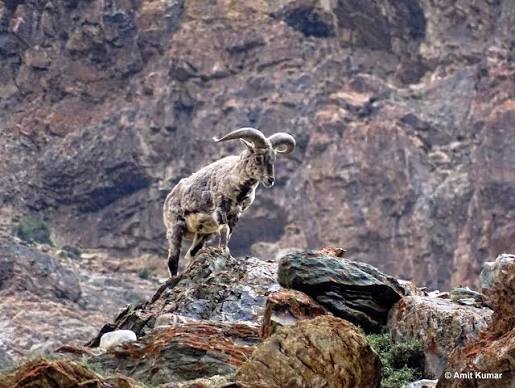
Additionally, Nanda Devi National Park showcases a remarkable richness of high-altitude biodiversity across its varied elevation zones. The park supports populations of snow leopard, Himalayan black bear, bharal, musk deer, and the Himalayan tahr, alongside an extraordinary diversity of alpine flowering plants that make the meadow zones some of the most botanically rich high-altitude habitats in all of Asia. The combination of UNESCO recognition, extreme mountain scenery, and deeply spiritual cultural significance to the people of Uttarakhand further strengthens its appeal as a destination of rare and lasting importance.
🏞️ Key Highlights Within the Area
Among the natural landmarks, the view of Nanda Devi Peak itself stands out as the most iconic and overwhelmingly distinctive feature of the park. Rising in a massive pyramid of rock and ice above the surrounding ridgelines, the peak holds a commanding presence that is visible from considerable distances and dominates the skyline of the entire Garhwal region. Nanda Devi is revered as a goddess by the people of Uttarakhand and her mountain form carries a spiritual weight that adds a profound cultural dimension to the already extraordinary natural spectacle.
The Rishi Ganga Gorge, the narrow and precipitous river canyon that forms the only natural entrance into the inner sanctuary basin, is another significant highlight. Carved by glacial meltwater through sheer rock walls that rise dramatically on either side, the gorge represents one of the most challenging and dramatic natural passages in the Himalayas, providing a compelling combination of geological spectacle and the visceral sense of entering a world entirely set apart from the one beyond its walls.
The alpine meadows and moraines of the outer sanctuary, accessible through trekking routes that approach the park from the Lata and Tolma villages, add a rich botanical dimension to the experience, particularly during the summer flowering season when species of primula, brahmakamal, and numerous other endemic plants fill the high-altitude grasslands with colour and fragrance.
The visual experience of Nanda Devi National Park changes dramatically with the seasons and with altitude, as the lower forested approaches give way to open alpine terrain, and the snowbound silence of winter transforms into the vivid florescence of the brief Himalayan summer. This vertical and seasonal variation adds extraordinary depth to the visitor experience, with each phase of the mountain year revealing a distinctly different and equally compelling face of this remarkable landscape.
🥾 Activities
High-altitude trekking through the outer zones and buffer areas of the park is the defining activity for visitors to Nanda Devi, with established routes approaching the park boundary through the Rishi Ganga valley and the trails above the villages of Lata, Tolma, and Jumma offering multi-day wilderness experiences of considerable challenge and exceptional scenic reward. These treks, conducted through terrain that rises steeply through successive Himalayan vegetation zones, provide opportunities to observe rare alpine flora, high-altitude wildlife, and the gradually unfolding panorama of the Nanda Devi massif from successive vantage points.
Birdwatching is a particularly rewarding pursuit within the lower and mid-elevation zones approaching the park, with the Himalayan forests and alpine scrub supporting an impressive diversity of high-altitude species including the Himalayan monal, snow partridge, alpine chough, lammergeier, and various species of accentor and rosefinch that inhabit the rocky terrain above the treeline. Early morning hours along the approach trails are especially favorable, as bird activity peaks in the cooler hours of dawn.
Mountaineering expeditions to the peaks surrounding the outer sanctuary, undertaken with the appropriate permits and experienced high-altitude guides, represent the most demanding and committed form of engagement with this landscape, offering those with the necessary skill and preparation an experience of the Himalayan high country that is truly without parallel. Visiting the nearby Valley of Flowers National Park, which together with Nanda Devi forms the UNESCO World Heritage Area, is also strongly recommended, offering one of the most spectacular wildflower displays in the entire Himalayan range during the summer months.
🌤️ Best Time to Visit
The most favorable period to visit Nanda Devi National Park is from May to June and again from September to October, representing the windows between the winter snowfall and the heavy monsoon precipitation when the trekking routes into the outer zones are accessible and the mountain views are at their clearest and most dramatic. During these brief seasonal windows, the settled weather and firm trail conditions make high-altitude wilderness exploration both safe and extraordinarily rewarding.
The summer months of May and June are particularly spectacular for botanical richness, as the alpine meadows emerge from the winter snowpack and burst into flower with remarkable speed, filling the high-altitude terrain with a diversity and density of flowering plants that makes this one of the most visually extraordinary periods in the entire park calendar.
The winter months from November to April bring deep snowfall to virtually all accessible terrain within and approaching the park, rendering trekking routes entirely impassable and closing the region to all but the most experienced and fully equipped winter mountaineers, while the inner sanctuary remains closed to all visitors throughout the entire year in order to protect its exceptional ecological integrity.
🚗 Connectivity
Nanda Devi National Park is accessible from the town of Joshimath, situated approximately 25 kilometres from the primary trailheads that lead toward the park boundary, and serving as the most practical base for trekkers and mountaineers preparing for excursions into the surrounding high-altitude terrain. Joshimath is itself connected to Rishikesh by a mountain road of approximately 250 kilometres, passing through the sacred towns of Devprayag and Rudraprayag along the Garhwal pilgrimage corridor.
Dehradun, served by the Jolly Grant Airport with regular domestic flights from Delhi and several other major Indian cities, serves as the most accessible major gateway for visitors arriving by air, with road travel from Dehradun to Joshimath taking approximately nine to ten hours through the scenic mountain highway of the Garhwal region. Rail connectivity is available via Rishikesh and Haridwar, both of which have regular train services from Delhi and other major cities and serve as established starting points for road journeys into the Garhwal Himalayas. This makes Nanda Devi National Park a meaningful inclusion in extended Uttarakhand itineraries for travelers combining the park with visits to the Valley of Flowers, Kedarnath, Badrinath, and the broader sacred and natural landscape of the Garhwal Himalayan region.