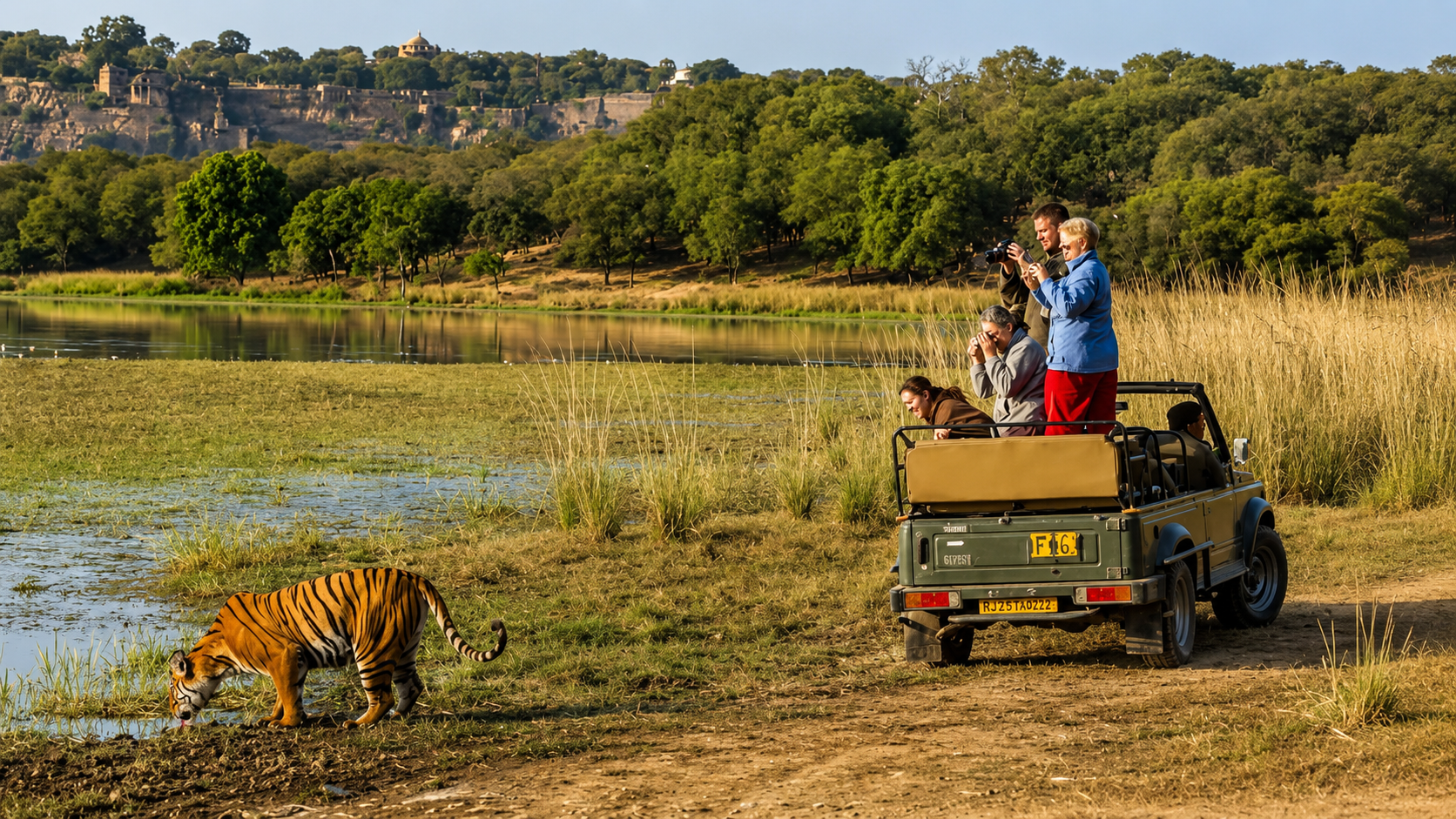
Ranthambore-National-Park : Land Of The Royal Bengal Tiger
Picture yourself entering a landscape where ancient ruins emerge from dense forests, where tranquil lakes mirror rugged hills, and where every rustle in the wilderness quickens your pulse with anticipation. The morning mist hangs low over the grasslands as peacocks call from distant trees and spotted deer graze cautiously in the shadows. Then, suddenly, the jungle falls silent. Somewhere nearby, the undisputed king of these forests is on the move. This is Ranthambore National Park—not merely a wildlife reserve, but one of India's most iconic destinations for experiencing nature in its most raw and captivating form. Nestled in southeastern Rajasthan, Ranthambore combines extraordinary wildlife, dramatic landscapes, and centuries of history to create an experience unlike any other in India.
🐅 Ranthambore National Park, Rajasthan
Where the Wild Heart of India Roams Free
📍 Location
Sawai Madhopur, Rajasthan
🐯 Famous For
Bengal Tiger Sightings
🏰 Heritage
Ranthambore Fort
🚙 Experience
Jeep & Canter Safaris
Picture yourself entering a landscape where ancient ruins emerge from dense forests, where tranquil lakes mirror rugged hills, and where every rustle in the wilderness quickens your pulse with anticipation. The morning mist hangs low over the grasslands as peacocks call from distant trees and spotted deer graze cautiously in the shadows. Then, suddenly, the jungle falls silent. Somewhere nearby, the undisputed king of these forests is on the move. This is Ranthambore National Park—not merely a wildlife reserve, but one of India's most iconic destinations for experiencing nature in its most raw and captivating form. Nestled in southeastern Rajasthan, Ranthambore combines extraordinary wildlife, dramatic landscapes, and centuries of history to create an experience unlike any other in India.
🌿 A Legacy of Conservation and Royal Heritage
Ranthambore's story stretches back centuries. Once the private hunting grounds of the Maharajas of Jaipur, the forests and grasslands surrounding the historic Ranthambore Fort were reserved for royal expeditions and exclusive game hunts. Over time, growing awareness of wildlife conservation transformed the region from a hunting estate into a protected sanctuary.
In 1973, Ranthambore became one of the first reserves included under India's ambitious Project Tiger initiative, aimed at protecting the country's declining tiger population. It was later declared a national park in 1980 and has since become one of the most successful wildlife conservation areas in India. Today, Ranthambore stands as a symbol of hope for tiger conservation and remains one of the best places in the world to observe Bengal tigers in their natural habitat.
🏞️ A Landscape That Feels Like a Living Storybook
The moment you enter Ranthambore, you realize this is far more than a typical wildlife park. The landscape is a dramatic blend of dry deciduous forests, open grasslands, rocky cliffs, and sparkling lakes framed by the ancient Aravalli and Vindhya hill ranges.
Unlike dense jungles where wildlife often remains hidden, Ranthambore's varied terrain creates excellent opportunities for wildlife sightings. Ancient banyan trees, seasonal streams, and picturesque lakes such as Padam Talao, Malik Talao, and Rajbagh Talao provide vital habitats for countless species while creating breathtaking scenery for visitors.
Adding to the park's unique character are the remnants of abandoned pavilions, temples, and hunting lodges scattered throughout the wilderness. These historic ruins lend the landscape an almost mystical quality, where nature and history exist side by side.
🐅 What Awaits Inside
The undisputed star attraction of Ranthambore is the Bengal tiger. The park has earned international recognition for its healthy tiger population and frequent sightings. Unlike many wildlife reserves where tiger encounters are rare, Ranthambore offers visitors a genuine chance to witness these magnificent predators roaming freely through forests, grasslands, and even near ancient ruins.
Yet the park's biodiversity extends far beyond its famous tigers. Leopards, sloth bears, striped hyenas, jackals, jungle cats, crocodiles, and numerous species of deer inhabit the reserve. Bird enthusiasts will find paradise here, with over 300 species of resident and migratory birds adding color and life to the landscape throughout the year.
The safari experience itself is unforgettable. Guided jeep and canter safaris venture into designated zones, each offering unique landscapes and wildlife encounters. Every safari feels like an expedition into the unknown, where every turn of the trail may reveal a remarkable sighting.
🏰 Ranthambore Fort – The Guardian of the Forest
One of Ranthambore's most distinctive features is the magnificent Ranthambore Fort, which rises dramatically above the park on a rocky hilltop. Dating back to the 10th century, this UNESCO World Heritage Site has witnessed centuries of battles, royal intrigue, and changing empires.
The fort offers spectacular panoramic views of the surrounding wilderness and serves as a reminder that Ranthambore's significance extends beyond wildlife alone. Ancient temples, reservoirs, gateways, and palaces within the fort complex provide fascinating insights into Rajasthan's rich history and architectural heritage.
📅 Best Time to Visit
The ideal time to visit Ranthambore National Park is from October to June. The cooler months between October and March offer pleasant weather and comfortable safari conditions. However, wildlife sightings are often at their best during the warmer months of April to June, when animals gather around water sources.
The park remains closed during the monsoon season, typically from July to September, to protect wildlife habitats and ensure visitor safety.
To fully experience the reserve, visitors should plan at least two to three safari drives over multiple days, significantly increasing the chances of memorable wildlife encounters.
🚗 How to Reach
Ranthambore National Park is located near the town of Sawai Madhopur in Rajasthan and is well connected by road and rail. Sawai Madhopur Railway Station is the nearest railhead, situated approximately 10 kilometers from the park entrance, with regular trains connecting it to major cities such as Delhi, Jaipur, Mumbai, and Agra.
The nearest airport is Jaipur International Airport, located around 180 kilometers away, which is approximately a 3.5 to 4-hour drive from Ranthambore. Private taxis, rental vehicles, and organized transfers are readily available from Jaipur. The park is also accessible by road from Delhi, Agra, Udaipur, and other major destinations in Rajasthan, making it a convenient addition to wildlife and heritage itineraries.
📍 Nearby Places Worth Exploring
Beyond the national park, visitors can explore the historic Ranthambore Fort, ancient temples within the reserve, and the charming town of Sawai Madhopur. The region also serves as an excellent extension to Rajasthan's famous Golden Triangle circuit, connecting seamlessly with Jaipur, Agra, and Delhi.
✨ Why You Simply Must Visit Ranthambore National Park
Some destinations showcase history. Others celebrate nature. Ranthambore offers both in extraordinary measure.
Standing in an open safari vehicle as the morning sun illuminates the forest, you realize that this is more than a wildlife excursion—it is an encounter with one of India's greatest natural treasures. Here, ancient fort walls overlook tiger territory, lakes reflect centuries-old ruins, and every safari carries the promise of an unforgettable discovery.
For wildlife enthusiasts, Ranthambore offers one of the finest tiger-viewing experiences in the world. For photographers, the combination of dramatic landscapes and incredible wildlife creates endless opportunities. For history lovers, the fort and ruins add a fascinating cultural dimension to every journey. And for travelers seeking authentic adventure, few places in India can rival the excitement of exploring these legendary forests.
Drive through its wild trails. Listen to the sounds of the jungle. Watch the landscape come alive around you. And discover why Ranthambore National Park remains one of India's most celebrated destinations for wildlife, heritage, and unforgettable experiences.