Satpura-National-Park : The Hidden Gem Of Central India
Picture yourself drifting silently through a mist-covered forest at dawn. The calls of exotic birds echo through the trees, sunlight filters through dense sal and teak forests, and the distant rustle of leaves hints at wildlife moving unseen through the undergrowth. A river winds its way through rugged hills, creating a landscape that feels untouched by time. This is Satpura National Park—not merely a wildlife destination, but one of India's most immersive and unspoiled wilderness experiences. Nestled in the Satpura Hills of Madhya Pradesh, this remarkable national park offers a rare opportunity to explore nature on foot, by jeep, by canoe, and even by boat, creating encounters with the wild that feel both intimate and unforgettable.
🌿 Satpura National Park, Madhya Pradesh
Where the Wild Heart of India Still Beats
Picture yourself drifting silently through a mist-covered forest at dawn. The calls of exotic birds echo through the trees, sunlight filters through dense sal and teak forests, and the distant rustle of leaves hints at wildlife moving unseen through the undergrowth. A river winds its way through rugged hills, creating a landscape that feels untouched by time. This is Satpura National Park—not merely a wildlife destination, but one of India's most immersive and unspoiled wilderness experiences. Nestled in the Satpura Hills of Madhya Pradesh, this remarkable national park offers a rare opportunity to explore nature on foot, by jeep, by canoe, and even by boat, creating encounters with the wild that feel both intimate and unforgettable.
📜 A Wilderness Preserved Through Time
Satpura National Park was established in 1981 and forms the core of the larger Satpura Tiger Reserve, one of Central India's most important conservation landscapes. Spread across a diverse terrain of hills, valleys, sandstone peaks, rivers, and dense forests, the park protects a rich ecosystem that has remained remarkably intact despite the pressures of modern development.
Unlike many wildlife reserves where tourism is concentrated in specific zones, Satpura offers a more exclusive and less crowded safari experience. Its remote location and carefully managed tourism model have helped preserve the area's ecological integrity, making it one of India's best-kept wildlife secrets.
The park derives its name from the ancient Satpura mountain range, whose rugged beauty forms the backdrop to countless wildlife encounters. Together with neighboring protected forests and sanctuaries, Satpura creates a vast wilderness corridor that supports some of India's most iconic species.
🏞️ Natural Beauty That Captivates
The moment you enter Satpura National Park, you realize this is not the typical safari landscape. Instead of endless grasslands, visitors are greeted by rolling hills, thick forests, rocky escarpments, tranquil lakes, and winding rivers. The scenery feels wild, dramatic, and wonderfully diverse.
The Denwa River, flowing along the park's edge, adds another dimension to the experience. Boat safaris glide across its calm waters, offering unique perspectives of the forest and opportunities to spot wildlife gathering at the shoreline. During sunrise and sunset, the reflections of the surrounding hills create some of the most breathtaking views in Central India.
The changing seasons transform the landscape. Summer reveals wildlife congregating around water sources, while the monsoon paints the forest in vibrant shades of green. Winter brings clear skies, pleasant temperatures, and excellent wildlife viewing conditions.
🐅 What Awaits Inside
Satpura is one of the few national parks in India where visitors can experience multiple forms of exploration. Traditional jeep safaris remain popular, but the park is equally famous for its guided walking safaris, canoe excursions, and boat rides.
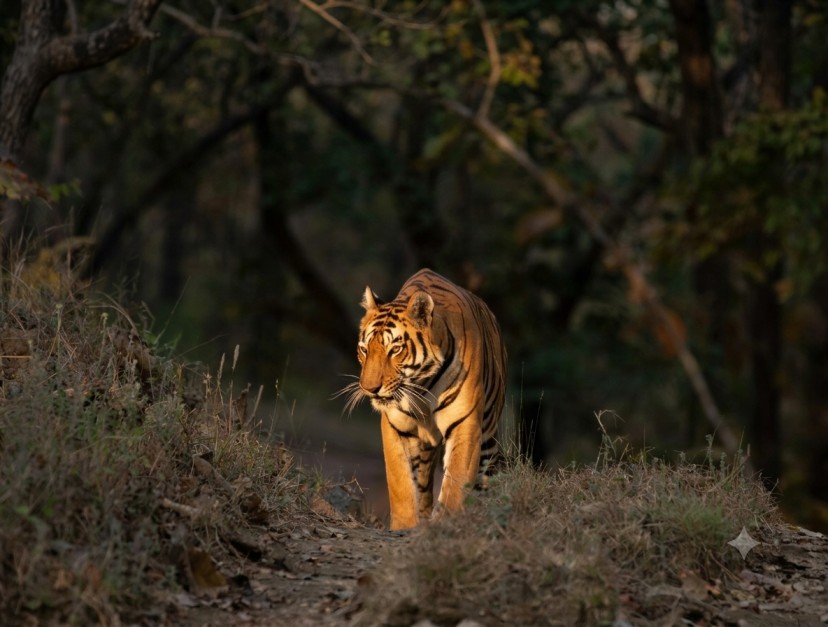
The forests shelter an extraordinary variety of wildlife. Tigers roam the dense woodlands, while leopards, sloth bears, wild dogs, Indian gaur, sambar deer, chital, and nilgai thrive throughout the reserve. The park is also home to giant squirrels, porcupines, marsh crocodiles, and numerous smaller mammals that contribute to its ecological richness.
Bird enthusiasts find Satpura particularly rewarding. More than 300 bird species inhabit the reserve, including hornbills, crested serpent eagles, paradise flycatchers, kingfishers, and numerous migratory visitors. Every trail, riverbank, and forest clearing presents new opportunities for discovery.
🚶 A Different Kind of Safari Experience
What truly sets Satpura apart is the feeling of connection it offers. Unlike many wildlife destinations where visitors remain confined to vehicles, Satpura encourages immersive exploration. Guided walking safaris allow guests to experience the forest at ground level, observing tracks, listening to bird calls, and learning about the intricate relationships that sustain the ecosystem.
This slower pace creates a deeper appreciation of the wilderness. Here, the experience is not solely about spotting a tiger. It is about understanding the forest itself—the sounds, scents, landscapes, and countless forms of life that make it extraordinary.
The emphasis on low-impact tourism ensures that wildlife encounters remain authentic while maintaining the delicate balance between conservation and visitor experience.
📅 Best Time to Visit
The ideal time to visit Satpura National Park is from October to June. The winter months from October to February offer comfortable temperatures, clear skies, and excellent opportunities for wildlife viewing and photography.
March to June is considered the prime season for spotting large mammals, as animals gather around water sources during the warmer months. The park generally remains closed during the monsoon season from July to September to protect wildlife and maintain visitor safety.
A stay of two to three nights is recommended to fully experience the park's diverse safari activities and natural beauty.
🚗 How to Reach
✈️ By Air
Satpura National Park is located near Madhai in Madhya Pradesh and is well connected by air, rail, and road. The nearest airport is Raja Bhoj Airport in Bhopal, approximately 150 kilometers away, offering regular flights from major Indian cities. Another convenient option is Dr. Babasaheb Ambedkar International Airport in Nagpur, located around 250 kilometers from the park.
🚆 By Rail
The nearest railway station is Pipariya, situated approximately 50 kilometers from the Madhai gate, with direct train connections to Delhi, Mumbai, Bhopal, and other major cities. From Pipariya, visitors can easily hire taxis to reach the park.
🛣️ By Road
Well-maintained roads also connect Satpura to Bhopal, Pachmarhi, Jabalpur, and Nagpur, making self-drive and private vehicle travel convenient options.
📍 Nearby Places Worth Exploring
The charming hill station of Pachmarhi, often called the "Queen of Satpura," lies close to the park and offers waterfalls, caves, scenic viewpoints, and colonial-era heritage. The Denwa River and surrounding buffer zones provide additional opportunities for nature activities, while nearby villages offer glimpses into the traditional culture of rural Madhya Pradesh.
✨ Why You Simply Must Visit Satpura National Park
Some wildlife destinations are about ticking animals off a checklist. Satpura is about experiencing nature in its purest form.
Standing in the forest as morning mist drifts through the trees, listening to birds awaken the wilderness, you realize that Satpura offers something increasingly rare in today's world—silence, authenticity, and connection. It is a place where adventure feels real, where every trail leads to discovery, and where the forest reveals its secrets gradually to those willing to slow down and observe.
For wildlife enthusiasts, the biodiversity is exceptional. For photographers, the landscapes are endlessly rewarding. For nature lovers, the combination of walking safaris, river excursions, and pristine forests creates one of India's most memorable wilderness experiences.
Walk beneath ancient trees. Drift along the Denwa River. Listen to the heartbeat of the forest. And discover why Satpura National Park remains one of India's most extraordinary and underrated wildlife destinations.