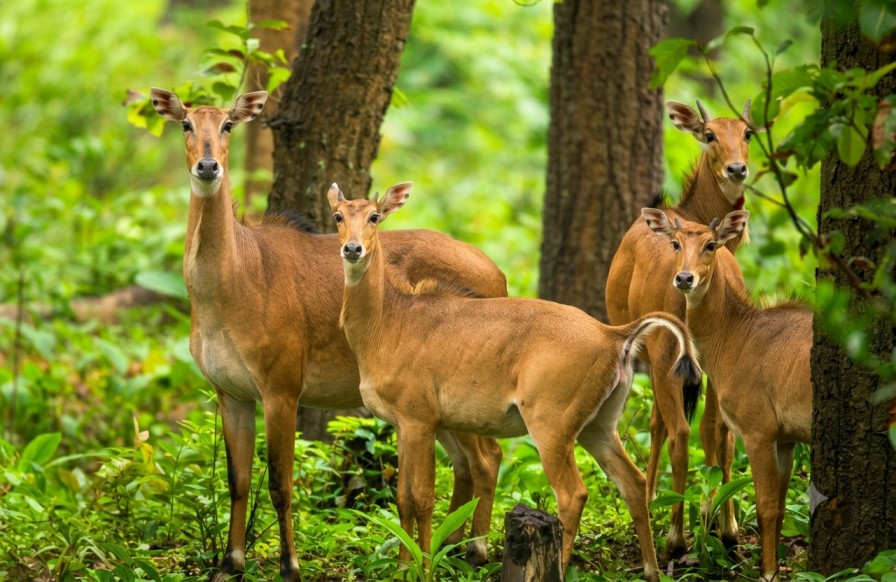
Semarsot Wildlife Sanctuary
A 430 sq km stretch of sal and mixed deciduous forest along the historic Ambikapur-Daltonganj road, forming the northern extension of the Ramgarh hills and supporting leopard, sloth bear, nilgai and a wide range of resident and seasonal birdlife — largely free from mainstream tourist crowds.
A compact, ecologically continuous forest tract
Semarsot Wildlife Sanctuary sits in the northern reaches of Chhattisgarh, near the deserted village of Semarsot along the Ambikapur-Daltonganj road, bordering Bihar to the east with the Tropic of Cancer passing directly through its landscape. The terrain combines mixed deciduous and sal forest, undulating hills and seasonal streams across roughly 430 square kilometres.
What distinguishes Semarsot from more commercialised wildlife destinations is not only its biodiversity but the combination of relative remoteness, varied topography and a genuine sense of undisturbed wilderness within a compact protected area, positioned along an ancient trade corridor connecting Chhattisgarh to Bihar and Jharkhand.
As one of Surguja district's principal wildlife reserves, Semarsot preserves a substantial stretch of northern Chhattisgarh's forest ecosystem. Unlike heavily visited national parks, it offers a cohesive experience in which dense forest, hilly terrain and genuine seclusion combine for a rewarding, low-crowd wildlife visit.
Resident fauna
What the sanctuary comprises
Forested hill tracts
A northern extension of the Ramgarh hills, with undulating ridges and valleys supporting moist and dry tropical deciduous vegetation and varied microhabitats.
Sal-dominated forest
Dense tree cover composed largely of sal, alongside Terminalia and Anogeissus, sheltering the sanctuary's mammal and bird populations.
Shiv Temple & Kailash Caves
Heritage and natural landmarks that add cultural interest and are commonly combined with a sanctuary visit by travellers based in Ambikapur.
Pawai & Kedai Waterfalls, Tatapani
Waterfalls and the Tatapani hot water spring provide additional stops along the wider Surguja wildlife and nature circuit.
How visitors engage with the sanctuary
Jungle safaris
By jeep or on foot, depending on guide availability and terrain conditions, in search of nilgai, chital, sambar and other resident species.
Trekking
The sanctuary's hilly, uneven topography offers an engaging outdoor experience suited to visitors comfortable with rugged walking conditions.
Birdwatching
Mixed forest habitat supports resident and seasonal species, with early morning and late afternoon particularly rewarding for observation.
Nature photography
Quiet exploration of the forest interior appeals to those seeking a peaceful retreat away from crowded tourist circuits.
Seasonal considerations
January – May
Temperatures range 20°C–35°C. Wildlife sightings are more predictable as animals gather around available water sources, favouring both safaris and trekking.
November – June
Generally considered a suitable extended window for a visit, with the January–May stretch remaining the most favoured by wildlife enthusiasts.
Monsoon & Early Winter
Lush greenery returns to the forest, but trekking conditions become more difficult and wildlife sightings less predictable.
Reaching the sanctuary
Ambikapur-Daltonganj Route
Approximately 50 km from Ambikapur, the Surguja district headquarters, via the Ambikapur-Daltonganj road, which passes directly by the sanctuary. Public bus and taxi options are available.
Ambikapur / Jainagar
Ambikapur is the nearest railway station, with Jainagar also cited as a nearby railhead; both connect onward to the sanctuary by road.
Darmia Airport & Varanasi
Ambikapur's Darmia Airport is around 18 km from the town centre; Varanasi is often cited as the nearest airport with broader regional and national connectivity. Accommodation within the sanctuary is limited, with Ambikapur serving as the primary base.