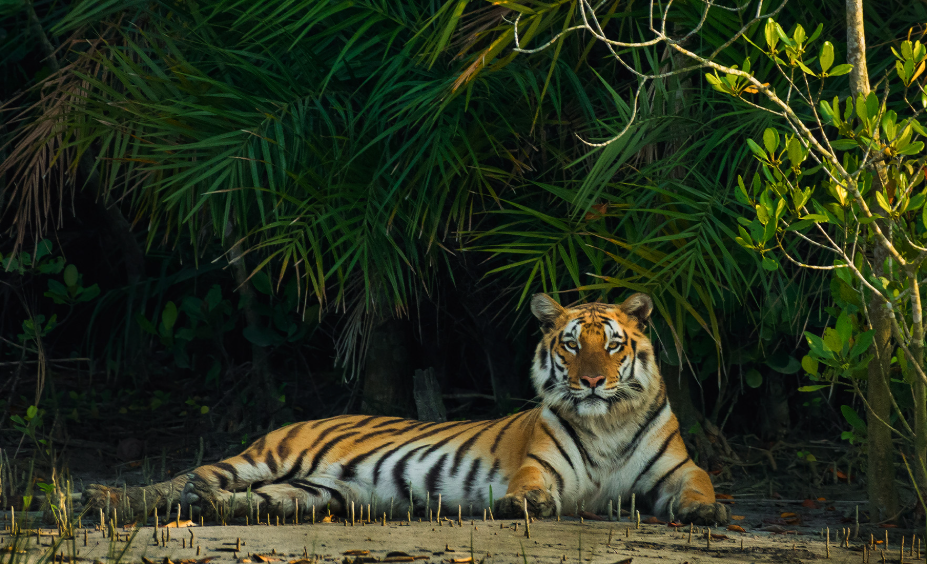
Sundarban National Park : Home Of Royal Bengal Tiger
Sundarbans National Park stands as one of the most extraordinary and ecologically irreplaceable destinations in the world, a vast, labyrinthine wilderness of tidal rivers, mudflats, and mangrove forests that together constitute the largest mangrove delta on earth. Located in the South 24 Parganas district of West Bengal, straddling the border between India and Bangladesh at the mouth of the Ganges, Brahmaputra, and Meghna river systems, the Indian portion of the Sundarbans encompasses an area of nearly ten thousand square kilometres of which the national park and tiger reserve form the protected core. The destination draws wildlife enthusiasts, naturalists, photographers, and adventurous travelers from across the world, united by the prospect of encountering one of the most mythologised and genuinely dangerous wilderness landscapes remaining on the planet, home to the largest population of Royal Bengal Tigers living in a single contiguous habitat anywhere in their range.
🌿 Sundarbans National Park (West Bengal)
📖 Overview
Sundarbans National Park stands as one of the most extraordinary and ecologically irreplaceable destinations in the world, a vast, labyrinthine wilderness of tidal rivers, mudflats, and mangrove forests that together constitute the largest mangrove delta on earth. Located in the South 24 Parganas district of West Bengal, straddling the border between India and Bangladesh at the mouth of the Ganges, Brahmaputra, and Meghna river systems, the Indian portion of the Sundarbans encompasses an area of nearly ten thousand square kilometres of which the national park and tiger reserve form the protected core. The destination draws wildlife enthusiasts, naturalists, photographers, and adventurous travelers from across the world, united by the prospect of encountering one of the most mythologised and genuinely dangerous wilderness landscapes remaining on the planet, home to the largest population of Royal Bengal Tigers living in a single contiguous habitat anywhere in their range.
What distinguishes Sundarbans National Park specifically from the broader Sundarbans biosphere is its status as the strictly protected core zone of the delta, gazetted as a national park in 1984 and recognised as a UNESCO World Heritage Site in the same year. Within this core area, entry is restricted, human habitation is absent, and the tidal forest exists in its most undisturbed and ecologically intact condition. The national park's waters, channels, and mangrove islands represent the last refuge of a tiger population uniquely adapted over generations to a semi-aquatic existence, swimming freely between islands, hunting spotted deer and wild boar along the muddy shorelines, and tolerating salinity levels that would be fatal to tigers in any other habitat in the world.
🐅 Why Visit Sundarbans National Park
The dual designation of Sundarbans National Park as both a UNESCO World Heritage Site and a component of the Sundarbans Biosphere Reserve reflects the global significance of an ecosystem of extraordinary ecological value, performing critical functions of coastal protection, carbon sequestration, and biodiversity conservation that extend far beyond its boundaries. A visit is thus not merely a wildlife excursion but a direct engagement with one of the planet's most important and irreplaceable natural systems.
One of the most compelling reasons to visit is the opportunity to experience the Royal Bengal Tiger in the only mangrove habitat in the world where a significant tiger population survives. The Sundarbans tiger is a genuinely wild animal that moves through dense mangrove, tidal creek, and open mudflat entirely on its own terms, making every sighting a matter of chance and circumstance rather than the product of established safari roads and predictable animal movements.
🌊 Key Highlights Within the National Park
The core area of Sundarbans National Park, accessible only by authorised vessel with prior forest department permission, represents the most pristine and wildlife-rich portion of the entire delta. Moving through the narrow tidal channels of this restricted zone, with the mangrove wall rising directly from the water on either side and the real possibility of a tiger on the bank at any moment, is the defining experience of the national park and one of the most viscerally powerful wildlife encounters available anywhere in the subcontinent.
The watchtowers positioned at Sudhanyakhali and Dobanki within the national park's accessible zones offer elevated vantage points over surrounding forest clearings, freshwater ponds, and tidal edges that attract spotted deer, wild boar, estuarine crocodiles, and occasionally tigers during the cooler hours.
🛶 Activities
Boat-based navigation through the tidal channels and river systems of the national park is the sole means of experiencing the core zone and the primary activity of every Sundarbans visit. Moving slowly through the interior creeks by authorised vessel, with an experienced naturalist guide scanning the mangrove edges and interpreting the signs of wildlife presence, constitutes an experience of sustained and concentrated natural observation that rewards patience and attentiveness above all other qualities.
Birdwatching from the boat along the national park's channel edges and at the designated watchtowers is one of the most consistently rewarding activities the destination offers, with the diversity of kingfishers, herons, egrets, sea eagles, ospreys, and migratory waterbirds visible from the water during the winter months representing some of the finest avian spectacle available anywhere in eastern India.
📅 Best Time to Visit
The most favorable period to visit Sundarbans National Park is from November to March, when cooler temperatures, lower humidity, and the arrival of large numbers of migratory waterbirds combine to create conditions of maximum wildlife diversity and visitor comfort.
🚤 Connectivity
Sundarbans National Park is accessed from Kolkata, the nearest major city with comprehensive air and rail connectivity. From Kolkata, the journey to the gateway points of Canning or Godkhali covers approximately one hundred kilometres and takes between two and three hours, with local trains from Sealdah station to Canning providing a practical approach to the delta.
Forest department permits for entry into the national park's core zone are mandatory and must be arranged through licensed tour operators, who manage the full logistics of vessel hire, guide arrangements, and permit processing.