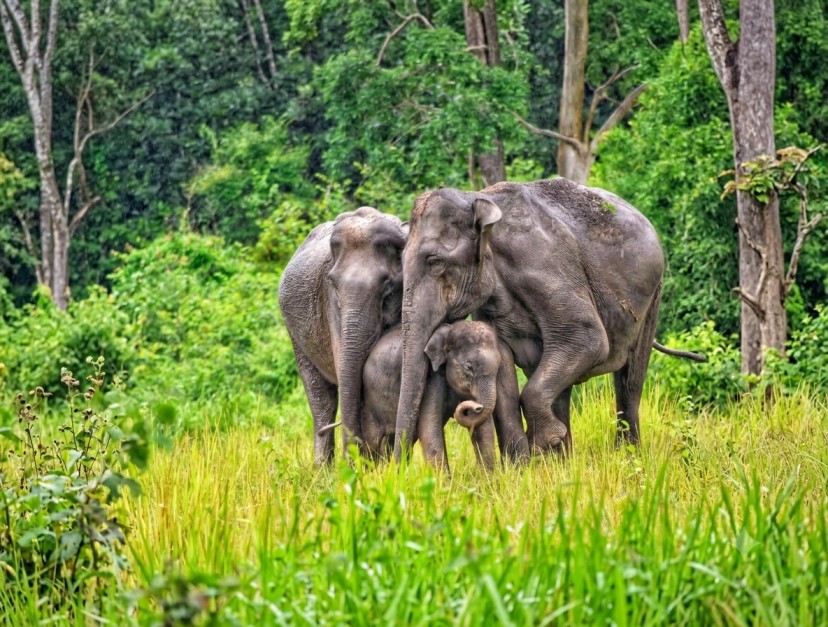
Wayanad Wildlife Sanctuary : The Green Paradise Of Kerela
Imagine stepping into a world where the air is thick with the scent of teak and wild cardamom, where the rustle of leaves might just be a herd of elephants making their quiet way through the mist-laced undergrowth, and where every trail you take feels like a conversation with nature itself. That's Wayanad Wildlife Sanctuary — not merely a reserve on a map, but a living, breathing world that humbles you with its scale and beauty. Nestled in the northeastern hills of Kerala, straddling the Western Ghats at altitudes between 700 and 2,100 metres, this magnificent sanctuary has long been one of India's most treasured wild spaces. Come here once, and the forest has a way of never quite leaving you.
🌿 Wayanad Wildlife Sanctuary, Kerala – Where the Wild Calls and the Forest Breathes
🌲 Introduction
Imagine stepping into a world where the air is thick with the scent of teak and wild cardamom, where the rustle of leaves might just be a herd of elephants making their quiet way through the mist-laced undergrowth, and where every trail you take feels like a conversation with nature itself. That's Wayanad Wildlife Sanctuary — not merely a reserve on a map, but a living, breathing world that humbles you with its scale and beauty. Nestled in the northeastern hills of Kerala, straddling the Western Ghats at altitudes between 700 and 2,100 metres, this magnificent sanctuary has long been one of India's most treasured wild spaces. Come here once, and the forest has a way of never quite leaving you.
📜 A Little Bit of History First
The name "Wayanad" is believed to derive from "Vayal Nadu" in Malayalam, meaning the Land of Paddy Fields — a nod to the fertile valleys that have sustained communities here for millennia. The Adivasi tribes — including the Paniyas, Kurumas, Adiyars, and Kattunaikkans — have lived in these forests for generations, maintaining a profound relationship with the land that no textbook can fully capture.
The sanctuary itself was formally established in 1973 as part of the Nilgiri Biosphere Reserve, the first biosphere reserve in India. Over time, it was recognized as a crucial wildlife corridor connecting the Nagarhole and Bandipur reserves of Karnataka and the Mudumalai reserve of Tamil Nadu, forming one of the largest contiguous protected forest areas in peninsular India. That ecological link is what makes Wayanad remarkable — it is not an island of wilderness but part of a vast, interconnected wild world.
🐘 The Attractions That Will Leave You Breathless
🌳 Muthanga Wildlife Range
The Muthanga Wildlife Range is the most visited part of the sanctuary and for good reason. This is where you're most likely to spot the star residents — Asian elephants, Indian bison (gaur), spotted deer, sambars, leopards, and if fortune smiles upon you, the elusive tiger. The forest here is a rich mosaic of teak, rosewood, and bamboo, and a jeep safari through these tracks at dawn is one of those experiences that you simply cannot put into words.
🦜 Tholpetty Wildlife Range
The Tholpetty Wildlife Range in the northern reaches of the sanctuary offers a quieter, more intimate encounter with nature. With fewer crowds and denser forest cover, this is a birder's paradise. Over 300 species of birds have been recorded here, including the Malabar pied hornbill, grey-headed fish eagle, and the rare Nilgiri wood pigeon. Early mornings at Tholpetty feel like the world is still being assembled, piece by piece, from birdsong and mist.
🪨 Edakkal Caves
Beyond the safari ranges, Edakkal Caves — though technically a separate heritage site nearby — deserve a mention. These prehistoric caves contain engravings dating back to the Neolithic age, offering a breathtaking window into human history framed by the same hills and forests that surround the sanctuary today.
🏞️ Banasura Sagar Dam & Chembra Peak
The Banasura Sagar Dam, the largest earthen dam in India and second largest in Asia, sits at the edge of the Wayanad region and offers stunning reservoir views framed by Western Ghats peaks. And Chembra Peak, the highest point in Wayanad at 2,100 metres, rewards trekkers with a legendary heart-shaped lake and panoramic views that stretch all the way to Karnataka and Tamil Nadu on clear days.
🎭 Culture, People, and Food
Wayanad is one of the most culturally layered destinations in Kerala. The district is home to the largest proportion of Adivasi (tribal) population in the state, and their art, music, and relationship with the forest form an irreplaceable part of Wayanad's identity. Cultural villages and tribal eco-tourism initiatives now offer visitors a respectful window into these communities and their traditions.
The broader population is a warm blend of Malayali Hindus, Christians, and Muslims, and the harmony between communities is something you feel tangibly as you move through the small towns and spice markets.
Wayanad's food is an extension of its soil. The district is celebrated for its spices — black pepper, cardamom, ginger, and turmeric grown on rolling plantation slopes — and you taste their freshness in every meal. A traditional Kerala sadya (feast) served on a banana leaf is unmissable. Try puttu and kadala curry for breakfast at a local eatery, and wash it all down with fresh black tea from a nearby estate. The coffee here, too, is exceptional — grown at altitude, shade-grown under the forest canopy, it has a depth of flavour that store-bought coffee can only dream of.
Pick up fresh spices, plantation-grown coffee powder, and handmade tribal crafts as souvenirs — they carry the fragrance and spirit of Wayanad with them long after you're home.
🌤️ Best Time to Visit
Wayanad rewards visitors across seasons, but each has its own character. October to February is considered the best time — the monsoon has washed everything clean, the forests are lush and green, wildlife sightings increase as animals move to water sources, and the weather is pleasantly cool. March to May brings warmer days but remains manageable at this elevation, and the dry conditions make wildlife tracking on safaris easier. The monsoon months of June to September transform Wayanad into an emerald world of cascading waterfalls and misty valleys — visually stunning, but some safari operations may be limited.
🚗 How to Get There
✈️ By Air
By Air: The nearest airport is Calicut International Airport (CCJ) in Kozhikode, approximately 100 km from Kalpetta, the district headquarters of Wayanad. It is well-connected to major cities across India and to Gulf destinations. Taxis and buses are readily available from the airport.
🚆 By Rail
By Rail: The closest railway stations are Kozhikode (Calicut) and Mysuru, both roughly 90–100 km away. From either city, state buses and private taxis navigate the scenic ghat roads into Wayanad.
🛣️ By Road
By Road: Wayanad is excellently connected by road. Kerala State Road Transport Corporation (KSRTC) runs frequent buses from Kozhikode, Kochi, Bengaluru, and Mysuru. If you're driving, the ghat roads from Kozhikode — particularly through the Thamarassery Pass with its famous eighteen hairpin bends — are among the most scenic drives in South India. Take it slow, pull over, and breathe in the view.
📍 Nearby Places Worth Exploring
Wayanad sits at the crossroads of three states, making it a superb base for regional exploration. Ooty in Tamil Nadu is about 3–4 hours away through the Gudalur route. Coorg (Kodagu) in Karnataka, famous for its coffee estates and Kodava culture, is roughly 3 hours east. Closer to home, Calicut (Kozhikode) — a historic Malabar port city famous for its food and Zamorin heritage — is well worth a half-day trip. The Nilambur Teak Museum, celebrating the world's oldest teak plantation, is another fascinating detour just south of the district.
🎒 A Few Travel Tips Before You Go
Book safari permits for Muthanga and Tholpetty in advance, especially during peak season — slots fill up quickly. Carry full-sleeved clothing in neutral colours for safaris; avoid bright colours and strong perfumes in the forest. Leeches are a reality during and after the monsoon — tuck your trousers into your socks and carry salt or a repellent. Respect the sanctuary rules strictly — you are a guest in these animals' home. And do support local and tribal-run homestays where possible; your stay becomes part of a conservation story when you do.
💚 Why You Simply Must Visit Wayanad Wildlife Sanctuary
There are places that entertain you, and there are places that change you. Wayanad Wildlife Sanctuary belongs firmly in the second category. It's the moment a wild elephant steps unhurriedly across your path and regards you with quiet ancient eyes. It's the sound of a Malabar hornbill calling through the canopy at first light. It's the smell of cardamom in the morning air and the cool mist rising off a forest that has been standing long before any of us arrived and will, if we're wise enough to protect it, stand long after we're gone.
Whether you come as a wildlife enthusiast, a trekker, a photographer, a family, or simply someone who needs to remember what silence sounds like — Wayanad will meet you exactly where you are and give you something you didn't know you were looking for.
Pack lightly, tread gently, and let the forest speak. It always has something worth hearing.