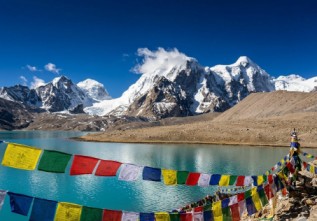
Gurudongmar Lake A Sacred High-Altitude Wonder in Sikkim
One of the highest lakes in the world — sacred to Buddhists and Sikhs, surrounded by snow-capped Himalayan peaks near the Tibetan Plateau.
📍 Introduction
A Sacred High-Altitude Wonder in Sikkim
Nestled in the remote mountains of North Sikkim at an altitude of approximately 5,430 meters (17,800 feet), Gurudongmar Lake is one of the highest lakes in the world and among India's most breathtaking natural attractions. Located near the Tibetan Plateau, about 190 kilometers from Gangtok, the lake is surrounded by snow-capped Himalayan peaks, vast barren landscapes, and crystal-clear waters that create an unforgettable setting. Revered by both Buddhists and Sikhs, Gurudongmar Lake is not only a scenic destination but also a place of deep spiritual significance. Its extraordinary beauty, peaceful atmosphere, and dramatic mountain scenery make Gurudongmar Lake tourism a remarkable experience for nature lovers, photographers, pilgrims, and adventure seekers.
🌄 Natural Beauty
Natural Beauty and Landscapes
The pristine blue waters of Gurudongmar Lake are framed by towering snow-covered mountains and rugged high-altitude terrain. The contrast between the turquoise lake, barren valleys, and gleaming white peaks creates one of the most spectacular landscapes in the Eastern Himalayas. Even during winter, when temperatures fall well below freezing, a small portion of the lake is believed to remain unfrozen, adding to its spiritual and natural appeal.
The surrounding landscape is largely untouched, offering visitors panoramic views of the Himalayan wilderness. The crisp mountain air, clear skies, and peaceful environment make every visit a memorable experience.
Even during winter, when temperatures fall well below freezing, a small portion of the lake is believed to remain unfrozen, adding to its spiritual and natural appeal.
🙏 Spiritual Heritage
History, Culture, and Spiritual Significance
Gurudongmar Lake holds immense religious importance for both Buddhists and Sikhs. According to Buddhist tradition, the lake was blessed by Guru Padmasambhava, who is believed to have visited the region in the 8th century. Sikh tradition associates the lake with Guru Nanak Dev Ji, who is believed to have blessed the waters during his travels. Many devotees consider the lake's water sacred and believe it possesses spiritual significance.
The region is also home to communities of Bhutia and Tibetan origin, whose customs, monasteries, and traditional lifestyles contribute to North Sikkim's rich cultural heritage.
🗺️ Major Attractions
Major Attractions
The main attraction is the breathtaking Gurudongmar Lake itself, where visitors can admire crystal-clear waters reflecting the surrounding Himalayan peaks. The serene atmosphere and stunning scenery make it one of Sikkim's most iconic destinations.
The journey to the lake is equally memorable, passing through dramatic mountain landscapes, glacial valleys, high-altitude plateaus, and picturesque villages. Travelers also pass through Thangu Valley, a charming Himalayan settlement known for its scenic beauty and peaceful surroundings.
Nearby Chopta Valley is another popular destination, famous for its colorful alpine meadows, seasonal wildflowers, and spectacular mountain views.
🧭 Adventure & Local Experiences
Adventure and Local Experiences
A trip to Gurudongmar Lake is an adventure in itself. The high-altitude drive through winding mountain roads offers breathtaking views at every turn. Photography is one of the most rewarding activities, with opportunities to capture pristine lakes, snow-covered peaks, dramatic clouds, and unique Himalayan landscapes.
Nature lovers can enjoy birdwatching and admire the region's untouched environment, while adventure enthusiasts appreciate the thrill of traveling to one of India's highest accessible lakes. The peaceful surroundings also provide an ideal setting for quiet reflection and meditation.
🦅 Wildlife, Cuisine & Shopping
Wildlife, Cuisine, and Shopping
Although the harsh climate limits wildlife, the surrounding region is home to Himalayan species such as blue sheep, Himalayan marmots, yaks, and various high-altitude birds. During certain seasons, birdwatchers may spot migratory species in the nearby valleys.
Visitors can enjoy simple but delicious Sikkimese cuisine at local eateries along the route. Popular dishes include momos, thukpa, noodle soups, butter tea, and traditional Tibetan breads. Due to the remote location, food options near the lake are limited.
Shopping opportunities are available mainly in Gangtok and Mangan, where travelers can purchase handwoven textiles, Buddhist prayer flags, handicrafts, organic tea, traditional souvenirs, woolen garments, and locally produced spices.
📅 Visit Planning
Best Time to Visit and How to Reach
The best time to visit Gurudongmar Lake is from April to June and October to November, when roads remain accessible and the weather is generally favorable for sightseeing. Winter often brings heavy snowfall, which may restrict access to the lake.
The nearest airport is Pakyong Airport, while Bagdogra Airport in West Bengal offers better connectivity. The nearest railway station is New Jalpaiguri (NJP). From Gangtok, visitors travel by road through Mangan, Chungthang, Lachen, and Thangu before reaching the lake. Since Gurudongmar lies in a protected border region, an Inner Line Permit (ILP) is mandatory for Indian visitors, while foreign tourists have restricted access.
Since Gurudongmar lies in a protected border region, an Inner Line Permit (ILP) is mandatory for Indian visitors, while foreign tourists have restricted access.
💡 Travel Tips
Travel Tips and Visitor Experience
Due to the extreme altitude, visitors should spend a night in Lachen to help their bodies adjust before traveling to the lake. Carry warm clothing, sunglasses, sunscreen, drinking water, and essential medicines. Avoid strenuous physical activity, stay hydrated, and follow local guidance to minimize the effects of high altitude. Respect the sacred nature of the lake, avoid littering, and help preserve its fragile Himalayan ecosystem.
Due to the extreme altitude, visitors should spend a night in Lachen to help their bodies adjust before traveling to the lake. Avoid strenuous physical activity, stay hydrated, and follow local guidance to minimize the effects of high altitude.