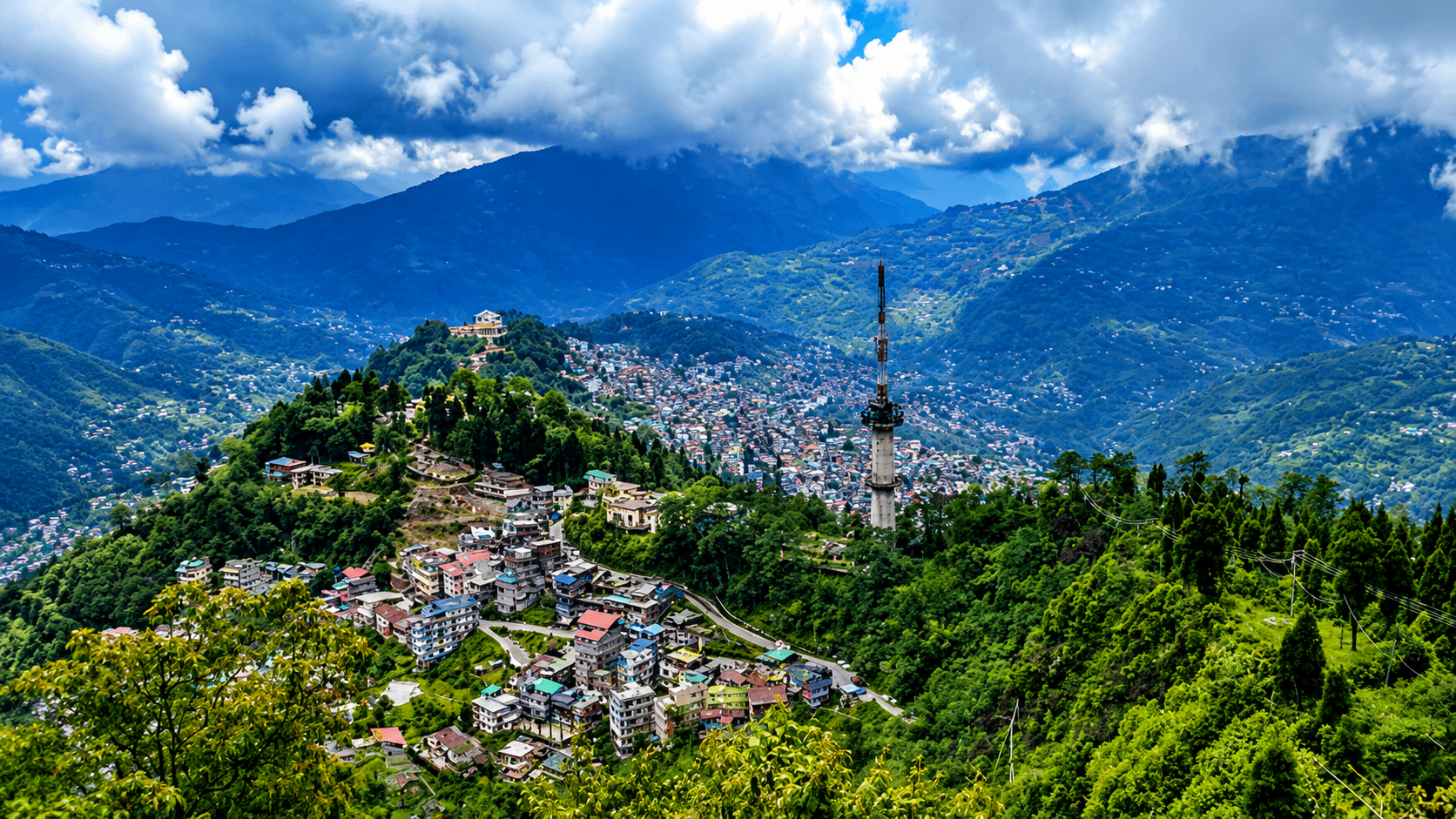
🏔️ Kalimpong (West Bengal)
🌿 Overview
Kalimpong stands as one of the most charming and culturally rich destinations in the northeastern Himalayan foothills, representing far more than a quaint hill town on a map. Situated at an elevation of approximately 1,250 meters in the Darjeeling district of West Bengal, Kalimpong is recognized as a place of remarkable natural beauty, Buddhist spiritual significance, and living multicultural heritage. The destination draws pilgrims, cultural enthusiasts, and travelers from across the world, offering a landscape defined by ancient monasteries, verdant gardens, colonial-era architecture, and an atmosphere of serene mountain charm and cultural authenticity rarely matched elsewhere.
What distinguishes Kalimpong from other heritage destinations in the region is not merely its spiritual significance, but the unique combination of living Buddhist monastic tradition, indigenous Himalayan communities, horticultural traditions, and colonial heritage embedded in this compact hillside town. The area is anchored by significant Buddhist monasteries including the Thongsa Gompa and the Durpin Monastery, and surrounded by communities representing Lepcha, Limbu, Rai, and Anglo-Indian cultures that have created a distinctive multicultural fabric. This layered character elevates Kalimpong beyond a simple tourist destination into a place of genuine cultural, spiritual, and natural discovery.
✨ Why Visit Kalimpong
The recognition of Kalimpong as one of the most significant Buddhist pilgrimage destinations and cultural centers in the Northeast reflects its unparalleled importance within the regional spiritual and social landscape. Unlike isolated hill stations or single-attraction tourism spots, Kalimpong offers a cohesive experience where ancient monastic tradition, living indigenous heritage, horticultural excellence, and colonial nostalgia work together to create a deeply immersive and multifaceted destination.
One of the most compelling reasons to visit is the living continuity of Buddhist spiritual practice that has flourished here for generations, combined with the preservation of authentic indigenous Himalayan cultures largely unchanged by modernization. The monasteries of Kalimpong, particularly the ancient Thongsa Gompa and Durpin Monastery, offer profound spiritual environments where visitors can witness monastic rituals, participate in meditation, and experience the living tradition of Tibetan Buddhism integrated seamlessly into daily community life. The act of engaging with these sacred spaces while surrounded by verdant hillsides and authentic local communities creates a unique cultural experience that connects visitors to centuries of spiritual and social heritage.
🏛️ Key Highlights Within the Area
Among the sacred landmarks, the Thongsa Gompa stands out as the most spiritually significant and architecturally distinctive feature of Kalimpong. Majestically perched on a hilltop overlooking the town, this magnificent monastery comprises the main prayer hall with its soaring golden roof, intricate religious artwork, countless Buddha statues, and peaceful meditation spaces. The interplay of golden architectural elements, prayer flags, and the surrounding emerald green hillsides creates a visual and spiritual experience that is profoundly transformative, particularly during prayer ceremonies when the monastery resonates with monastic chanting.
The Durpin Monastery, situated at an even higher elevation, represents another defining spiritual highlight. Offering panoramic views of the entire Kalimpong valley and distant mountain ranges, this ancient monastery adds a rich spiritual dimension to the visit, particularly for those interested in Buddhist heritage and the integration of spirituality with natural landscape.
🌺 Activities
Monastery visits and meditation sessions are primary activities at Kalimpong, with the Thongsa Gompa, Durpin Monastery, and other spiritual centers offering spaces for reflection, cultural immersion, and meaningful interaction with resident monks. These visits provide opportunities to observe monastic rituals, participate in guided meditations, learn about Tibetan Buddhist philosophy, and experience the authentic spiritual practice that forms the foundation of Kalimpong's cultural identity.
Walking tours of the town are an excellent way to experience Kalimpong's unique character, offering routes through ancient monasteries, colonial neighborhoods, flower nurseries, and local markets that reveal the town's layered history and multicultural present.
🌸 Best Time to Visit
The most favorable period to visit Kalimpong is from March to May, when temperatures are pleasant, the skies tend to be clear, and the hillsides burst with colorful blooms from the flower nurseries and wild rhododendrons.
🚗 Connectivity
Kalimpong is conveniently accessible from several major urban centers in northeastern India and the broader region. Siliguri, located approximately 70 kilometers away in West Bengal, is the nearest major city and serves as the most practical base for reaching Kalimpong by road.
Places to Visit Nearby