🌿 East Khasi Hills · Meghalaya · Northeast India
Nongjrong Village, Meghalaya
The Khasi Village Where Clouds Sleep Below Your Feet
A Hidden Sunrise Destination in the East Khasi Hills
There's a particular kind of stillness that settles over Nongjrong just before dawn — the kind that makes you hold your breath. Standing at the hilltop viewpoint in the dark, wrapped in a fleece against the cold, you look down and see nothing but cloud. A white, slow-moving sea of it, filling the valleys below while the peaks of the surrounding Khasi Hills emerge like islands above the mist. Then the sun arrives, and for a few minutes, the sky turns every shade from deep violet to burnt orange, and you understand immediately why people set alarms for 3 AM to be here.
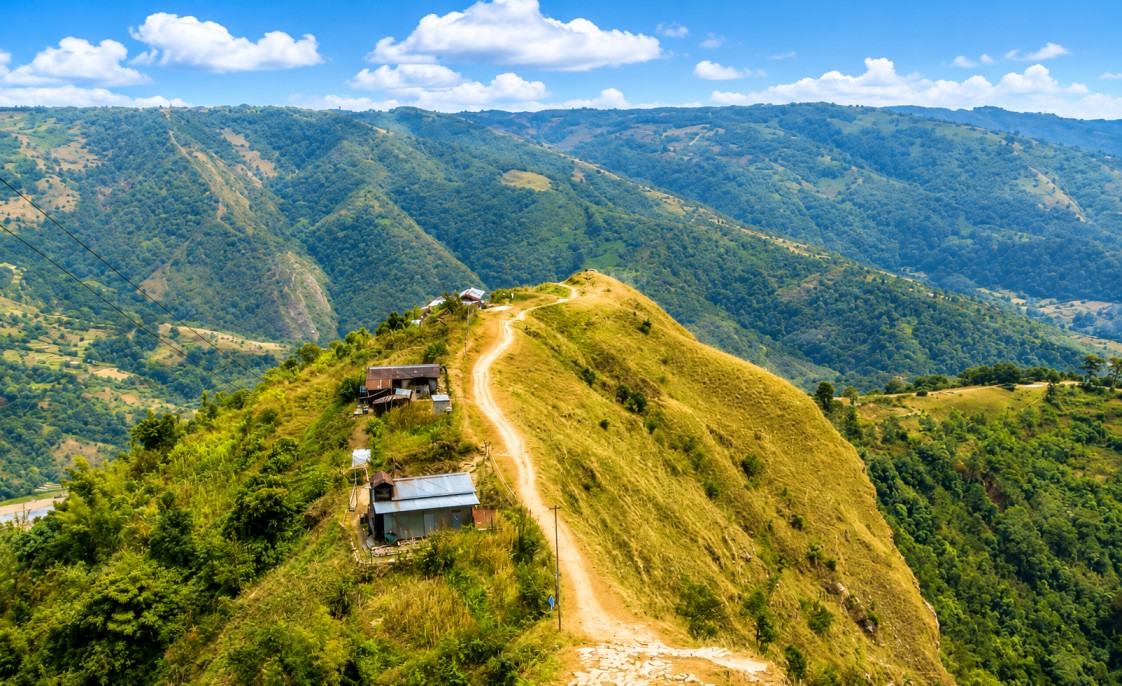
Nongjrong is a small Khasi village in the East Khasi Hills district of Meghalaya, perched at roughly 1,400–1,500 metres above sea level along a forested ridge in the Mawkynrew Tehsil. With just around 1,440 residents, it is one of the quietest and most genuinely off-the-beaten-path destinations in the entire northeast. About 50–55 kilometres from Shillong (a 2–2.5 hour drive) and around 144 kilometres from Guwahati (roughly 4–5 hours), it sits close enough to plan as a day trip — though staying overnight is the only way to catch the sunrise the village is famous for.
☁️ The Cloud Inversion Phenomenon: Nongjrong's Main Draw
🌊 What is Cloud Inversion?
What makes Nongjrong visually unlike almost any other village in India is its elevation relative to the surrounding valley. On clear mornings — particularly from October through March — clouds from the Bay of Bengal move inland and settle into the lower valleys, while the Nongjrong ridge stays above them. The result is a cloud inversion: you stand on solid ground while a white ocean stretches below you, broken only by distant ridgelines.
It was images of this phenomenon — shared widely on social media and notably by industrialist Anand Mahindra — that first drew wider attention to the village. The crowds never quite arrived, which is part of why Nongjrong still feels like a discovery.
The viewpoint itself is accessible by a short hike from the village, and the homestays nearest to it are literally a two-minute walk away — which matters when your alarm goes off at 4 AM.
🏛️ Life in a Khasi Village: Culture and Community
Nongjrong is a Khasi village, and that cultural identity shapes everything about the place. The Khasi people are one of the few remaining matrilineal communities in the world — property and family names pass through the mother's line, and women hold central authority in household decisions. Walking through the village, you'll see traditional architecture, small kitchen gardens growing betel nut, ginger, and oranges (the local variety, Soh Khoh, is beautifully golden), and the quiet rhythms of agricultural life.
🗣️ Language & Greetings
One genuinely unusual detail: Nongjrong is primarily English-speaking, a legacy of Christian missionary influence across the Khasi Hills. Conversations with locals are easy and warm, and a greeting of "Khublei" (the Khasi word for thank you, used broadly as a warm acknowledgement) is always well received.
Christianity is the main religion, though indigenous Khasi spiritual beliefs and traditions run alongside it, giving the village a layered cultural character that rewards slow, curious visitors.
🗺️ Things to Do In and Around Nongjrong
-
Sunrise at the Viewpoint The non-negotiable, centre-of-everything experience. Aim to be at the hilltop by 5–5:30 AM. October to February offers the clearest skies and the most reliable cloud inversions.
-
Nongjrong Falls About 3 kilometres from the village, accessible by a forest trek. The waterfall pours into a clear pool surrounded by dense vegetation and is at its most dramatic during and just after the monsoon season.
-
Village Walk An hour wandering through the village lanes gives you a genuine feel for Khasi rural life — the agricultural plots, the Presbyterian church, the friendly exchanges with residents who are genuinely welcoming to visitors.
-
Kayaking and Rafting on the Umngot River About 10 kilometres from the village, the Umngot is one of the cleanest rivers in India. Kayaking and rafting opportunities operate out of the nearby town of Dawki, and the combination of Nongjrong plus Dawki makes for an excellent two-day itinerary.
-
Laitlum Canyons Around 40 kilometres away, Laitlum offers another dramatic viewpoint across deep canyon landscapes — a worthwhile afternoon stop when combining with a Nongjrong sunrise morning.
💚 Who Will Love Nongjrong Most
Photographers will find the sunrise light extraordinary — the combination of cloud, early colour, and mist-softened landscapes is difficult to get wrong. Couples looking for a quiet, genuinely beautiful escape that doesn't involve crowds will find Nongjrong close to ideal. Solo travellers benefit from the village's English-speaking community and the genuine warmth of homestay hosts. Nature lovers will appreciate the intact forest, clean air, and the biodiversity of the East Khasi Hills — orchids and endemic bird species are found in the sacred groves nearby. Adventure seekers have the Umngot River and forest treks to keep them busy.
Families with young children can visit comfortably for the sunrise experience, though the early start and cold mornings require planning.
📅 Best Time to Visit Nongjrong
October to March is ideal — skies are clearest, temperatures are cool but manageable, and cloud inversions are most reliable. November to February is the peak window. March and April are also rewarding before the pre-monsoon rains begin. Avoid June to September if the cloud viewpoint is your primary reason for visiting: heavy rainfall, persistent fog, and slippery paths reduce the experience significantly, and cloud inversions are rare during monsoon.
🚗 How to Get There
The standard approach is to hire a taxi or self-drive. No direct bus service runs to Nongjrong. Most visitors heading for the sunrise depart Shillong around 3 AM — factor in time for the short uphill walk to the viewpoint.
📌 Essential Travel Tips
Book homestays in advance: Options within the village are limited. Iohhun's Sunrise Homestay and Lara Homestay (beside the Presbyterian Church) are the most popular, both within a short walk of the viewpoint.
Carry warm layers: Even in March, pre-dawn temperatures at the viewpoint are cold. A wind-proof jacket is essential.
Bring a torch: The path to the viewpoint is unlit early in the morning.
Foreign visitors: An Inner Line Permit (ILP) or Restricted Area Permit (RAP) is required for Meghalaya and can be obtained online before travel.
Cash only: There are no ATMs in Nongjrong. Carry adequate cash from Shillong.
Meals: Homestays offer simple, home-cooked Khasi food — rice-based meals with local vegetables and occasional pork or chicken dishes. It's good, honest cooking.
Nongjrong doesn't offer luxury. It offers something rarer — a village that hasn't been reshaped by tourism, where a spectacular piece of natural theatre happens most mornings, and where the people who live there are quietly, genuinely pleased to share it with you.
Places to Visit Nearby