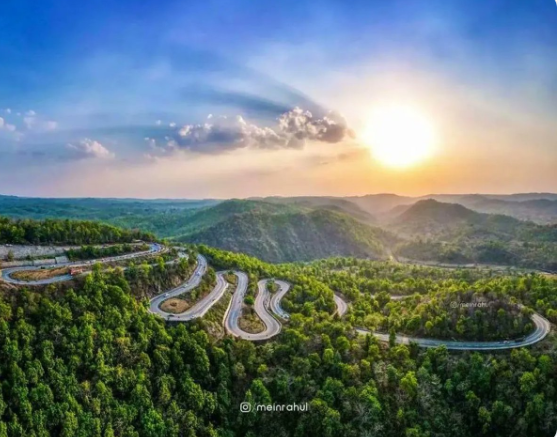
🌄 Overview – Patratu Valley (Jharkhand)
Patratu Valley stands as one of the most scenically captivating and increasingly celebrated leisure destinations in eastern India, offering a landscape of sweeping reservoir waters, forested hillsides, and winding mountain roads that together create an experience of natural beauty rare within easy reach of a major urban centre. Located in the Ramgarh district of Jharkhand, approximately forty-five kilometres northwest of Ranchi, the valley is anchored by the Patratu Reservoir, a large artificial water body formed by the damming of the Nalkari river, whose expansive blue waters set against the surrounding Chota Nagpur plateau hills define the visual character of the destination. The area draws weekend travelers, nature enthusiasts, photography seekers, and families from Ranchi and beyond, drawn by a combination of open water, forested terrain, and the celebrated serpentine road that winds through the valley.
What distinguishes Patratu Valley from other scenic destinations in Jharkhand is the particular quality of its landscape, where the interplay of still water, undulating forested ridgelines, and the characteristic red laterite soil of the Chota Nagpur plateau creates a visual palette that shifts dramatically with the seasons and the time of day. The valley road, which curves and descends through a sequence of viewpoints before opening onto the reservoir, has become celebrated in its own right as one of the most pleasurable drives in the region, elevating Patratu beyond a simple picnic destination into a journey that rewards the act of travel itself.
🌿 Why Visit Patratu Valley
The appeal of Patratu Valley rests on its ability to deliver a genuinely immersive natural experience within a short distance of Ranchi, making it one of the most accessible escapes from urban life available to residents of and visitors to Jharkhand's capital. Unlike remote destinations requiring extended travel, Patratu offers a compelling landscape that can be savoured within a half-day or full-day excursion without sacrificing depth of experience.
One of the most compelling reasons to visit is the celebrated valley road itself, a stretch of highway that descends through a series of graceful curves and elevated vantage points, offering changing views of the reservoir and the forested hillsides at every turn. This road has earned considerable recognition among driving enthusiasts and photographers, and the experience of moving through it at a leisurely pace, stopping at natural viewpoints to take in the panorama below, constitutes one of the most distinctive pleasures the destination offers.
Additionally, Patratu Valley benefits from the seasonal transformation that the monsoon brings to the Chota Nagpur landscape. The months following the rains see the surrounding hills clothed in vivid green, the reservoir filled to its margins, and small waterfalls appearing along the hillsides, lending the valley an almost theatrical lushness that makes it one of the most rewarding post-monsoon destinations in the region. The combination of accessible natural beauty, a pleasurable drive, and the calm of the reservoir's open waters makes Patratu a destination of genuine leisure appeal across a broad range of visitor types.
⭐ Key Highlights Within the Area
The Patratu Reservoir is the defining feature and visual centrepiece of the valley, a wide expanse of calm water whose reflective surface mirrors the surrounding hills and sky in a manner that changes with every hour of the day and every shift in weather. The reservoir's shoreline offers multiple vantage points for simply sitting and absorbing the landscape, and the early morning hours in particular produce a quality of still, mist-touched light over the water that is widely regarded as the most beautiful the destination offers.
The valley road winding down from the plateau rim to the reservoir is itself a highlight that many visitors cite as the most memorable aspect of the Patratu experience. The sequence of curves, the gradual revelation of the water below, and the forested slopes on either side create a sense of anticipation and arrival that distinguishes this approach from the straightforward access roads of most reservoir destinations in the region.
The Patratu Thermal Power Station, visible from several points along the valley, adds an unexpected industrial dimension to the landscape that some visitors find strikingly atmospheric, particularly in the early morning when steam and mist combine to create a layered visual effect against the backdrop of the hills. While the plant itself is not open to general visitors, its presence contributes to the particular character of Patratu's landscape.
The forested hillsides surrounding the reservoir support populations of birds and wildlife that reward those who spend time quietly at the water's edge or along the quieter approach tracks. The broader Chota Nagpur plateau landscape visible from the elevated sections of the valley road extends the visual experience well beyond the reservoir itself, offering sweeping views across a terrain of remarkable natural integrity.
🚗 Activities
🚘 Scenic Drive
Driving or riding through the valley road at a leisurely pace is the activity most visitors prioritise at Patratu, and rightly so, as the road's sequence of curves and viewpoints is best experienced without haste, with frequent stops to absorb the changing perspectives on the reservoir and surrounding hills. Early morning arrivals are particularly recommended, as the combination of softer light, thinner traffic, and the possibility of mist over the water produces conditions that photographers and nature seekers find especially rewarding.
🚤 Boating
Boating on the Patratu Reservoir is available through local operators and offers a direct engagement with the water that the shoreline viewpoints alone cannot provide. Moving across the open reservoir by boat allows visitors to appreciate the full scale of the water body and the encircling hills from a perspective unavailable from land, and the experience of being out on the calm water in the early morning or late afternoon is one of the quieter pleasures the destination affords.
🧺 Picnicking
Picnicking along the reservoir's more secluded shoreline stretches is a widely practised and deeply enjoyable activity, particularly for families and groups who wish to spend extended time in the natural setting without structured itineraries. The grassy margins and shaded spots along certain sections of the bank provide natural gathering places that encourage the kind of unhurried leisure that Patratu's landscape most naturally invites.
🍃 Best Time to Visit
The most favorable period to visit Patratu Valley is from October to February, when the post-monsoon landscape retains much of its greenery while the weather across the Chota Nagpur plateau is cool, clear, and genuinely pleasant. During these months, the reservoir tends to be well filled, the air carries a crisp quality particularly enjoyable on the exposed valley road viewpoints, and the light across the water in the morning and evening hours is at its most photogenic.
The monsoon season from July to September is widely regarded as the most dramatically beautiful time to experience Patratu, as the surrounding hills turn an intense, saturated green, the reservoir fills to its fullest extent, and small seasonal waterfalls appear along the hillsides, transforming the valley into a landscape of considerable natural spectacle. The trade-off is unpredictable rainfall, reduced visibility on some days, and roads that require careful driving, but for those comfortable with these conditions the monsoon visit offers a version of Patratu that is arguably its most vivid and atmospheric.
The summer months from March to June bring rising temperatures to the plateau, making the midday hours less comfortable for outdoor lingering, though the early mornings remain pleasant and the reservoir continues to offer a cooling visual and physical presence. Visitors during this period tend to time their arrival for dawn and depart before the heat of the afternoon builds.
🛣️ Connectivity
Patratu Valley is conveniently accessible from Ranchi, which serves as the primary air and rail gateway for the region. Ranchi Airport offers regular domestic flights from Delhi, Mumbai, Kolkata, and other major cities, and the drive from Ranchi to Patratu covers approximately forty-five kilometres, typically taking between one and one and a half hours depending on road and traffic conditions. The route passes through the characteristic landscape of the Chota Nagpur plateau and offers a pleasant approach to the valley in its own right.
Road connectivity is the principal means of reaching Patratu, with a well-maintained highway linking it directly to Ranchi and onward to Ramgarh, from where connections to other parts of Jharkhand are readily available. Patratu also has a railway station on the Ranchi to Barkakana line, providing an additional access option for those traveling by train, though road travel remains the more practical and scenic choice for most visitors. The proximity to Ranchi makes Patratu a natural inclusion in any itinerary covering Jharkhand's capital region, and it is frequently combined with visits to the nearby Mccluskieganj heritage settlement or the Hundru Falls for those wishing to extend their exploration of the surrounding landscape.
Top Attractions Nearby
```